
Lighthouse Point Condo Plumbing
Plumbing problems in a condo or townhome can be difficult to trace because the visible symptom may not reveal which unit, pipe run, or shared building system is involved. A ceiling stain, wall leak, recurring backup, or utility-closet problem may require more than a fixture-level repair.
Lighthouse Point condo plumbing focuses on identifying the likely source, separating private-unit issues from shared-stack concerns, and coordinating access or shutoff needs before unnecessary walls, ceilings, or finished surfaces are opened.
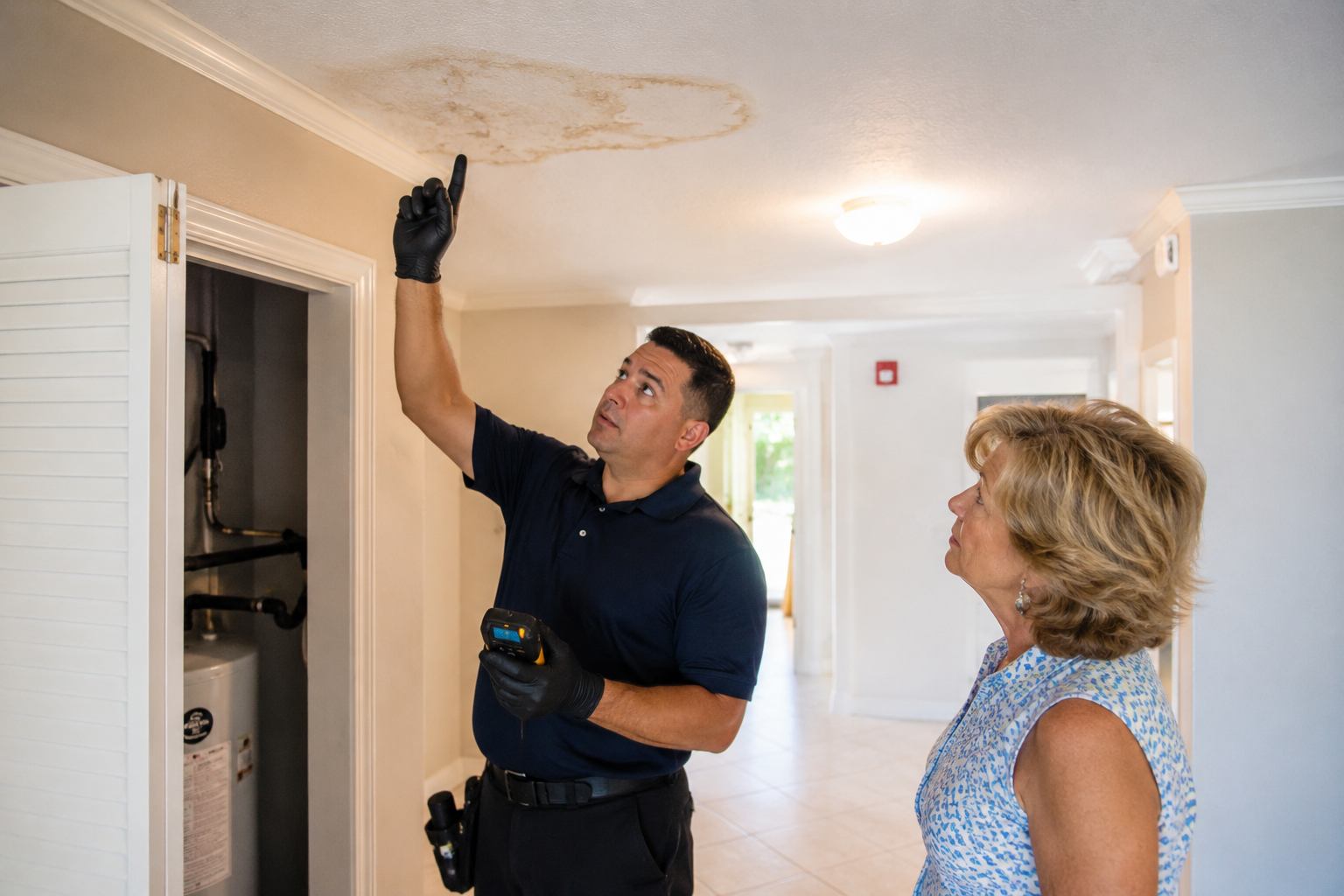
Ceiling Stain Below Another Unit
Water appearing overhead may have traveled from a bathroom, pipe run, fixture connection, or hidden leak in an adjacent area.
Several Units Notice Slow Drains
Drain problems affecting more than one residence may point toward a shared stack or common wastewater path.
Shutoff Access Is Unclear
Some repairs require coordination with an HOA, property manager, neighboring unit, or building-level shutoff location.
Water Spreads Between Units
Moisture can travel through walls, ceilings, flooring, and framing before it becomes visible in the affected residence.
Condo Plumbing Problems Often Need More Than a Fixture-Level Repair
A plumbing issue inside a condo can begin in one location and appear somewhere else. Water may move along framing before staining the ceiling below. A leaking toilet connection may affect another unit. A drain restriction may appear inside one residence even though the larger problem sits in a shared stack serving several units.
This makes early diagnosis important. Opening the first visible wet ceiling or wall without understanding the plumbing layout can create unnecessary disruption while still missing the actual source.
Condo owners can begin with this page or return to the broader Lighthouse Point plumber hub for help choosing the right local plumbing service.
Choose the Service That Matches the Pattern Inside the Building
The right next step depends on whether the strongest symptom is a hidden leak, an active emergency, a shared-stack backup, a ceiling stain, or a shutoff-access problem.
Lighthouse Point Condo Leak Detection
Condo leak detection helps trace hidden water when moisture appears in walls, ceilings, floors, utility closets, or neighboring units without a clear source.
Lighthouse Point Emergency Condo Plumbing
Emergency condo plumbing is appropriate when water is actively spreading, a drain is overflowing, a shutoff is needed, or more than one unit may be affected.
Lighthouse Point Shared Stack Backup
Shared-stack diagnosis may be needed when recurring drain restrictions, gurgling fixtures, or wastewater backups affect multiple units or vertical plumbing lines.
Lighthouse Point Ceiling Leak Detection
Ceiling leak detection helps narrow the source when stains, drips, bubbling paint, or damp drywall appear below another unit or hidden pipe route.
Lighthouse Point Condo Water Shutoff Help
Shutoff help may be needed when a repair depends on locating a unit valve, coordinating a building shutoff, or working with an HOA or property manager.
The Pattern Can Reveal Whether One Unit or a Shared System Is Involved
A dripping faucet inside one unit is usually straightforward. A ceiling stain below another residence, recurring backup affecting several fixtures, or drain symptoms spreading between units often requires a broader view of the plumbing layout.
The strongest diagnosis comes from understanding where the symptom appears, which units are affected, and whether the problem follows a shared vertical or horizontal plumbing path.
A Ceiling Leak Does Not Always Start Directly Above the Stain
Water often follows framing, flooring seams, plumbing chases, and low points before it becomes visible. A ceiling stain may appear below a bathroom, but the source could involve a nearby pipe connection, shower area, toilet seal, supply line, drain line, or hidden route between units.
That is why a visible stain should be treated as a clue rather than a complete diagnosis. Opening the first damp ceiling panel without tracing the likely path may create extra damage while leaving the original plumbing failure unresolved.
When the source is unclear, condo leak detection can help narrow the most likely area before repair access begins.
A Practical Sequence Helps Reduce Unnecessary Disruption
Condo plumbing work should address both the physical problem and the coordination required to access shared systems safely.
1. Identify Which Units and Fixtures Are Affected
Start by determining whether the symptom is limited to one residence, appearing between units, or affecting several fixtures along a shared plumbing path.
2. Separate Private and Shared Plumbing Possibilities
Evaluate whether the likely issue involves a fixture connection, in-unit pipe, ceiling route, shared stack, common drain, or building-level shutoff concern.
3. Coordinate Access Before Opening Surfaces
Some repairs require entry into another unit, HOA communication, property-manager involvement, or scheduled shutoff access before work can begin.
4. Match the Repair to the Confirmed Source
The next step may involve targeted leak repair, ceiling-leak repair, shared-stack clearing, emergency containment, or shutoff coordination.
Drain Problems Affecting Multiple Units May Be Larger Than One Fixture Clog
In a multi-unit building, several residences may connect into shared drain stacks. A restriction farther down that shared path can create symptoms in more than one unit, especially at lower fixtures or along the same vertical plumbing line.
Warning signs may include repeated gurgling, wastewater rising through tubs or showers, several drains slowing down together, or backups returning after a localized clearing attempt. The problem may involve buildup, debris, scaling, roots, standing water, or another condition affecting the shared wastewater route.
A dedicated shared-stack backup evaluation can help determine whether the issue extends beyond one residence.
The Repair May Depend on Access, Responsibility, and Shutoff Timing
A condo plumbing diagnosis often raises practical questions: Is the leaking pipe inside the unit or part of a shared building system? Does another residence need to provide access? Is a unit-level valve available, or does the building need a larger shutoff?
The HOA, property manager, or building contact may need to help confirm access rules, shutoff locations, maintenance responsibilities, and scheduling. These steps are not paperwork for its own sake. They help prevent unnecessary disruption to neighboring units and reduce avoidable delays during the repair.
When shutoff access is the immediate obstacle, condo water-shutoff help may be the most useful next path.
Lighthouse Point Condo Plumbing Should Reflect the Property Type
Lighthouse Point is not primarily a high-rise market. The more realistic local fit is smaller condo buildings, townhomes, and multi-unit properties near Federal Highway and nearby residential corridors.
Even in a smaller building, plumbing systems can cross unit boundaries. Shared walls, common drain stacks, utility closets, ceiling routes, and coordinated shutoffs can still shape the diagnosis and repair plan.
The goal is to treat the building as a connected plumbing system where appropriate without assuming that every leak or backup automatically belongs to the HOA or affects every unit.
The Right Next Step Depends on Whether the Problem Is Hidden, Shared, or Active
Condo plumbing diagnosis should lead into the most relevant repair path while avoiding unnecessary disruption to neighboring units and finished surfaces.
Condo Leak Detection
Use this path when water appears between units, spreads behind drywall, or reaches ceilings and floors without a clear source.
Emergency Condo Plumbing
Use this path when water is actively spreading, a drain is overflowing, or immediate coordination is needed to limit damage across units.
Shared Stack Backup
Use this path when multiple residences, lower fixtures, or recurring drain symptoms suggest a common wastewater restriction.
Ceiling Leak Detection
Use this path when stains, drips, bubbling paint, or damp drywall appear overhead and the original plumbing source remains unclear.
Condo Water Shutoff Help
Use this path when repair access depends on identifying a unit valve, coordinating a building shutoff, or working with HOA management.
Residents Should Understand the Source, the Access Needs, and the Repair Path
Condo plumbing work should not rely on vague assumptions about responsibility or generic recommendations to open walls. The strongest approach explains what symptoms point toward, which units or shared systems may need to be checked, and why a particular repair path is being considered.
Experienced technicians, fully stocked service vehicles, modern diagnostic equipment, and transparent upfront pricing help make the process more practical. Clear communication is especially important when an HOA, neighboring resident, or property manager needs to coordinate access or shutoff timing.
The objective is to solve the plumbing problem while limiting unnecessary disruption to the building and the people living inside it.
Common Questions About Multi-Unit Plumbing Problems
Condo plumbing issues often involve both diagnosis and coordination. These answers explain what homeowners should understand before repair work begins.
Does a ceiling stain mean the leak started in the unit directly above?
Not always. Water may travel along framing, flooring seams, plumbing routes, or low points before it becomes visible. The source may involve a nearby fixture, supply line, drain line, or hidden connection rather than the area directly above the stain.
How do I know whether a condo drain problem involves a shared stack?
Shared-stack problems are more likely when several units notice slow drains, lower fixtures back up, toilets gurgle when other units use water, or the same symptoms return after localized drain clearing.
Should the HOA be contacted before a condo plumbing repair?
HOA or property-manager involvement may be helpful when the suspected issue involves shared piping, another unit, a common area, a building shutoff, or access rules. A problem clearly limited to an in-unit fixture may be more straightforward.
Can a plumber shut off water to only one condo unit?
Sometimes. The answer depends on the building design and whether a working unit-level valve exists. In other cases, a larger building shutoff may require HOA or property-manager coordination.
When does a condo leak become an emergency?
A condo leak becomes more urgent when water is actively spreading through ceilings, walls, flooring, utility closets, or neighboring units, or when a shutoff is needed to limit continued damage.
Can a shared drain backup affect more than one unit?
Yes. A restriction inside a shared wastewater path can create symptoms in multiple residences, especially along the same stack or at lower fixtures. The pattern helps determine whether the problem extends beyond one unit.
Condo Plumbing Across Lighthouse Point and Eastern Broward County
Condo plumbing support is available for Lighthouse Point residents dealing with ceiling leaks, hidden moisture, shared-stack backups, utility-closet plumbing issues, shutoff coordination, and water spreading between units.
Local coverage includes smaller condo buildings, townhomes, and multi-unit properties near Federal Highway, Sample Road, NE 39th Street, NE 22nd Avenue, Lighthouse Drive, and nearby residential corridors close to the Pompano Beach and Deerfield Beach borders.
You can also return to the Lighthouse Point plumber hub or view broader Broward County plumbing services.
Get Help Tracing a Leak, Backup, or Shared Plumbing Issue
If water is spreading between units, a ceiling stain keeps returning, several drains are affected, or a repair depends on shutoff coordination, the next step is identifying whether the problem sits inside one residence or along a shared building system.