
Lighthouse Point Condo Leak Detection for Ceiling Stains and Hidden Water Migration
Water appearing in a condo ceiling, shared wall, utility closet, or flooring area does not always reveal where the leak began. Moisture can travel through framing, plumbing chases, drywall, and low points before becoming visible inside another unit.
Lighthouse Point condo leak detection helps narrow the likely source before finished ceilings or walls are opened unnecessarily. The goal is to determine whether the problem involves an in-unit fixture, hidden supply line, drain connection, neighboring residence, or shared building system.
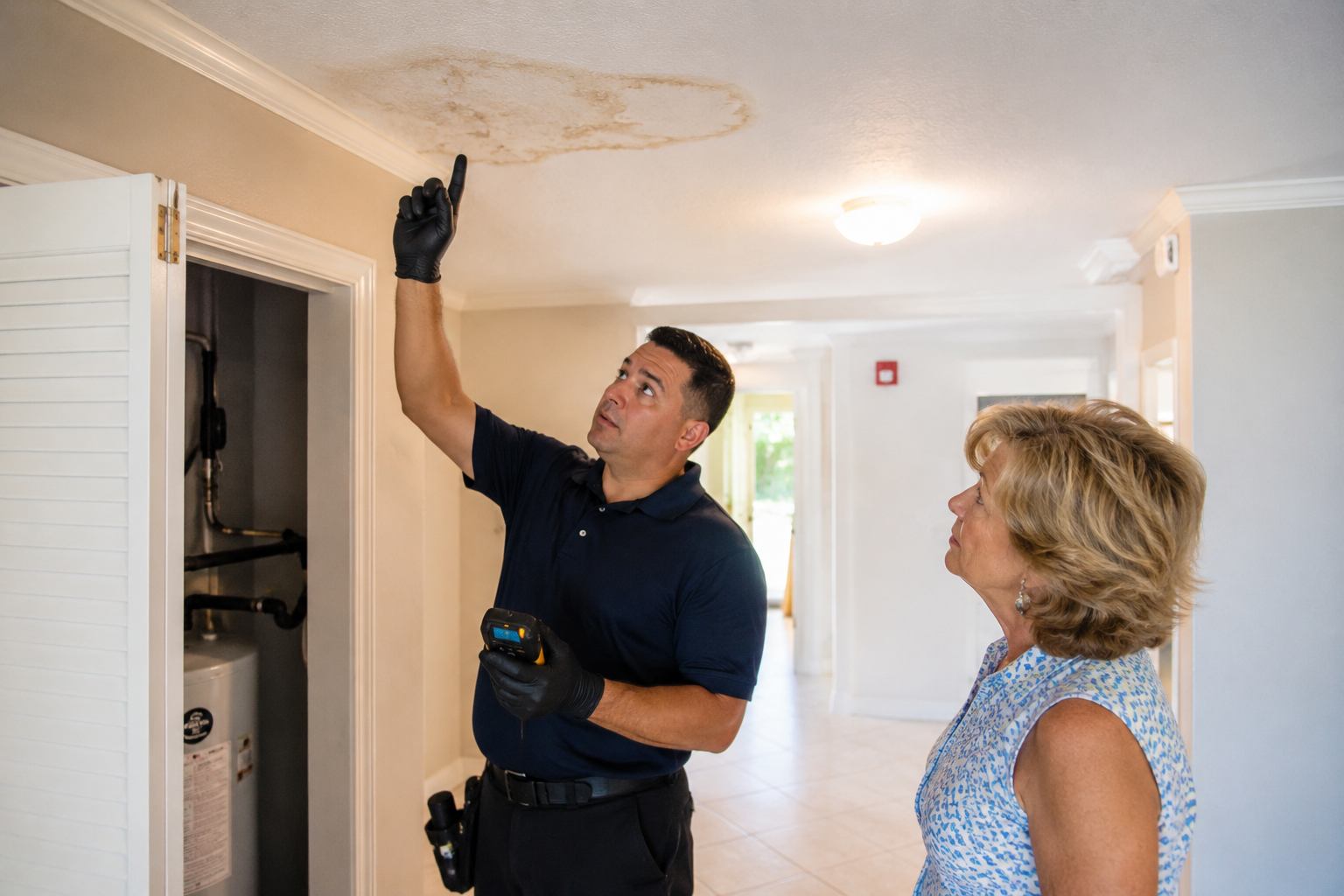
Ceiling Stain Keeps Returning
Moisture reappearing after the area dries may point to an unresolved plumbing source above or along a nearby pipe route.
Water Crosses Unit Boundaries
A leak may begin in one residence and become visible inside another after traveling through framing or finished surfaces.
Shared Wall Feels Damp
Moisture inside a common wall may involve an in-unit pipe, neighboring fixture, shared plumbing chase, or hidden connection.
Access Is Needed Above
Some repairs require coordination with another resident, the HOA, or a property manager before the source can be confirmed.
The Visible Ceiling Stain May Be the Endpoint of the Leak
A condo leak can be misleading because water rarely follows a perfectly vertical path. It may move along framing, collect at a low point, travel through a plumbing chase, spread beneath flooring, or reach a ceiling seam before a stain becomes visible.
A damp ceiling below an upstairs bathroom may involve a toilet seal, shower connection, tub drain, supply line, nearby pipe run, or another hidden source. A stain near a shared wall may come from the neighboring unit, but it may also involve plumbing inside the affected residence or a shared building route.
That is why the first wet area should be treated as a clue rather than a complete diagnosis. Homeowners can also review broader Lighthouse Point condo plumbing guidance when the issue may involve shared systems, shutoff access, or multiple units.
Hidden Condo Leaks Often Reveal Themselves Gradually
A major drip is easy to recognize. Smaller leaks may appear as a stain that grows slowly, a wall that remains damp, paint that begins bubbling, or a musty area that returns after drying.
The strongest diagnosis comes from comparing the moisture location with nearby bathrooms, kitchens, laundry connections, utility closets, neighboring units, and the likely route of shared plumbing lines.
Walls and Ceilings Can Hide the Actual Plumbing Route
Multi-unit plumbing systems often run through walls, ceilings, floor assemblies, and shared chases. When a pipe connection or drain component begins leaking, gravity pulls water downward, but framing and finished materials may redirect the moisture before it appears.
This can make one residence look like the source even when the failing plumbing sits in another unit or along a shared path. It can also create the opposite problem: a leak inside one condo may not become obvious until water appears below or beside it.
Careful tracing reduces unnecessary demolition. The objective is to identify the most likely source area, determine which unit or plumbing route needs access, and open only the surfaces required for the repair.
A Building-Aware Investigation Helps Narrow the Source
Condo leak detection should connect the visible symptom with the surrounding plumbing layout before walls or ceilings are disturbed.
1. Review Where and When Moisture Appears
Start with the stain, drip, damp area, utility-closet moisture, or flooring change and note whether it becomes worse during shower, sink, toilet, or laundry use.
2. Compare Nearby Units and Plumbing Routes
Determine whether the likely source may involve the affected residence, the unit above, an adjacent condo, a shared wall, or a common plumbing chase.
3. Coordinate Access Before Opening Surfaces
When another unit, a locked utility area, or a shared shutoff may be involved, HOA or property-manager coordination can prevent unnecessary delay.
4. Match the Repair to the Confirmed Source
The next step may involve targeted pipe repair, ceiling-leak repair, shutoff coordination, emergency containment, or a wider shared-system evaluation.
The Repair May Depend on Entering Another Unit or Scheduling a Shutoff
A condo leak cannot always be resolved from the unit where the stain appears. The likely source may sit above the ceiling, behind a shared wall, inside a neighboring residence, or near a plumbing component that requires building-level access.
The HOA or property manager may need to help confirm who can enter the relevant area, where unit valves are located, whether a building shutoff is required, and when neighboring residents should be notified.
When shutoff logistics become the primary obstacle, condo water-shutoff help may be the most useful next path.
A Wet Ceiling Should Not Be Opened Broadly Without a Likely Source Area
A ceiling stain can create understandable urgency, especially when dripping begins. However, opening a large section of ceiling without narrowing the source may create additional damage while still missing the actual plumbing problem.
The investigation should consider nearby bathrooms, kitchens, utility areas, fixture connections, supply lines, drain lines, and shared plumbing routes. The moisture pattern may also change depending on when neighboring fixtures are used.
A dedicated ceiling-leak detection evaluation may help when the strongest symptom appears overhead and the original source remains unclear.
Water Stains and Drain Backups Can Point to Different Plumbing Systems
A ceiling stain, damp wall, or wet utility closet usually begins as a leak investigation. A drain problem affecting multiple condos requires a different path. Gurgling toilets, repeated lower-fixture backups, and wastewater symptoms across several residences may suggest a shared drain-stack restriction rather than a supply-side leak.
Separating those two systems matters. Supply-side leaks call for tracing water that should remain inside the plumbing line. Shared-stack backups involve wastewater that cannot move through the building drain path normally.
When several residences notice drainage symptoms, review shared-stack backup guidance before treating the issue as an isolated fixture problem.
Active Water Spread Changes the Priority From Investigation to Containment
A small stain deserves investigation, but an active drip, rapidly growing ceiling mark, spreading wall moisture, or water entering another unit requires faster containment. The immediate goal is to reduce additional water flow and protect finished surfaces before the problem expands.
If a unit-level shutoff is available, it may help limit damage while the leak is evaluated. When the relevant valve is unclear or a building shutoff is required, property-manager or HOA coordination may become necessary.
When water is actively spreading, emergency leak repair may be the appropriate first step before longer-term diagnosis continues.
Lighthouse Point Condo Leaks Should Reflect the Building, Not a Generic High-Rise Template
Lighthouse Point is more commonly associated with private waterfront homes than large condo towers. The realistic local fit for this page is smaller condo buildings, townhomes, and multi-unit properties near Federal Highway and surrounding residential corridors.
Smaller buildings still have shared plumbing realities. Water can cross unit boundaries. A common wall may contain multiple pipe routes. One residence may need access so a leak affecting another unit can be repaired. A shutoff may still require coordination even when the building is not large.
The repair plan should fit the property: careful leak tracing, clear communication, focused access, and the least disruptive path that still solves the underlying plumbing problem.
Use the Symptom Pattern to Choose the Right Next Step
Condo leak detection is the diagnostic starting point. The next service depends on whether the main challenge is ceiling moisture, shutoff access, active water spread, or a shared drain-stack problem.
Lighthouse Point Ceiling Leak Detection
Use this path when stains, drips, bubbling paint, or damp drywall appear overhead and the original plumbing source remains unclear.
Lighthouse Point Condo Water-Shutoff Help
Use this path when repair work depends on locating a unit valve, coordinating a larger shutoff, or working with HOA management.
Lighthouse Point Emergency Leak Repair
Use this path when water is actively spreading through ceilings, walls, flooring, or neighboring units and containment cannot wait.
Lighthouse Point Shared Stack Backup
Use this path when several condos experience gurgling fixtures, slow drains, wastewater backups, or recurring drainage symptoms along a common route.
Lighthouse Point Leak Detection
Use the broader leak-detection path when moisture may involve a hidden pipe, ceiling route, slab area, water-service line, or another part of the property.
Residents Should Understand the Source, Access Plan, and Repair Responsibility
Condo leak detection is not only about finding water. It is about explaining which plumbing route is most likely involved, why another unit may need to be checked, whether a shared system appears relevant, and what access is required before repair work begins.
Experienced technicians, fully stocked service vehicles, modern diagnostic equipment, and transparent upfront pricing help make the process more practical. Clear findings also help residents, HOAs, and property managers coordinate the next step without opening more finished surfaces than necessary.
The objective is a focused repair plan: confirm the likely source, coordinate the right access, contain active moisture, and reduce unnecessary disruption across the building.
Common Questions About Ceiling Stains and Water Migration Between Units
Condo leaks can be difficult to trace because water may travel before it becomes visible. These answers explain what residents should understand before repair access begins.
Does a ceiling stain mean the leak started directly above it?
Not always. Water can travel along framing, flooring seams, plumbing chases, and low points before it becomes visible. The original source may sit several feet away or inside a nearby unit.
Should the ceiling be opened immediately?
Not automatically. When the source is unclear, leak detection can help narrow the likely area first. This may reduce unnecessary demolition and focus the repair on the section most likely to be involved.
Can a leak from one condo affect another unit?
Yes. Water may migrate through ceilings, walls, flooring assemblies, and shared plumbing routes before it appears. The visible damage may show up in a neighboring or lower unit even when the original plumbing failure began elsewhere.
When should the HOA or property manager be involved?
Coordination may be helpful when another unit needs to provide access, a shared plumbing route may be involved, shutoff locations are unclear, or the repair could affect common areas or neighboring residents.
How do I know whether the issue is a leak or a shared drain-stack backup?
Ceiling stains, damp walls, and active drips usually point toward leak tracing. Gurgling toilets, wastewater backups, and slow drains affecting several units may suggest a shared-stack restriction.
When does a condo leak become an emergency?
A condo leak becomes more urgent when water is actively dripping, stains are growing quickly, moisture is spreading into another unit, electrical areas are affected, or a shutoff is needed to limit continued damage.
Condo Leak Detection Across Lighthouse Point and Eastern Broward County
Condo leak-detection support is available for Lighthouse Point residents dealing with ceiling stains, shared-wall moisture, utility-closet leaks, damp drywall, water migration between units, and plumbing problems that require HOA or property-manager coordination.
Local coverage includes smaller condo buildings, townhomes, and multi-unit properties near Federal Highway, Sample Road, NE 39th Street, NE 22nd Avenue, Lighthouse Drive, and nearby residential corridors close to the Pompano Beach and Deerfield Beach borders.
You can also review Lighthouse Point condo plumbing, explore broader Lighthouse Point leak detection, or view regional Broward County plumbing services.
Get Help Finding the Source of Ceiling or Shared-Wall Moisture
If a ceiling stain keeps returning, water is spreading between units, or the source appears hidden behind a shared wall, the next step is narrowing the plumbing route before unnecessary demolition begins.