
Main Water Line Leak Repair in Fort Lauderdale
A main water line leak can slowly waste water underground long before major damage becomes visible. Many Fort Lauderdale homeowners first notice pressure loss, wet soil, unexplained meter movement, or rising water bills before realizing the underground service line may be leaking.
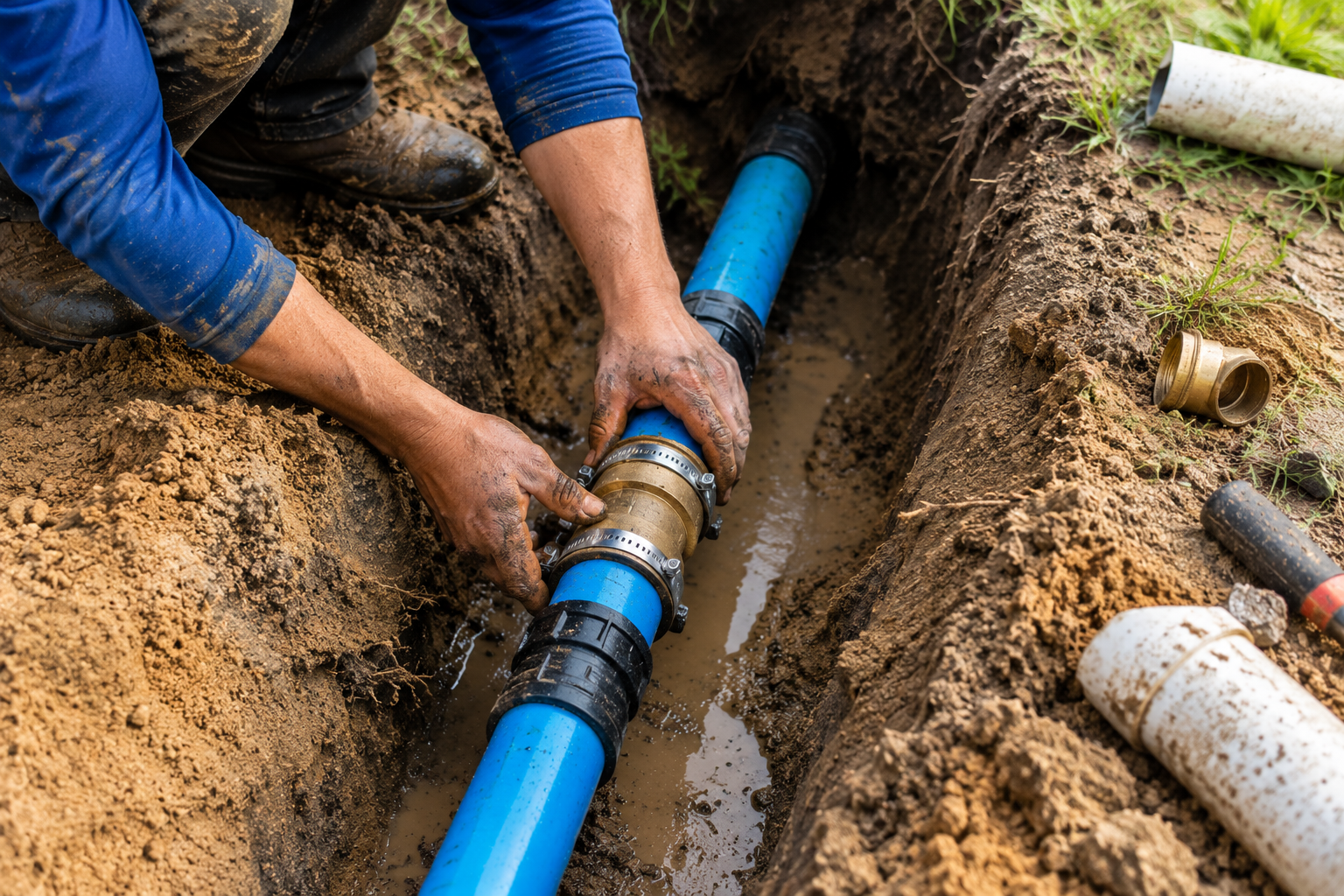
Main water line leak repair focuses on identifying where the underground service line is failing, determining how severe the damage has become, and deciding whether the line can be repaired locally or may require larger replacement planning.
Meter Movement Diagnosis
Continuous water meter activity may indicate hidden underground water flow even when fixtures are off.
Low Pressure Investigation
Main water line leaks can gradually reduce water pressure throughout the property.
Underground Leak Detection
Wet soil, saturated landscaping, or unexplained moisture may point toward buried service line damage.
Repair vs Replacement Planning
The right solution depends on pipe condition, leak location, accessibility, and overall system age.
Main Water Line Leaks Usually Begin Underground
The main water service line connects the municipal water supply to the home. Because the pipe runs underground, leaks can develop gradually without immediate flooding or visible plumbing damage inside the house.
In Fort Lauderdale, water service lines often pass beneath landscaping, driveways, sidewalks, patios, seawall-adjacent areas, and slab-edge foundations before entering the structure. Depending on the soil conditions and leak size, underground water loss may stay hidden for weeks or months.
Older homes, waterfront properties, and neighborhoods east of Federal Highway may contain aging underground water lines exposed to decades of moisture, corrosion, soil shifting, and coastal environmental conditions.
Signs the Main Water Line May Be Leaking
Main water line leaks often create subtle symptoms at first. Some homeowners notice water pressure changes, while others discover unusually wet landscaping or unexpected increases in monthly water usage.
The exact symptoms usually depend on the size of the leak, the pipe material, and where the underground failure occurs along the service line.
Main Water Line Leak Repair Starts With Confirming the Source
Before repair planning begins, it is important to confirm whether the underground leak actually involves the main service line or another plumbing system tied to the property. Some irrigation leaks, branch piping failures, or slab-adjacent leaks may initially appear similar.
Diagnosis may involve meter testing, pressure evaluation, moisture inspection, or underground leak detection to narrow the likely leak area before excavation begins.
Once the damaged section is identified, the next step depends on whether the pipe can be isolated and repaired locally or whether larger sections of aging service line should be replaced.
What Causes Main Water Line Leaks
Underground service lines remain under constant pressure while being exposed to soil movement, moisture, pipe aging, and environmental wear beneath the property.
Depending on the pipe material and installation history, underground water lines may begin developing isolated leaks or larger deterioration over time.
Older and Waterfront Properties Often Experience Different Water Line Issues
Fort Lauderdale contains a wide range of property types, including older inland neighborhoods, mid-century ranch homes, canal-front properties, and waterfront homes with aging underground infrastructure.
Homes east of Federal Highway, near the Intracoastal corridor, or inside older neighborhoods may still rely on decades-old underground service piping exposed to long-term moisture and environmental wear.
Waterfront properties may also experience shifting soil conditions and drainage patterns that affect underground plumbing stability differently than inland properties. In some homes, sections of the main service line may have already undergone prior spot repairs or partial replacement work over the years.
How Main Water Line Leaks Are Usually Investigated
The goal is to determine whether the underground service line is leaking, where the damage is located, and whether repair or replacement is the more practical long-term option.
1. Review Pressure & Water Usage Changes
Pressure loss, unexplained usage increases, and wet landscaping patterns help narrow the likely issue.
2. Monitor Meter Activity
Continuous meter movement while fixtures are off may indicate hidden underground water flow.
3. Narrow the Underground Leak Area
Moisture inspection and underground leak detection help isolate the most likely service line failure point.
4. Determine Repair or Replacement Scope
The condition of the pipe and accessibility of the damaged section help determine the best next step.
Related Fort Lauderdale Water Line Services
Main water line leak problems often overlap with underground leak detection, emergency plumbing repair, and low pressure diagnosis.
Underground Leak Detection
For hidden underground plumbing leaks causing wet soil, unexplained water loss, or pressure changes.
Emergency Leak Repair
For active underground water leaks causing rapid water loss or visible property damage.
Low Water Pressure Repair
For diagnosing pressure loss tied to underground service line leaks or plumbing restrictions.
Water Line Repair
The parent Fort Lauderdale water line resource covering underground piping, service line diagnosis, and repair planning.
Fort Lauderdale Main Water Line Leak Repair FAQs
Main water line leaks can create underground water loss long before major visible damage appears.
Can a main water line leak cause low water pressure?
Yes. Underground service line leaks may reduce pressure throughout the property depending on the size and location of the leak.
Why is my water meter moving when everything is turned off?
Continuous meter activity often points toward hidden water flow somewhere in the plumbing system, including possible underground service line leaks.
Can underground water line leaks stay hidden?
Yes. Many main water line leaks remain underground for long periods before wet soil, pressure loss, or high water bills become noticeable.
Does the entire water line always need replacement?
Not always. Some leaks can be isolated and repaired locally, while older or heavily deteriorated piping may require broader replacement planning.
Main Water Line Leak Repair in Fort Lauderdale and Broward County
Home Town Repair Experts helps connect Fort Lauderdale homeowners with plumbing help for underground service line leaks, wet soil, water pressure problems, and main water line repair concerns.
This page is especially relevant for older inland neighborhoods, waterfront homes, canal-front properties, and Broward properties with aging underground plumbing infrastructure.
You can also visit our Fort Lauderdale plumber hub or explore broader Broward County plumbing services.
Get Help With a Main Water Line Leak
Main water line leaks can gradually affect water pressure, landscaping, utility costs, and underground plumbing stability throughout the property. The next step is identifying where the underground service line is failing and determining the most practical repair approach.