
Low Water Pressure Repair in Fort Lauderdale
Low water pressure can make everyday plumbing frustrating, but the cause is not always a simple fixture problem. In Fort Lauderdale homes, weak water pressure may be connected to underground water line leaks, pipe corrosion, supply restrictions, aging plumbing systems, or hidden pressure loss somewhere within the property.
Low water pressure repair starts with identifying whether the issue affects a single fixture, part of the home, or the entire plumbing system. The goal is to diagnose the source of the restriction or pressure loss before repair work begins.
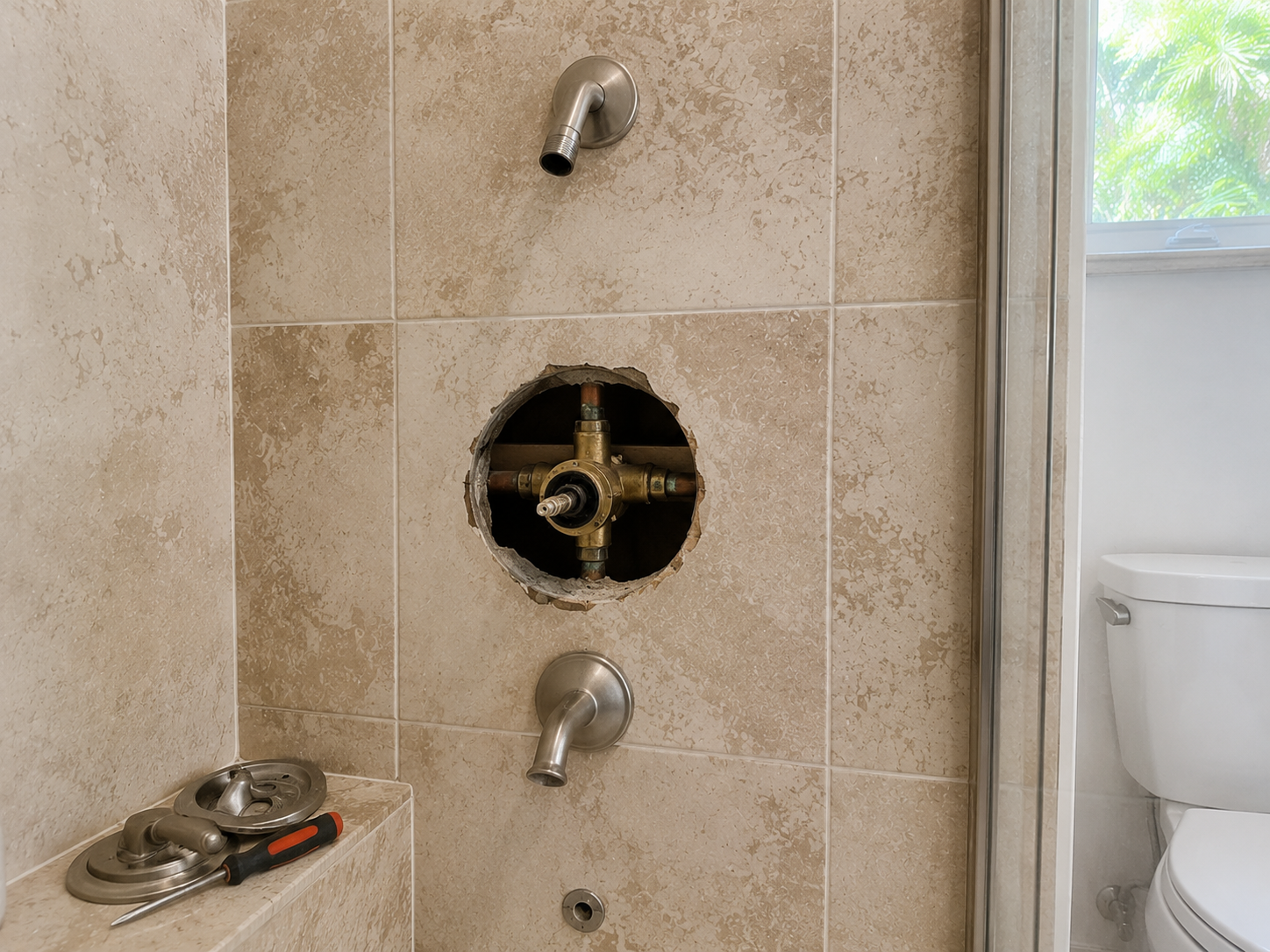
Whole-Home Pressure Loss
Low pressure throughout the property may point toward a larger water supply or underground line issue.
Pipe Restriction Diagnosis
Older plumbing systems may develop buildup, corrosion, or narrowing that reduces water flow over time.
Underground Leak Evaluation
Hidden water line leaks may create pressure loss before visible moisture appears outside.
Fixture vs System Testing
The first step is determining whether the pressure issue is isolated or affecting the broader plumbing system.
Low Water Pressure Is Not Always a Fixture Problem
Weak water pressure at a sink or shower may sometimes come from a clogged aerator or isolated fixture issue, but whole-home pressure loss usually points toward a larger plumbing condition somewhere in the water supply system.
In Fort Lauderdale homes, pressure problems may develop gradually due to aging underground water lines, hidden leaks, mineral buildup, pipe corrosion, partially closed valves, or restrictions inside older plumbing systems.
Older properties east of Federal Highway, mid-century ranch homes, waterfront houses, and neighborhoods with aging underground infrastructure may experience pressure issues differently depending on pipe material and plumbing history.
Signs the Low Water Pressure May Be System-Wide
Some pressure problems affect only one faucet, while others appear throughout the home. When pressure loss becomes widespread or inconsistent, the issue may involve the water supply system itself.
The pattern of the pressure loss often helps narrow whether the problem involves underground piping, supply restrictions, fixture-specific buildup, or larger plumbing deterioration.
Underground Water Line Leaks Can Reduce Pressure Gradually
Some low water pressure problems begin underground before homeowners notice visible plumbing damage. A leaking service line may allow water to escape continuously beneath the property, reducing available pressure inside the home over time.
If low pressure appears alongside wet landscaping, unexpected water bills, or unexplained meter movement, additional investigation may involve underground leak detection or main water line leak repair evaluation.
In other situations, older galvanized piping, partially closed valves, internal scaling, or pressure regulation problems may gradually restrict flow before the homeowner realizes the plumbing system itself is deteriorating.
What Can Cause Low Water Pressure
Water pressure problems can come from many different plumbing conditions, which is why diagnosis matters before repair recommendations are made.
Some homes experience isolated fixture restrictions, while others have broader supply-side problems affecting the entire plumbing system.
Older Coastal Plumbing Systems Often Develop Pressure Problems Differently
Fort Lauderdale properties vary widely between older inland neighborhoods, canal-front homes, waterfront properties, and newer redevelopment areas. Water pressure behavior may depend heavily on the age and condition of the plumbing infrastructure serving the property.
Homes built during the 1950s through 1970s may still contain aging galvanized piping, older underground service lines, or sections of repaired plumbing that gradually reduce water flow over time.
Coastal humidity, long-term moisture exposure, mineral buildup, and previous plumbing modifications can all contribute to pressure inconsistencies throughout the system.
How Low Water Pressure Problems Are Usually Diagnosed
The goal is determining whether the pressure loss involves a fixture issue, hidden plumbing leak, underground service line problem, or broader supply restriction inside the plumbing system.
1. Identify Which Fixtures Are Affected
Pressure behavior throughout the home helps determine whether the issue is isolated or system-wide.
2. Check for Hidden Water Loss
Meter activity, wet soil, or unusual water usage may point toward underground pressure loss.
3. Evaluate Plumbing Restrictions
Older piping, corrosion, buildup, or pressure regulator problems may restrict water flow inside the system.
4. Determine the Appropriate Repair Path
The next step depends on whether the problem involves fixture repair, underground leak repair, or larger piping replacement.
Related Fort Lauderdale Water Line Services
Low water pressure problems often overlap with underground leak detection, water line repair, and hidden plumbing leaks.
Underground Leak Detection
For hidden underground plumbing leaks causing water loss, wet soil, or unexplained pressure changes.
Main Water Line Leak Repair
For underground service line leaks affecting water pressure throughout the property.
Pipe Leak Repair
For hidden plumbing leaks, interior pressure loss, and deteriorating water supply piping.
Water Line Repair
The parent Fort Lauderdale water line resource covering underground plumbing leaks, service line problems, and water pressure issues.
Fort Lauderdale Low Water Pressure Repair FAQs
Low water pressure can come from several different plumbing conditions, not just clogged fixtures.
Can low water pressure mean there is a hidden leak?
Yes. Underground water line leaks and hidden plumbing leaks may reduce pressure gradually before visible water damage appears.
Why is the pressure weak throughout the house?
Whole-home pressure loss may point toward a supply-side issue such as underground service line damage, pressure regulator problems, or older pipe restrictions.
Can old pipes reduce water pressure?
Yes. Older galvanized or corroded pipes may narrow internally over time, restricting water flow throughout the plumbing system.
Is low pressure always caused by the city water supply?
No. Many low water pressure problems originate inside the home's own plumbing system or underground service line.
Low Water Pressure Repair in Fort Lauderdale and Broward County
Home Town Repair Experts helps connect Fort Lauderdale homeowners with plumbing help for weak water pressure, underground leaks, water supply restrictions, and hidden plumbing pressure loss problems.
This page is especially relevant for older inland neighborhoods, waterfront homes, canal-front properties, and Broward homes with aging plumbing infrastructure or underground service line issues.
You can also visit our Fort Lauderdale plumber hub or explore broader Broward County plumbing services.
Get Help With Low Water Pressure Problems
Low water pressure may be connected to underground leaks, aging plumbing systems, hidden restrictions, or water supply issues affecting the property. The next step is identifying where the pressure loss is occurring before deciding on the right repair approach.