
Ceiling Leak Between Units in Fort Lauderdale
A ceiling leak between condo units can be difficult to trace because the visible stain is not always directly below the source. Water may travel through shared walls, floor penetrations, drain lines, shower plumbing, or mechanical areas before appearing in the unit below.
In Fort Lauderdale condo buildings, ceiling leaks often require careful diagnosis, upstairs access coordination, HOA communication, and an understanding of how water moves through stacked plumbing systems.
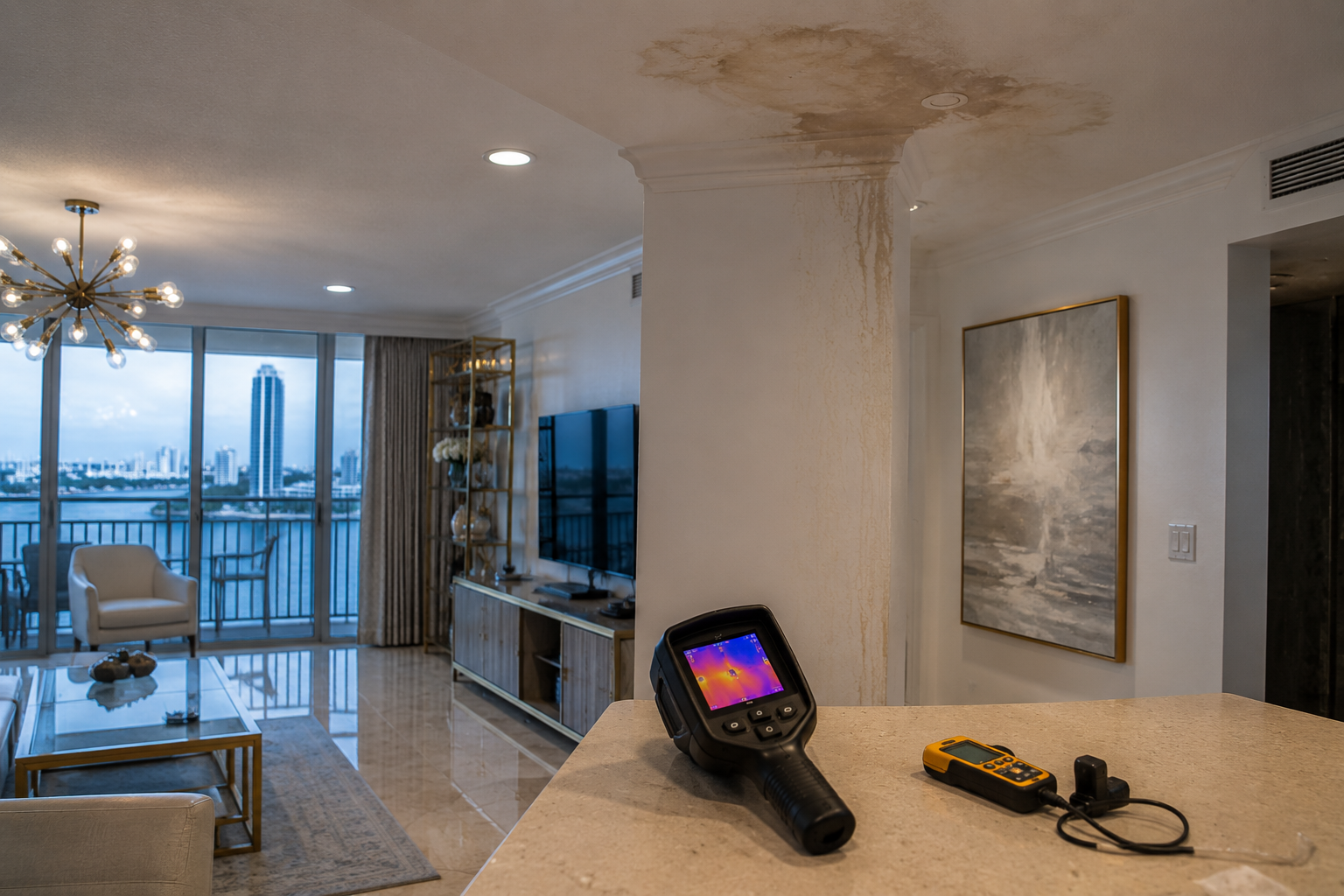
Ceiling Stain Diagnosis
Water marks, bubbling paint, and damp drywall may point to plumbing activity above or nearby.
Leak Migration Clues
Water can travel through floor openings, shared walls, and pipe chases before showing up below.
Upstairs Access Issues
Some ceiling leaks require access to the unit above before the source can be confirmed.
Condo Coordination
HOA, property manager, or building maintenance coordination may be part of the process.
Why Ceiling Leaks Between Condo Units Are Hard to Diagnose
Water appearing on a condo ceiling does not always mean the leak started directly overhead. In a Fort Lauderdale condo building, water may move from a shower, toilet, supply line, drain connection, water heater area, or shared plumbing wall before it finally becomes visible below.
High-rise and multi-unit buildings near Downtown Fort Lauderdale, Las Olas, Central Beach, Galt Ocean Mile, and east-side condo corridors often contain stacked bathrooms, shared drain stacks, vertical risers, and tight mechanical spaces. Those systems can make a ceiling leak look simple when the actual source is several feet away.
A ceiling stain should be treated as the starting point for diagnosis, not proof of the source. The real question is where the water entered the structure, how it traveled, and which plumbing system was active when the moisture appeared.
Signs the Leak May Be Coming From Another Unit
Ceiling leaks between units often begin as small marks or soft drywall before turning into active dripping. The timing of the leak can matter as much as the location.
If moisture appears after the upstairs shower, toilet, laundry, or kitchen plumbing is used, the leak may involve plumbing in the unit above or a shared building system between the two spaces.
The Visible Ceiling Damage May Not Show Where the Leak Started
Water usually follows the easiest path available. It can run along pipes, framing, slab penetrations, ceiling cavities, or shared walls before collecting at a low point. That low point is where the ceiling stain appears, but it may not be where the plumbing failed.
Ceiling leak diagnosis may involve moisture readings, controlled fixture testing, access panel checks, visual inspection, and coordination with the upstairs resident. If the source is not clear, condo leak detection may help narrow the problem before unnecessary ceiling demolition.
In some Fort Lauderdale buildings, the issue may also involve shared plumbing infrastructure rather than either individual unit alone. That is why HOA or property manager communication can become important when the leak appears to cross unit boundaries.
What Can Cause a Ceiling Leak Between Condo Units
A ceiling leak between units can come from several plumbing systems. The right repair depends on whether the water is tied to supply pressure, fixture use, drain flow, waterproofing failure, or a shared vertical plumbing line.
The same ceiling stain may have very different causes depending on the building layout and what plumbing sits above or beside the affected area.
Fort Lauderdale Condo Towers Make Leak Access More Complicated
Condo buildings along Galt Ocean Mile, Las Olas, Central Beach, Downtown Fort Lauderdale, and the A1A corridor often have stacked plumbing layouts where kitchens, bathrooms, and utility closets repeat from floor to floor.
That layout can help narrow the likely source, but it also creates access challenges. The affected resident may see the ceiling leak, while the actual test area may be inside the unit above, inside a shared wall, or behind a building-maintained access point.
Coastal humidity, older building infrastructure, tight mechanical rooms, and past renovations can add to the confusion. A renovated condo interior may still connect to older shared plumbing systems behind the walls or above the ceiling.
How Ceiling Leaks Between Units Are Usually Investigated
The goal is to confirm where the water begins, how it travels, and whether the issue involves a private unit line or shared building plumbing.
1. Review the Ceiling Pattern
The stain location, moisture spread, and nearby plumbing layout help identify possible source areas.
2. Check What Is Above or Nearby
Bathrooms, kitchens, laundry areas, water heaters, and shared plumbing walls are reviewed based on the building stack.
3. Coordinate Upstairs Access
If the likely source is above, the upstairs unit or property manager may need to help with controlled testing.
4. Confirm Before Opening Ceilings
The source should be narrowed as much as possible before drywall removal or repair decisions are made.
Related Fort Lauderdale Condo Leak Services
Ceiling leaks between units often overlap with condo leak detection, high-rise plumbing leak detection, emergency condo plumbing, and ceiling leak diagnosis.
Condo Leak Detection
For hidden water movement inside condo units, shared walls, utility closets, and multi-unit plumbing areas.
High-Rise Plumbing Leak Detection
For vertical leak migration, shared riser issues, and plumbing leaks that travel through high-rise buildings.
Ceiling Leak Detection
For ceiling stains, overhead moisture, and plumbing leaks that appear above living spaces.
Emergency Condo Plumbing
For active water movement, ceiling dripping, shutoff needs, or urgent condo plumbing coordination.
Fort Lauderdale Ceiling Leak Between Units FAQs
Ceiling leaks between condo units can be difficult because the source may not be directly above the visible stain.
Does a ceiling leak always come from the condo directly above?
No. It may come from the unit above, but water can also travel from a nearby shared wall, pipe chase, drain stack, water heater area, or plumbing penetration before appearing below.
Do I need access to the upstairs unit?
Sometimes. If the likely source is connected to the upstairs bathroom, kitchen, laundry area, or utility closet, access may be needed for controlled testing.
Should I cut open the ceiling right away?
Not always. It is usually better to narrow the likely source first so ceiling openings are made only where they are actually useful.
Can the HOA or property manager be involved?
Yes. If the leak may involve shared building plumbing, access coordination, or another unit, the HOA or property manager may need to help coordinate the investigation.
Ceiling Leak Help for Fort Lauderdale Condo Buildings
Home Town Repair Experts helps connect Fort Lauderdale condo residents with plumbing help for ceiling leaks, inter-unit water migration, hidden moisture, and condo leak diagnosis.
This page is especially relevant for condo buildings near Downtown Fort Lauderdale, Las Olas, Central Beach, Galt Ocean Mile, Harbor Beach, Flagler Village, and east-side Broward condo corridors.
You can also visit our Fort Lauderdale plumber hub or explore broader Broward County plumbing services.
Get Help With a Ceiling Leak Between Condo Units
If water is appearing through your condo ceiling, the next step is identifying where the leak is actually starting. Ceiling leaks between units need careful diagnosis, access coordination, and a clear understanding of how water may be traveling through the building.