
High-Rise Plumbing Leak Detection in Fort Lauderdale
Water showing up in a condo ceiling does not always mean the leak started directly overhead. In Fort Lauderdale high-rise buildings, plumbing leaks can travel through shared walls, drain stacks, pipe chases, mechanical closets, and multiple floors before becoming visible inside a unit.
High-rise plumbing leak detection focuses on finding the actual source of hidden water movement, not just the final stain. That may involve supply piping, drain lines, shared risers, water heater areas, shower plumbing, building shutoffs, and coordinated access between units.
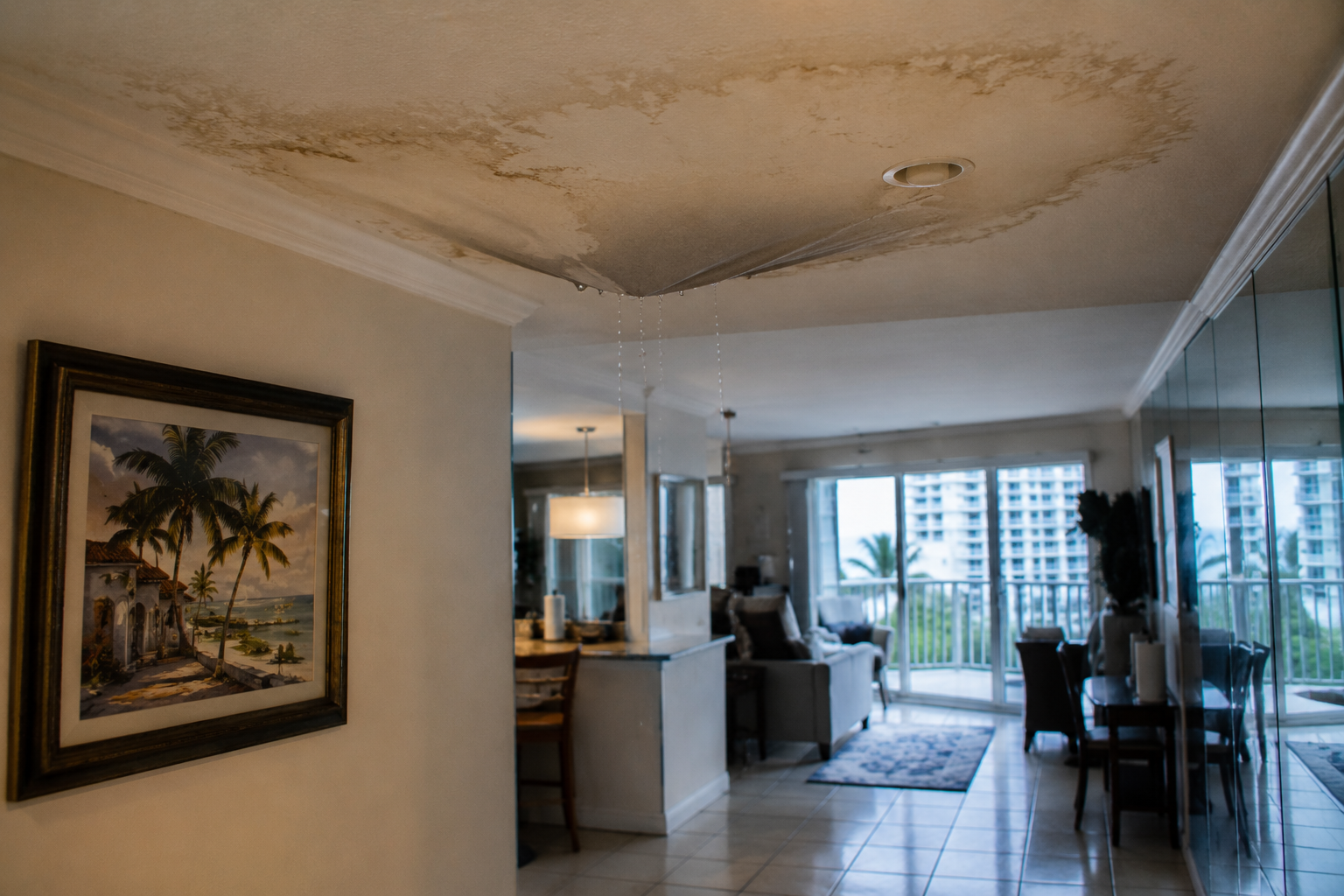
Ceiling Leak Clues
Ceiling stains, bubbling paint, and damp drywall may be the final stop of a leak that began elsewhere.
Shared Stack Issues
Vertical plumbing stacks and shared risers can move water between units before damage is visible.
Access Coordination
High-rise leak tracing may require unit access, shutoff timing, and property manager coordination.
Source-Focused Diagnosis
The goal is to identify where the leak starts before unnecessary ceiling or wall openings are made.
Why High-Rise Plumbing Leaks Are Hard to Trace
A leak inside a high-rise condo rarely behaves like a simple drip under a sink. Water may begin in one unit, move along a pipe chase, follow a concrete penetration, collect near a shared wall, and then appear in a ceiling several feet away from the actual plumbing source.
In Fort Lauderdale condo towers near Downtown, Las Olas, Galt Ocean Mile, Central Beach, and the A1A corridor, plumbing systems often include stacked bathrooms, shared drain lines, water heater closets, vertical risers, and building shutoffs that require coordination before testing or repair work can begin.
That is why visible moisture should be treated as a symptom, not the full diagnosis. A ceiling stain may point toward an upper unit, but it may also involve a nearby shower valve, drain connection, mechanical closet, toilet seal, shared plumbing wall, or vertical stack running through the building.
Signs a Condo Leak May Be Moving Between Units
In a high-rise building, the first visible sign is often not where the leak began. A small ceiling mark, damp corner, or wet mechanical closet can point to plumbing activity above, beside, or behind the affected unit.
The concern becomes stronger when moisture appears near shared plumbing walls, stacked bathrooms, laundry areas, water heater closets, or ceilings below another unit’s kitchen, shower, or utility space.
High-Rise Leak Detection Is About Following the Water Path
Effective high-rise leak detection starts by separating visible damage from likely source areas. The ceiling stain matters, but the diagnostic work usually looks at what plumbing is stacked above it, which shared walls contain piping, whether a mechanical closet is nearby, and whether the moisture changes during fixture use.
Moisture readings, visual inspection, controlled fixture testing, access panel checks, and building-side coordination may all be part of the process. In some cases, the leak may only appear when a shower runs, a toilet is flushed, a water heater cycles, or a drain line carries water from a unit above.
Fort Lauderdale high-rise buildings add another layer because access may depend on neighboring residents, HOA rules, property management availability, and building shutoff procedures. That coordination is often just as important as the plumbing diagnosis itself.
Common Sources Behind High-Rise Condo Leaks
A high-rise plumbing leak can come from several different systems. The right next step depends on whether the moisture is tied to water supply piping, drainage, fixture use, water heater equipment, or shared building infrastructure.
When water appears between units, condo leak detection may help narrow the source before ceilings, walls, or cabinetry are opened unnecessarily.
Condo Plumbing Is Different in Downtown, Beachside, and Galt Ocean Mile Buildings
Fort Lauderdale has a wide mix of high-rise and multi-unit buildings, from downtown condo towers near Las Olas and the New River to beachside buildings along A1A and Galt Ocean Mile. These properties often rely on shared plumbing stacks, vertical risers, mechanical closets, and access routes that are very different from single-family plumbing systems.
Coastal humidity, salt air exposure, older building infrastructure, repeated renovations, and tight mechanical spaces may make leak tracing more complicated. A newer interior finish does not always mean the plumbing behind the wall or above the ceiling is new.
In some situations, residents may need to involve the HOA, property manager, or building maintenance team before testing can be completed. If multiple units are affected, or if the leak may involve a shared building system, coordination becomes part of the diagnostic process.
How High-Rise Plumbing Leak Detection Is Usually Approached
The process depends on what is visible, which units are involved, and whether the suspected source is inside the affected unit, an upper unit, or a shared plumbing area.
1. Document the Visible Moisture
The ceiling stain, damp wall, flooring moisture, or utility closet water is checked first to understand where the problem is appearing.
2. Identify Stacked Plumbing Areas
Bathrooms, kitchens, laundry areas, water heaters, and shared walls above or beside the affected area are reviewed for likely leak paths.
3. Coordinate Access When Needed
Neighboring units, building maintenance, or the HOA may need to provide access before controlled testing or shutoff checks can happen.
4. Confirm the Source Before Repair
The goal is to determine whether the issue involves a fixture, supply line, drain stack, water heater, shared riser, or building-side system.
Related Fort Lauderdale Condo Plumbing Services
High-rise leak detection often overlaps with other condo plumbing services, especially when water is moving between units, appearing in ceilings, or tied to shared plumbing access.
Condo Leak Detection
For moisture inside condo units, shared walls, utility closets, and plumbing areas where the visible leak source is unclear.
Ceiling Leak Detection
For ceiling stains, bubbling drywall, and overhead water damage that may involve plumbing above or nearby.
Emergency Condo Plumbing
For active leaks, water spreading between units, shutoff concerns, or urgent coordination inside multi-unit buildings.
Condo Plumbing
The parent condo plumbing resource for Fort Lauderdale shared stacks, unit access, leak issues, and building plumbing concerns.
Fort Lauderdale High-Rise Plumbing Leak Detection FAQs
Condo leaks can be confusing because the water often appears far from where the plumbing issue begins.
Does a ceiling leak always come from the unit directly above?
No. A ceiling leak may come from the unit above, but water can also travel from a nearby shared wall, plumbing chase, drain stack, water heater closet, or fixture before appearing below.
Why are high-rise condo leaks hard to diagnose?
High-rise buildings often have stacked plumbing systems, shared drain lines, vertical risers, limited access points, and HOA coordination requirements. The visible damage may not identify the true source.
Will the HOA need to be involved?
Sometimes. If access is needed to another unit, a shared plumbing wall, a building shutoff, or a common plumbing system, the property manager or HOA may need to help coordinate the investigation.
Can a leak travel between units before it shows up?
Yes. Water may move along pipe penetrations, framing, concrete surfaces, insulation, or wall cavities before showing up as a ceiling stain or damp wall in another unit.
High-Rise Plumbing Leak Detection in Fort Lauderdale and Broward County
Home Town Repair Experts helps connect Fort Lauderdale residents with plumbing help for high-rise leak detection, ceiling leak concerns, shared plumbing issues, and condo plumbing problems that require careful diagnosis.
This page is especially relevant for condo towers and multi-unit buildings near Downtown Fort Lauderdale, Las Olas, Flagler Village, Central Beach, Galt Ocean Mile, A1A, the New River, and east-side Broward condo corridors.
You can also visit our Fort Lauderdale plumber hub or view broader Broward County plumbing services.
Get Help With a High-Rise Condo Plumbing Leak
If water is appearing through a ceiling, near a shared wall, around a condo utility closet, or between units, the next step is to identify where the leak is actually starting. High-rise plumbing problems need calm diagnosis, access coordination, and a clear plan before repair decisions are made.