
Lighthouse Point Emergency Leak Repair
When water is actively spreading across flooring, dripping through a ceiling, soaking drywall, or collecting near cabinets and baseboards, the first priority is containment. A shutoff may reduce additional damage while the source is narrowed and the right repair path is identified.
Lighthouse Point emergency leak repair is especially important in waterfront homes with finished interiors, slab foundations, remodeled rooms, garage or utility-area plumbing, and buried water lines that may make the visible symptom difficult to trace.
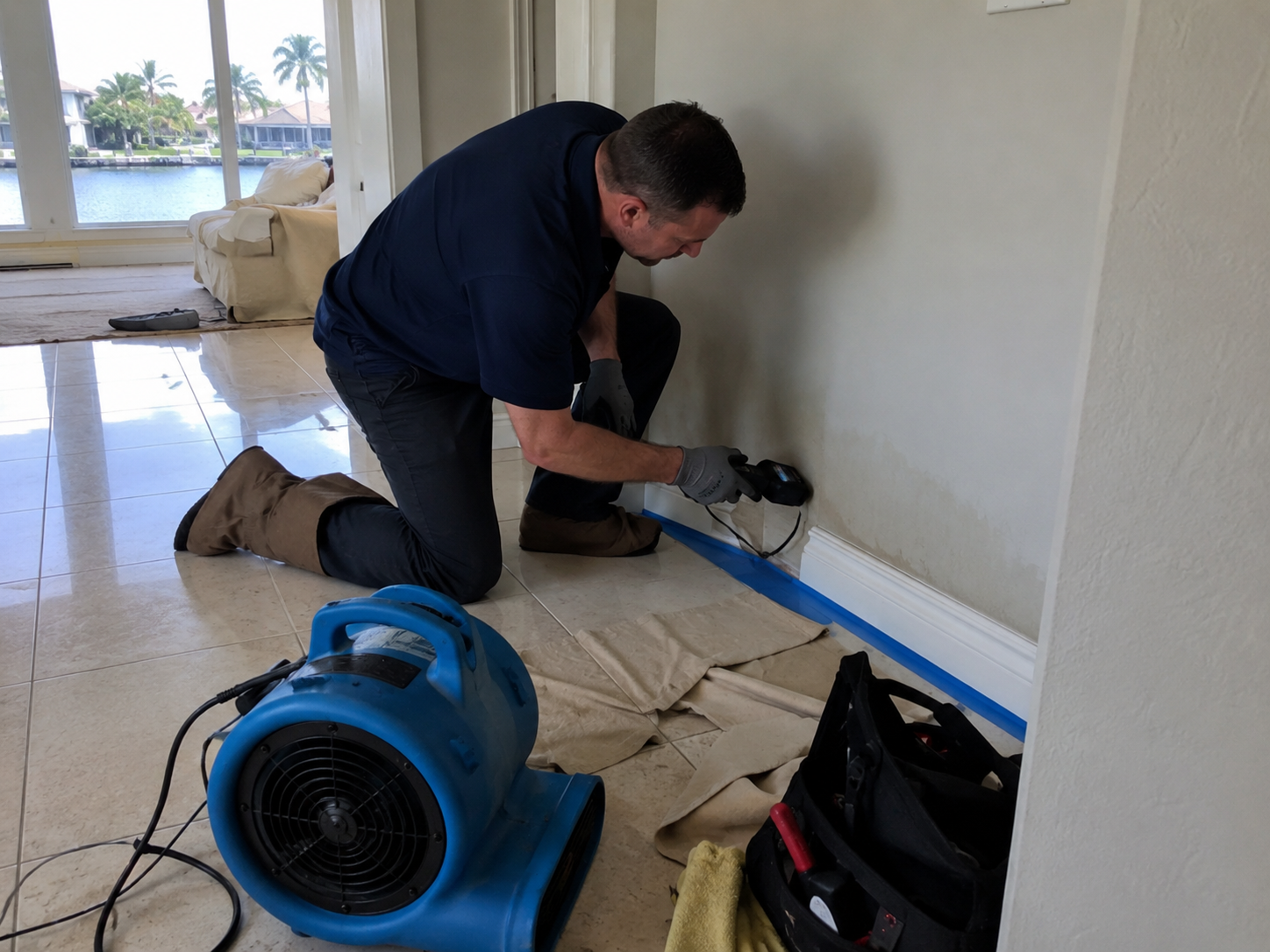
Water Is Spreading
Moisture moving across flooring or into walls may continue causing damage until the active flow is contained.
Ceiling Is Dripping
A ceiling stain or active drip may come from plumbing above, but the visible spot does not always reveal the original source.
Baseboards Stay Wet
Moisture near a wall edge may have migrated from a slab area, hidden supply line, fixture connection, or nearby pipe run.
Pressure Suddenly Drops
A sharp pressure change combined with meter movement or exterior moisture may point to an active buried water-line leak.
An Active Leak Should Be Contained Before Finished Surfaces Are Opened
Water damage can spread beyond the first wet area a homeowner notices. Moisture may travel beneath flooring, move behind drywall, collect inside cabinets, follow framing, or appear through a ceiling below the original plumbing problem.
If clean water is actively escaping from a pipe, fixture connection, water heater, or suspected supply line, shutting off the appropriate water source may help reduce additional damage. The priority is limiting continued water movement while preserving as much of the surrounding home as practical.
Homeowners can also review broader Lighthouse Point emergency plumbing guidance when the immediate source is unclear or several plumbing systems may be involved.
A Few Calm Steps Can Limit Additional Interior Damage
The immediate goal is to stop water from spreading and protect the most vulnerable areas of the home. Avoid unnecessary demolition during an active leak unless the source has been identified and the repair path is clear.
If water is near electrical outlets, appliances, ceiling fixtures, or energized areas, avoid contact and prioritize safety.
Protect Items That Are Difficult to Replace or Easy to Damage
When water begins spreading through a finished room, homeowners often lose time deciding what to move first. Start with items that are vulnerable to moisture or difficult to replace: electronics, documents, rugs, upholstered furniture, wood furniture, artwork, and personal belongings stored near the floor.
Move items out of the likely water path rather than only away from the first visible wet spot. Water may continue traveling beneath flooring or along a wall line after the original stain appears.
In garages and utility areas, keep storage boxes, tools, and household items away from water-heater pans, wall edges, and low areas where water may collect. When the source appears connected to a leaking tank or utility-area fixture, a dedicated water-heater leak emergency response may be appropriate.
Contain the Flow, Narrow the Source, Then Plan the Repair
Emergency leak repair should address the immediate water movement while also creating a clear transition into the permanent diagnostic or repair path.
1. Identify Whether Water Is Still Active
Determine whether the leak is continuing to spread, whether pressure has changed, and whether shutting off the source can reduce additional damage.
2. Protect Finished Surfaces and Belongings
Move vulnerable items away from the wet area, contain drips where practical, and avoid electrical hazards or unnecessary surface removal.
3. Narrow the Plumbing Source
Evaluate whether the problem involves an interior pipe, ceiling leak, slab area, burst line, water heater, fixture connection, or underground service line.
4. Match the Repair to the Finding
The next step may involve targeted pipe repair, ceiling-leak repair, slab-leak diagnosis, water-line repair, burst-pipe repair, or further leak detection.
The Wettest Area Is Not Always Where the Plumbing Failure Began
Water follows gravity, framing, flooring seams, low areas, and the path of least resistance. A wet baseboard may be several feet away from the failing pipe. A ceiling stain may appear below a bathroom, but the source may sit along a nearby pipe run rather than directly overhead.
That is why immediate repair and leak detection often work together. Once the active flow is contained, the next objective is narrowing the source before walls, floors, ceilings, tile, cabinetry, or other finished surfaces are disturbed.
This matters in Lighthouse Point homes with remodeled rooms, finished flooring, slab foundations, and carefully maintained interiors where unnecessary demolition creates additional cost and disruption.
The Symptom Pattern Helps Determine Which Plumbing System Needs Attention
A pipe leak behind a wall may create damp drywall, bubbling paint, or moisture near a cabinet. A slab leak may show up through warm flooring, damp tile, unexplained water use, or wet baseboards. A buried service-line leak may appear outside as yard moisture, meter movement, or low pressure across several fixtures.
These symptoms can overlap. A water meter that keeps moving while fixtures are off confirms that hidden water use may exist, but it does not identify the source by itself. The investigation should consider whether the strongest evidence sits inside the home, beneath the slab, or along the exterior supply path.
When the strongest clues involve finished flooring or warm slab areas, slab leak detection may be the appropriate next step. When pressure loss and repeat yard moisture point outside, water-line repair may become more relevant.
Water Coming Through a Ceiling May Have Traveled Before It Became Visible
A ceiling stain or active drip can be alarming, especially when it appears below a bathroom, laundry area, second-floor plumbing run, or mechanical space. The visible water spot does not always sit directly beneath the failing connection.
Water may move along framing, collect at a low point, or spread behind drywall before it drips into the room below. Opening the ceiling immediately without narrowing the likely source can create unnecessary damage while still missing the actual problem.
A dedicated ceiling-leak repair response helps focus the investigation when water is appearing overhead or spreading through ceiling materials.
The Right Permanent Repair Depends on Where the Water Is Coming From
Emergency containment solves the immediate problem. The next service should match the plumbing source so the same water damage does not return.
Lighthouse Point Burst-Pipe Repair
Burst-pipe repair is appropriate when a damaged water line is releasing water rapidly and the immediate priority is shutting down the active flow.
Lighthouse Point Ceiling-Leak Repair
Ceiling-leak repair helps trace water appearing overhead, identify the likely plumbing source, and limit unnecessary ceiling damage.
Lighthouse Point Water-Heater Leak Emergency
Water-heater leak response is appropriate when a tank, connection, drain pan, garage unit, or utility-area installation is actively releasing water.
Lighthouse Point Leak Detection
Leak detection helps narrow a hidden source when visible water does not clearly reveal which pipe, connection, slab area, or service line is involved.
Lighthouse Point Slab Leak Detection
Slab-leak detection may be appropriate when moisture appears beneath finished floors, baseboards remain wet, or warm slab areas suggest hidden water movement below the foundation.
Lighthouse Point Water-Line Repair
Water-line repair may be the permanent path when diagnosis confirms a buried supply-line leak tied to pressure loss, meter movement, or exterior moisture.
Finished Interiors and Exterior Water Symptoms Can Overlap
Lighthouse Point homes may show interior and exterior water symptoms at the same time. A wet side yard could involve irrigation, rainfall, saturated soil, high groundwater, or a buried supply-line issue. Damp flooring inside the home could involve beneath-slab water movement, an interior pipe leak, or water traveling from another area.
Canal-front properties may also have landscaping, patios, narrow side yards, seawall-adjacent areas, driveways, docks, and finished outdoor spaces that affect the least disruptive repair route.
The goal is not to assume that every visible wet area has the same cause. The goal is to contain active water loss, trace the most likely source, and protect the property while the permanent repair is planned.
Homeowners Should Understand Why a Specific Repair Path Is Recommended
Emergency plumbing should not rely on vague urgency. Homeowners should understand whether the leak appears to involve a fixture connection, wall pipe, ceiling line, slab area, water heater, burst pipe, or underground service line.
Experienced technicians, fully stocked service vehicles, modern diagnostic equipment, and transparent upfront pricing help make the response more practical. The objective is to reduce water damage, explain the likely source clearly, and avoid opening more of the property than necessary.
Once the immediate water movement is controlled, the permanent solution should follow the actual plumbing finding rather than the first visible wet spot.
Common Questions During an Active Plumbing Leak
The first few decisions can reduce additional damage and help narrow whether the source is inside the wall, beneath the slab, overhead, or along the buried supply path.
Should I shut off the water during an active plumbing leak?
Shutoff may help when clean water is actively escaping from a pipe, fixture connection, water heater, or suspected supply line. If the source is unclear and water is spreading, turning off the appropriate water source can reduce additional damage while the leak is evaluated.
What should I move first when water is spreading through a room?
Start with electronics, documents, rugs, upholstered furniture, wood furniture, artwork, and personal items stored near the floor. Move belongings beyond the visible wet spot because water may continue traveling beneath flooring or along a wall line.
Why is the baseboard wet if the leak is hidden?
Water may migrate beneath flooring, follow framing, or move behind drywall before it becomes visible. A wet baseboard can be the endpoint of the moisture path rather than the location where the pipe failed.
Should walls or ceilings be opened immediately?
Not automatically. When the source is unclear, leak detection can help narrow the likely area first. This may reduce unnecessary demolition and help focus the repair on the plumbing component most likely involved.
How do I know whether the problem is a slab leak?
Warm flooring, damp tile, wet baseboards, rising water bills, and meter movement while fixtures are off may justify slab-leak detection. These symptoms should be evaluated together before beneath-floor repair work begins.
When does an exterior leak become an emergency?
An exterior water-line problem becomes more urgent when pressure drops suddenly, the meter moves continuously, soil begins washing out, water spreads toward the home, or an active buried supply-line failure is suspected.
Emergency Leak Repair Across Lighthouse Point and Eastern Broward County
Emergency leak-repair help is available for Lighthouse Point homeowners dealing with active water leaks, wet flooring, damp baseboards, ceiling drips, burst pipes, water-heater leaks, pressure loss, and hidden moisture spreading through finished surfaces.
Local coverage includes Venetian Isles, Coral Key Villas, Coral Key Harbor, Lighthouse Point Estates, Lighthouse Manor, Lake Placid, Lake Placid Isles, homes near Federal Highway, properties near Sample Road, neighborhoods near NE 39th Street, and waterfront areas close to the Intracoastal Waterway.
You can also review Lighthouse Point emergency plumbing, explore Lighthouse Point leak detection, or view broader Broward County plumbing services.
Get Help Stopping Active Water Before Interior Damage Spreads
If water is moving across flooring, soaking drywall, dripping through a ceiling, or spreading near cabinets and baseboards, the next step is containing the active leak and identifying the source before more finished surfaces are affected.