
Lighthouse Point Water Line Repair
A wet yard area, rising water bill, or noticeable drop in household pressure may point to a buried water-service problem, but the visible symptom does not always reveal the source. Irrigation, drainage, saturated soil, and canal-adjacent yard conditions can create similar exterior moisture patterns.
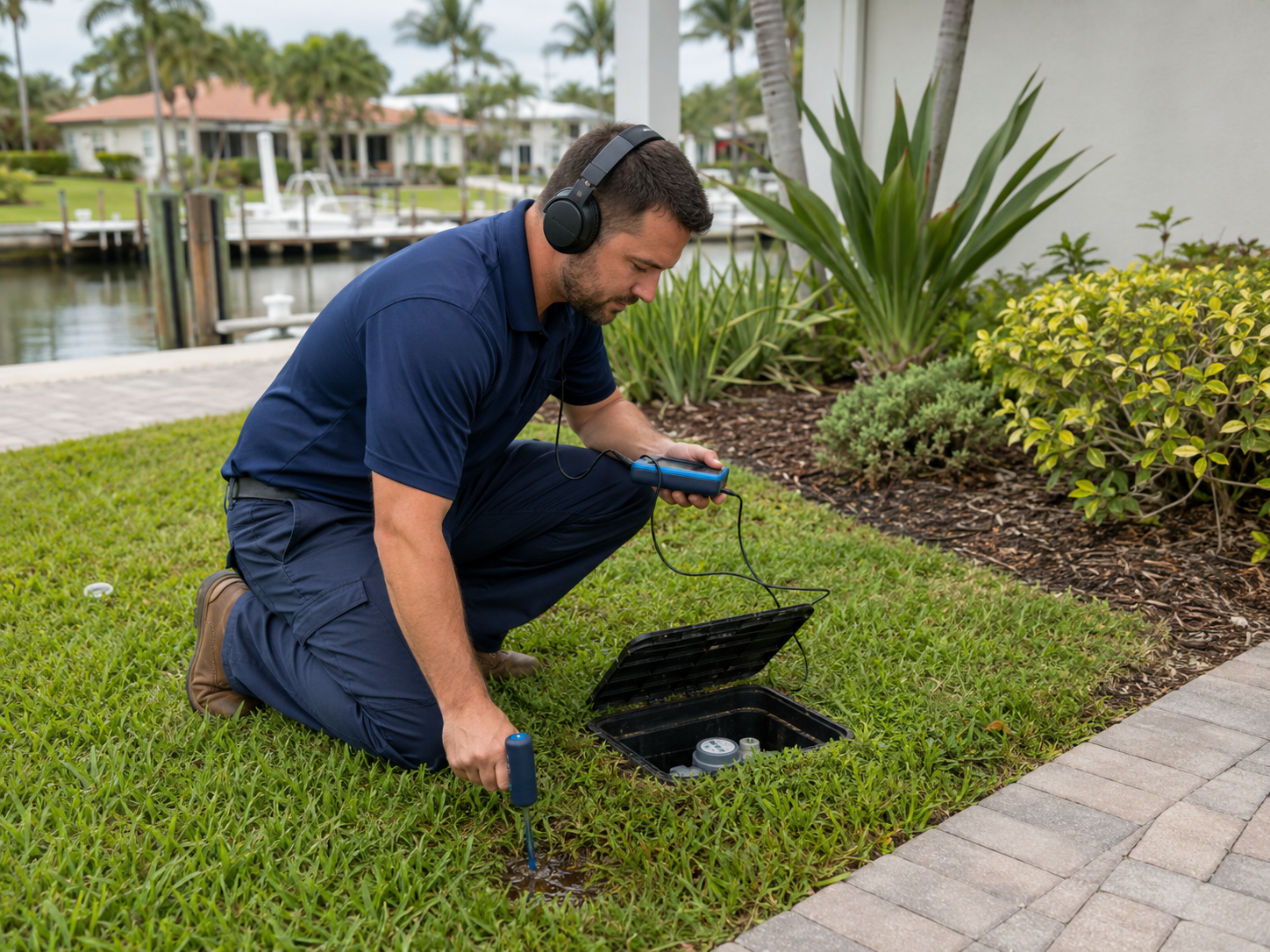
Lighthouse Point water-line repair should begin with leak confirmation and careful tracing. The goal is to determine whether the underground supply line is actually losing water before landscaping, driveway edges, side yards, or finished outdoor areas are disturbed.
Low Water Pressure
Pressure dropping across several fixtures may point to water loss, a valve issue, or a restriction along the supply path.
Wet Yard Areas
Repeat moisture near landscaping or a driveway edge may justify a closer look at the buried water-service line.
Meter Movement
A water meter that continues moving while fixtures are off may indicate hidden water loss somewhere on the property.
Rising Water Bills
Unexpected usage can be an early warning sign even before an underground leak becomes obvious at the surface.
A Water-Line Repair Should Start With Evidence, Not Assumptions
The water-service line carries water from the meter toward the home. When that buried line begins leaking, the first symptom may be subtle: a pressure change, a water bill that no longer matches normal household use, a narrow wet strip in the lawn, or soil that remains soft after nearby areas dry out.
Exterior symptoms can be misleading. A damp section of yard may involve sprinklers, drainage, recent rainfall, saturated soil, or a plumbing leak. Around canal-front homes, high groundwater conditions and seawall-adjacent moisture can make the visual overlap even harder to interpret.
That is why repair planning should follow diagnosis. Homeowners with broader hidden-water concerns can also review Lighthouse Point leak detection before deciding which part of the property needs closer evaluation.
Match the Repair Path to the Supply-Line Problem
Water-line symptoms can overlap, but the next step depends on whether the strongest clue is an active leak, a pressure concern, a buried service-line failure, or unexplained exterior water movement.
Lighthouse Point Main Water-Line Leak
Main water-line leak evaluation may be appropriate when meter movement, wet-yard symptoms, rising bills, or a sudden pressure change point toward active water loss along the buried supply path.
Lighthouse Point Low Water-Pressure Repair
Low-pressure investigation helps separate a possible underground leak from valve issues, fixture-specific restrictions, supply concerns, and other causes of reduced household flow.
Lighthouse Point Underground Water-Service Repair
Underground water-service repair may be needed when diagnosis confirms a failing buried line between the meter and the home.
Lighthouse Point Underground Leak Detection
Underground leak detection helps distinguish plumbing water loss from irrigation, drainage, saturated soil, and wet-season exterior moisture.
Lighthouse Point Emergency Leak Repair
Emergency leak help is appropriate when water loss is active, pressure drops suddenly, a shutoff is needed, or continued leakage could worsen property damage.
Water-Line Problems Often Show Up Through More Than One Symptom
One damp patch does not automatically confirm a broken supply line. The strongest diagnosis comes from looking at the pattern: where moisture appears, whether it returns during dry weather, how the meter behaves, and whether household pressure has changed.
When the clues point toward buried water loss, underground leak detection can help narrow the source before repair access is planned.
Canal-Front Properties Can Make a Buried Water Leak Harder to Confirm
Lighthouse Point yards can hold moisture for several reasons. Heavy summer rain, irrigation cycles, tropical landscaping, drainage patterns, high groundwater, and seawall-adjacent areas may all affect what a homeowner sees outside.
Those conditions do not automatically mean the buried water line is healthy, and they do not automatically mean it has failed. They simply make surface-level assumptions less reliable. A wet patch that returns during dry weather becomes more meaningful when the water meter also moves unexpectedly or household pressure changes.
Properties near Venetian Isles, Coral Key Harbor, Lighthouse Point Estates, Lake Placid Isles, and the Intracoastal corridor may also have different pipe routes and access limitations depending on driveways, side yards, patios, seawalls, and existing landscaping.
Confirm the Leak, Narrow the Route, Then Plan the Repair
A buried service-line repair should follow a logical diagnostic sequence so homeowners understand why excavation is being recommended and where access may be needed.
1. Review the Symptom Pattern
Start with pressure changes, meter movement, rising bills, repeat yard moisture, irrigation timing, and recent weather conditions.
2. Separate Plumbing Loss From Yard Conditions
Determine whether the wet area is more consistent with irrigation, drainage, saturated soil, high groundwater, or a buried supply-line leak.
3. Narrow the Likely Pipe Route
Review the relationship between the meter, the home, driveways, landscaping, side yards, and access-sensitive areas before opening the property.
4. Match the Repair to the Confirmed Problem
The repair may involve a targeted buried-line fix, a larger service-line replacement, valve work, emergency containment, or another solution based on the actual finding.
Reduced Household Flow Can Have More Than One Possible Cause
Low water pressure may point toward a buried service-line leak, but it can also involve valve issues, fixture restrictions, supply concerns, or another plumbing condition. The pattern helps determine where the investigation should begin.
Pressure loss across several fixtures is more meaningful than one slow faucet. When low pressure appears alongside meter movement, rising bills, or yard moisture, the possibility of underground water loss becomes more important to investigate.
A dedicated low water-pressure repair evaluation can help separate a service-line concern from other causes before a buried-line repair is planned.
Meter Movement Confirms Water Use, but It Does Not Identify the Source by Itself
A moving water meter while fixtures are off can be an important warning sign, but it does not automatically mean the failure sits in the yard. A running fixture, beneath-slab leak, hidden interior pipe problem, irrigation issue, or underground service-line leak may all affect usage.
The strongest clues come from combining meter behavior with symptom location. Warm floors, damp tile, or wet baseboards may justify slab leak detection. Repeat moisture outside the home may point more strongly toward underground service-line tracing.
This is why repair confirmation matters before excavation. The objective is to disturb the smallest practical area while still correcting the actual plumbing problem.
Landscaping, Driveways, and Side-Yard Access Can Shape the Repair Path
Buried water-service lines may run beneath lawn areas, landscaping beds, driveway edges, walkways, or narrow side-yard spaces. In waterfront properties, the pipe route may also need to be evaluated in relation to seawall-adjacent yards, patios, docks, and other finished exterior areas.
A thoughtful repair plan considers more than the leaking pipe. It also considers how to access the line, how much disruption direct excavation may create, and whether the damaged section is isolated or part of a broader service-line problem.
Homeowners should receive a clear explanation of what the diagnostic findings suggest, why a specific access area is being considered, and whether a targeted repair or larger replacement path is more realistic.
Common Questions About Buried Water-Service Problems
Water-line symptoms can overlap with irrigation, drainage, and other hidden plumbing issues. These answers explain what homeowners should understand before excavation begins.
Does a wet yard always mean the main water line is leaking?
No. Irrigation, rainfall, drainage, saturated soil, groundwater conditions, and landscaping can all contribute to yard moisture. A repeat wet area combined with meter movement, pressure loss, or rising water bills may justify a buried-line evaluation.
Can an underground water-line leak cause low pressure?
It can. A leaking service line may reduce the amount of water reaching the home. Low pressure can also have other causes, so the symptom should be evaluated alongside meter behavior, water use, and exterior moisture patterns.
Does water-meter movement show where the leak is located?
No. Meter movement can indicate hidden water use, but it does not identify the source by itself. The leak may involve an interior fixture, a beneath-slab line, irrigation, or the exterior water-service line.
Will water-line repair require digging up the entire yard?
Not automatically. The goal of diagnosis is to narrow the likely source and pipe route before excavation begins. The repair path depends on the location, extent of the damage, and access conditions around the property.
When does a water-line leak become an emergency?
A buried water-line leak becomes more urgent when pressure drops suddenly, water loss increases, soil begins washing out, moisture spreads toward the home, or a shutoff is needed to reduce continued damage.
Water-Line Repair Across Lighthouse Point and Eastern Broward County
Water-line diagnosis and repair support is available for Lighthouse Point homeowners dealing with low pressure, wet-yard areas, water-meter movement, rising utility bills, irrigation confusion, and buried supply-line leaks.
Local coverage includes Venetian Isles, Coral Key Villas, Coral Key Harbor, Lighthouse Point Estates, Lighthouse Manor, Lake Placid, Lake Placid Isles, homes near Federal Highway, properties near Sample Road, neighborhoods near NE 39th Street, and waterfront areas close to the Intracoastal Waterway.
You can also return to the Lighthouse Point plumber hub or view broader Broward County plumbing services.
Get Help Confirming a Buried Water-Service Problem Before Excavation
If pressure has dropped, a wet-yard area keeps returning, water bills are rising, or the meter continues moving while fixtures are off, the next step is confirming the source before landscaping, driveway edges, or side-yard areas are disturbed.