
Lighthouse Point Emergency Sewer Backup Help
When sewage begins rising through a shower, tub, toilet, floor drain, or exterior cleanout, stop using plumbing fixtures throughout the home. Continued flushing, laundry use, showering, or dishwasher cycles can send more wastewater into an already restricted sewer line.
Lighthouse Point emergency sewer-backup service focuses on immediate containment, identifying whether the restriction is affecting the private lateral or a broader sewer path, and determining the right next step after the overflow is under control.
Sewage Through a Shower
Wastewater rising from a tub or shower often suggests the restriction is deeper than one fixture drain.
Several Drains Back Up
When toilets, tubs, and sinks are affected together, the private sewer lateral or main drain may be restricted.
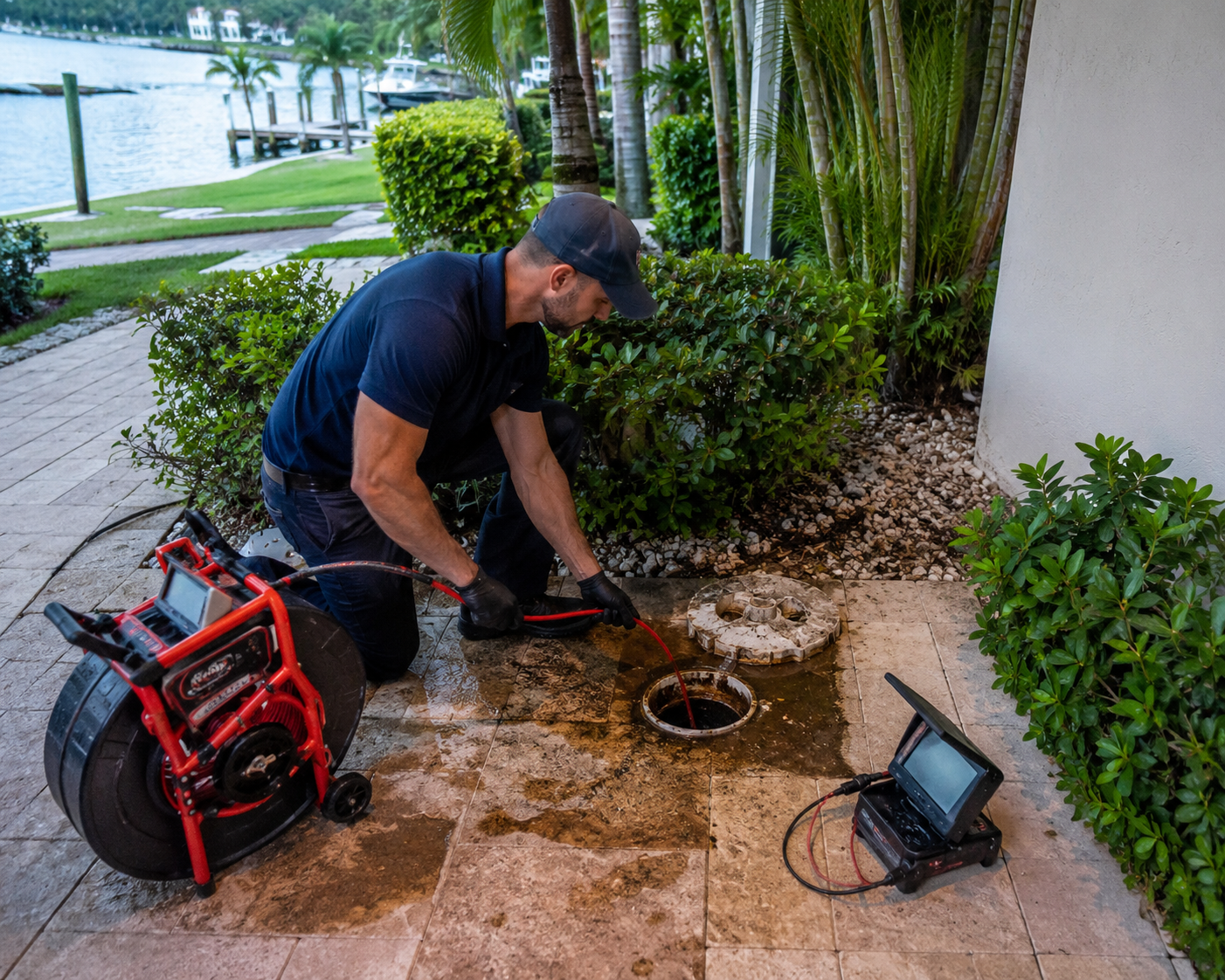
Cleanout Overflows Outside
Wastewater surfacing at an exterior cleanout means additional fixture use may worsen the overflow.
Backup Returns After Snaking
Recurring symptoms may point to buildup, roots, standing water, pipe slope, or cast iron deterioration.
The Most Important First Step Is To Stop Using Plumbing Fixtures
An emergency sewer backup behaves differently from a leaking water-supply pipe. Shutting off the household water may help prevent someone from accidentally using a fixture, but the immediate issue is wastewater that cannot move through the sewer path normally.
Do not flush toilets to test whether the backup has cleared. Avoid running sinks, showers, laundry appliances, and dishwashers. Each additional gallon sent into the system may push more wastewater toward a tub, shower, floor drain, toilet, or exterior cleanout.
If the backup is active, begin with Lighthouse Point emergency plumbing guidance and keep children and pets away from affected areas until the source can be evaluated.
Multiple Fixtures Backing Up Usually Points Beyond a Single Drain
A localized sink clog often stays limited to one fixture. A sewer backup tends to reveal itself through a broader pattern. Toilets may bubble when another fixture drains. Laundry use may cause water to rise through a shower. An exterior cleanout may overflow when several fixtures are used.
Those patterns suggest that wastewater is meeting resistance farther down the drain system. The restriction may involve buildup, roots, standing water, pipe deterioration, or another problem inside the private sewer lateral.
Calm Containment Steps Can Reduce Additional Wastewater Damage
Sewer backups are disruptive, but the immediate response does not need to be complicated. The goal is to prevent more wastewater from entering the restricted line and limit contact with contaminated areas.
Avoid attempting to clear a serious backup by repeatedly flushing toilets or running water. Do not open buried sewer access areas or remove finished flooring during an active overflow. The first priority is containment and diagnosis.
If sewage is surfacing near an exterior cleanout, review the dedicated Lighthouse Point overflowing cleanout service path for more specific guidance.
A Practical Sequence From Overflow Containment to Permanent Repair
The first visit should address the urgent wastewater problem while also identifying the inspection or repair path that may prevent the same backup from returning.
1. Stop Fixture Use Throughout the Home
Pause toilets, sinks, showers, laundry appliances, and dishwashers so additional wastewater is not pushed into the restricted drain system.
2. Identify the Backup Pattern
Determine whether the overflow affects one fixture, several drains, the exterior cleanout, or the larger sewer path serving the property.
3. Clear or Stabilize the Immediate Restriction
The first objective is restoring safe wastewater movement or reducing the overflow so the buried line can be evaluated more clearly.
4. Diagnose Why the Backup Happened
Sewer camera inspection, hydro jetting evaluation, cast iron assessment, or sewer-line repair planning may follow when recurring symptoms point to a deeper issue.
Storms May Make an Existing Sewer Restriction Harder To Ignore
A sewer backup after a summer storm can appear to be caused entirely by the weather. In practice, heavy rain may make an existing restriction more noticeable rather than create the private-lateral problem by itself.
Saturated soil, drainage pressure, high groundwater conditions, and prolonged wet periods can overlap with symptoms around waterfront homes. An older buried sewer line that was already restricted by buildup, roots, standing water, pipe slope, or cast iron deterioration may become more difficult to ignore during those conditions.
Lighthouse Point homeowners dealing with recurring storm-sensitive symptoms can also review sewer backup after heavy rain for a more focused explanation of what those patterns may reveal.
Buried Sewer Problems Can Require Property-Specific Diagnosis
Lighthouse Point homes may have private sewer laterals running beneath landscaped yards, driveway edges, narrow side access areas, patios, or other finished exterior spaces. In waterfront properties, seawall-adjacent yards and dockside layouts can add another layer of access planning.
Older ranch homes and remodeled waterfront properties may also contain partial PVC repairs tied into older cast iron piping. One repaired section does not automatically mean the rest of the lateral is free from scaling, corrosion, roots, standing water, or low areas.
Once the active overflow is under control, sewer camera inspection can help reveal the condition of the buried line before a larger repair decision is made.
Some Backup Patterns May Justify Contacting the City First
A backup limited to one home, one private yard, or one exterior cleanout often points toward the private sewer lateral. That is the buried line carrying wastewater from the home toward the municipal connection.
It may make sense to contact the city first if multiple nearby homes are affected, sewage is surfacing near the street, or the symptoms appear connected to a broader public sewer issue. This does not replace private-side diagnosis when the problem remains limited to the property.
Regardless of the likely responsibility, stop fixture use while wastewater is backing up. Continued water use may worsen the overflow before the underlying problem is identified.
The Long-Term Solution Depends on What Is Restricting the Sewer Line
Emergency clearing can restore immediate flow, but recurring sewer problems should feed into a permanent diagnostic path rather than become a cycle of repeated temporary fixes.
Lighthouse Point Sewer Camera Inspection
Camera inspection may help identify buildup, roots, cast iron scaling, standing water, bellies, pipe separation, partial repairs, and other buried conditions.
Lighthouse Point Hydro Jetting
Hydro jetting may help restore flow capacity when heavy buildup, grease, sludge, or debris continues narrowing a serviceable line after basic clearing.
Lighthouse Point Cast Iron Pipe Repair
Cast iron repair may become relevant when scaling, corrosion, rough internal surfaces, or deteriorated sections continue contributing to repeat backups.
Lighthouse Point Main-Line Backup
Main-line backup diagnosis is appropriate when several fixtures are affected and the restriction appears to sit farther down the larger sewer path.
Lighthouse Point Sewer-Line Repair
Sewer-line repair may be needed when inspection confirms structural damage, collapse, severe deterioration, separation, or a belly that cleaning alone cannot correct.
Homeowners Should Understand Both the Immediate Fix and the Underlying Cause
Emergency sewer work should not stop at restoring temporary flow. Homeowners should understand what likely caused the backup, whether the buried line needs further inspection, and what conditions may cause the problem to return.
Experienced technicians, fully stocked service vehicles, modern diagnostic equipment, and transparent upfront pricing help make the response more practical. The goal is to explain the difference between an isolated obstruction, heavy buildup, root intrusion, cast iron deterioration, standing water, and a sewer-line condition that may require repair.
That clarity matters in Lighthouse Point properties where landscaping, driveways, patios, slabs, side-yard access, docks, and seawall-adjacent spaces can all affect the least disruptive long-term repair path.
Common Questions During an Active Wastewater Backup
A sewer backup is easier to manage when the immediate containment steps are clear and the longer-term diagnosis follows a logical path.
What should I do if sewage is coming up through the shower?
Stop using toilets, sinks, showers, laundry appliances, and dishwashers throughout the home. Wastewater rising through the shower often suggests a restriction farther down the drain system, and continued fixture use may worsen the overflow.
Why are several drains backing up at the same time?
Multiple affected fixtures often point beyond a localized clog. The private sewer lateral or main drain may be restricted by buildup, roots, standing water, deterioration, or another buried condition.
Does an overflowing cleanout mean the sewer line is broken?
Not automatically. A cleanout overflow suggests wastewater is meeting resistance downstream from that point. The cause may involve buildup, roots, standing water, cast iron deterioration, or structural damage that needs further inspection.
Can heavy rain cause a sewer backup?
Heavy rain does not automatically cause a private sewer failure, but it may make an existing restriction more noticeable. Saturated soil, drainage pressure, and wet-season conditions can overlap with symptoms around older buried laterals.
When should I contact the city about a sewer backup?
Contacting the city first may make sense if multiple nearby homes are affected, sewage is surfacing near the street, or the issue appears connected to a broader public sewer concern. A backup limited to one property is more likely to require private-lateral diagnosis.
Will hydro jetting permanently fix the problem?
Hydro jetting may help restore flow when heavy buildup is narrowing a serviceable line. It cannot correct collapse, severe deterioration, separation, or a belly that continues holding water. Inspection helps determine whether cleaning or repair is the better path.
Emergency Sewer Backup Help Across Lighthouse Point and Eastern Broward County
Emergency sewer-backup help is available for Lighthouse Point homeowners dealing with sewage through showers or tubs, several fixtures backing up together, overflowing cleanouts, storm-sensitive sewer symptoms, and recurring main-line restrictions.
Local coverage includes Venetian Isles, Coral Key Villas, Coral Key Harbor, Lighthouse Point Estates, Lighthouse Manor, Lake Placid, Lake Placid Isles, homes near Federal Highway, properties near Sample Road, neighborhoods near NE 39th Street, and waterfront areas close to the Intracoastal Waterway.
You can also review Lighthouse Point emergency plumbing, explore Lighthouse Point sewer services, or view broader Broward County plumbing services.
Get Help Containing an Active Sewer Backup Before the Overflow Spreads
If sewage is rising through a shower, several fixtures are backing up, or an exterior cleanout is overflowing, stop using plumbing fixtures and request help identifying the restriction before additional wastewater enters the line.