
Lighthouse Point Cast Iron Pipe Repair
Cast iron drain problems usually develop gradually. A homeowner may notice a slow shower drain, recurring toilet backup, sewer odor after rain, or wastewater returning through a tub long before the buried pipe reaches the point of obvious failure.
In older Lighthouse Point waterfront homes, original cast iron lines may still run beneath slabs, landscaped yards, driveways, or finished interiors. The right repair depends on what inspection reveals inside the pipe, not simply how old the home appears from the surface.
Backups Return After Snaking
Temporary clearing may reopen flow without correcting scaling, rough pipe walls, standing water, or weakened sections.
Several Fixtures Slow Down
When bathrooms, showers, or drains act up together, an older main drain or lateral may be involved.
Partial Repairs Already Exist
Newer PVC sections may still connect into older cast iron that continues restricting wastewater flow.
Sewer Odor After Rain
Odors that become more noticeable after storms may justify a closer look at the buried drain system.
The Pipe Can Become Restrictive Before It Appears Completely Failed
Cast iron deterioration rarely begins as a sudden collapse. The process often starts inside the line, where corrosion and mineral scaling gradually create rough surfaces. Those rough areas catch paper, grease, sludge, and debris more easily than a smoother pipe.
Flow capacity narrows over time. Water may move more slowly through the line. A low section may hold standing water. A basic snake may temporarily open a path, but the pipe walls remain rough and the underlying restriction continues developing.
Homeowners dealing with repeat backups can review broader Lighthouse Point sewer services to understand how cast iron evaluation fits into the larger diagnosis process.
Recurring Symptoms Often Matter More Than One Isolated Clog
A single slow sink may not point to a larger cast iron issue. A pattern across several fixtures is more meaningful, especially when the same symptoms return after drain clearing.
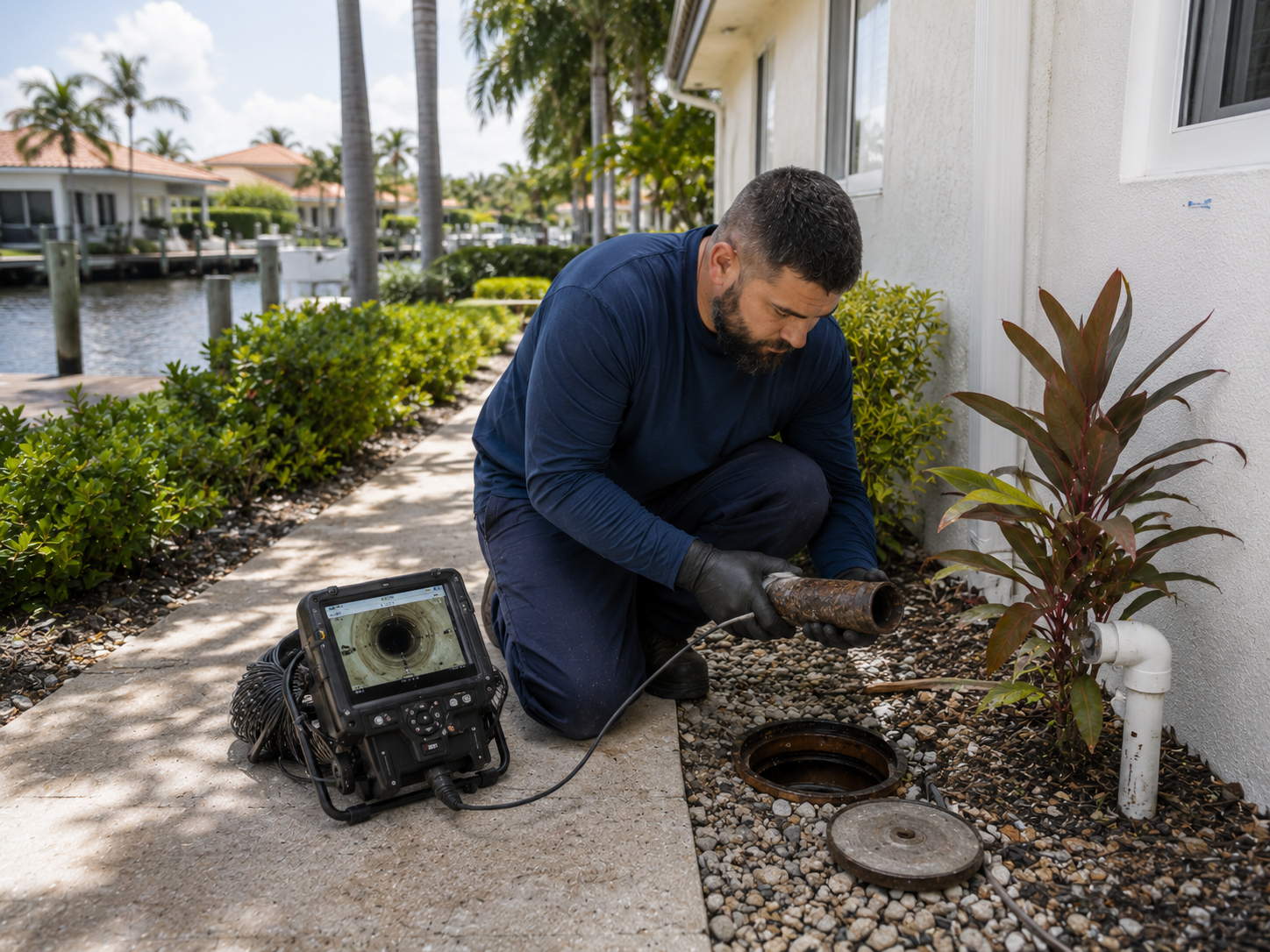
A sewer camera inspection may help show whether buildup, scaling, standing water, partial repairs, or visible deterioration are affecting the buried line.
Updated Interiors May Still Depend on Original Underground Plumbing
A renovated kitchen or remodeled bathroom does not always mean the underground drain system was replaced at the same time. Some Lighthouse Point homes still contain older cast iron below slabs, beneath landscaping, or along private sewer laterals leading toward the municipal connection.
Canal-front properties may also have finished yards, limited side access, driveways, dockside areas, or seawall-adjacent spaces that make repair planning more property-specific. Accurate diagnosis matters because the least disruptive option depends on the location and extent of deterioration.
This is especially relevant in older ranch-style homes, waterfront properties, and partially remodeled residences near Venetian Isles, Coral Key Harbor, Lighthouse Point Estates, Lake Placid Isles, and other eastern Broward neighborhoods where buried piping may have served the home for decades.
Repair Planning Should Follow the Actual Condition of the Pipe
Cast iron repair decisions should be based on visible conditions, symptom patterns, and the location of the failing section rather than assumptions about age alone.
1. Review the Backup History
Determine whether the issue is isolated, recurring after snaking, affecting multiple fixtures, or becoming more noticeable after heavy rain.
2. Inspect the Buried Drain Line
A sewer camera may help reveal scaling, rough pipe walls, standing water, partial PVC tie-ins, damaged sections, or areas where waste keeps catching.
3. Separate Cleaning From Structural Repair
Hydro jetting may help restore flow when buildup is the primary issue and the pipe remains serviceable. Structural damage requires a different plan.
4. Match the Repair to the Failing Section
The right solution may involve targeted replacement, under-slab drain repair, a broader sewer lateral repair, or reroute planning when access is limited.
Hydro Jetting Can Improve Flow, but It Cannot Rebuild a Deteriorated Pipe
When cast iron scaling and buildup reduce flow capacity, hydro jetting may help clean the interior of a serviceable line. It can remove material that a basic snake may leave behind and may improve drainage when heavy buildup is the primary restriction.
Cleaning has limits. It cannot correct severe corrosion, a collapsing section, major pipe separation, or a belly that continues holding water. It also cannot change the reality of older cast iron that has become structurally unreliable beneath the slab or along the private sewer lateral.
A practical recommendation explains whether the homeowner is dealing with a cleaning problem, a monitoring issue, a targeted repair, or a larger replacement decision.
The Best Repair Approach Depends on Location, Access, and Pipe Condition
Cast iron deterioration does not always require the same repair. The location of the failing section and the surrounding property layout both matter.
Under-Slab Drain Repair
Under-slab repair may be considered when inspection points to deterioration beneath flooring, bathrooms, kitchens, or other finished areas of the home.
Partial Cast Iron Replacement
A targeted replacement may make sense when a clearly defined section has failed while other portions of the drain system remain serviceable.
Sewer Reroute Planning
A reroute may be worth evaluating when direct access beneath finished surfaces would create unnecessary disruption or when the existing path no longer makes practical sense.
Sewer Line Repair
Exterior lateral repair may be appropriate when the damaged section runs through the yard, driveway edge, landscaping, or another buried path outside the home.
Emergency Sewer Backup
When wastewater is actively backing up through fixtures or an exterior cleanout is overflowing, immediate containment comes first and permanent repair planning may follow.
Common Questions About Older Cast Iron Drain Systems
Cast iron problems often develop quietly before backups become disruptive. These answers explain what homeowners should understand before choosing a repair.
Why do cast iron drain problems often start slowly?
Corrosion and scaling usually develop gradually inside the pipe. Rough internal surfaces catch paper, grease, sludge, and waste more easily, reducing flow capacity over time before a major failure becomes obvious.
Can snaking fix a deteriorated cast iron line?
Snaking may reopen a temporary path through a restriction, but it cannot rebuild weakened pipe walls, correct severe corrosion, or remove every layer of buildup. If symptoms return, a deeper evaluation may be appropriate.
Can hydro jetting help older cast iron pipes?
Hydro jetting may help clean buildup from a serviceable cast iron line. Pipe condition matters, so sewer camera inspection and diagnostic judgment are important before aggressive cleaning is recommended.
Does a partial PVC repair solve the entire problem?
Not always. A newer PVC section may repair one failed area while older cast iron remains elsewhere in the system. Inspection can help show whether another section is still contributing to recurring backups.
How do I know whether I need repair or replacement?
The decision depends on the extent and location of deterioration, the number of failing sections, the condition of the surrounding pipe, and how disruptive direct access would be. A camera-confirmed evaluation helps clarify the options.
Cast Iron Pipe Repair Across Lighthouse Point and Eastern Broward County
Cast iron pipe diagnosis and repair support is available for Lighthouse Point homeowners dealing with recurring backups, sewer odors, rough internal scaling, partial PVC tie-ins, and older buried drain systems.
Local coverage includes Venetian Isles, Coral Key Villas, Coral Key Harbor, Lighthouse Point Estates, Lighthouse Manor, Lake Placid, Lake Placid Isles, homes near Federal Highway, properties near Sample Road, and waterfront neighborhoods close to the Intracoastal Waterway.
You can also review Lighthouse Point sewer services, return to the Lighthouse Point plumber hub, or view broader Broward County plumbing services.
Get Help Understanding Why Drain Backups Keep Returning
When basic clearing no longer provides lasting relief, the next step is identifying whether scaling, corrosion, buildup, standing water, or a damaged cast iron section is affecting the buried drain system.