
Lighthouse Point Slab Leak Detection
A slab leak can remain hidden long before water becomes obvious inside the home. Some homeowners first notice a warm section of flooring, a damp baseboard, an unexplained increase in water use, or a water meter that continues moving while fixtures are turned off.
Lighthouse Point slab leak detection helps narrow the likely source of beneath-foundation water movement before tile, wood flooring, cabinetry, or finished interiors are disturbed unnecessarily.
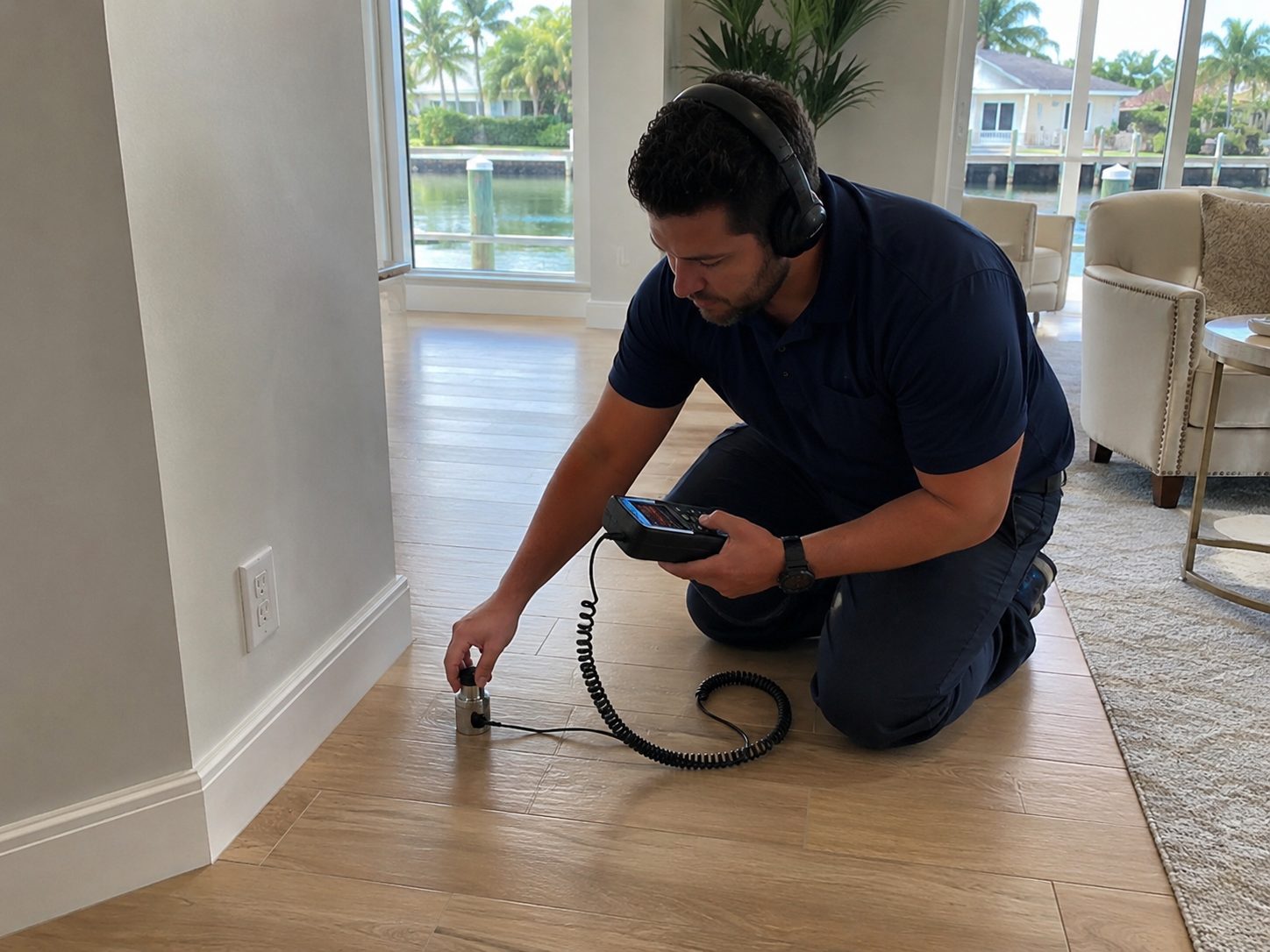
Warm Floor Areas
A warm patch beneath tile or finished flooring may be a clue that a hot-water line beneath the slab needs evaluation.
Damp Baseboards
Moisture appearing near a wall edge may have migrated from beneath the floor rather than starting at the visible surface.
Unexpected Water Use
A rising water bill or meter movement with fixtures off may point to hidden water loss somewhere beneath the home.
Finished Flooring Changes
Loose tile, moisture near grout lines, or flooring that feels damp may justify a closer beneath-slab investigation.
Slab Leaks Are Easy to Miss Because the Pipe Is Not Visible
A slab leak begins beneath the concrete foundation, where a water-supply line may develop a small failure that is difficult to see from inside the home. The leak can release water gradually into areas beneath flooring, along slab edges, or near wall lines before a clear surface symptom appears.
The first clue may not look dramatic. A tile floor may feel warmer than usual. A baseboard may remain damp after cleaning. A water bill may rise without any obvious fixture leak. Some homeowners first notice that the water meter continues moving even though faucets, showers, appliances, and irrigation are not running.
Homeowners dealing with broader moisture concerns can review Lighthouse Point leak detection to understand how slab leaks fit into the larger hidden-water diagnosis process.
Small Interior Changes May Point to Beneath-Slab Water Movement
One symptom does not automatically confirm a slab leak. Flooring temperature changes, dampness, water-meter movement, fixture pressure, and household water use all need to be considered together.
When several clues appear at the same time, targeted inspection may help narrow the likely source before floors or walls are opened.
The Wettest Surface Is Not Always Directly Above the Failing Pipe
Water beneath a slab can travel before it becomes visible. Moisture may follow a low area, migrate beneath tile, move toward a wall edge, or appear near cabinetry and baseboards. The first damp spot a homeowner notices may be several feet away from the actual plumbing failure.
That matters in Lighthouse Point homes with remodeled kitchens, updated bathrooms, tile floors, wood flooring, custom cabinets, and carefully maintained interiors. Opening the first visible wet area without narrowing the source can create unnecessary disruption while still missing the damaged line.
Slab leak detection is designed to reduce that guesswork. The goal is to understand the likely path of hidden water movement and identify the most practical repair location before finished surfaces are disturbed.
A Practical Investigation Should Narrow the Source Before Repair Begins
Beneath-slab leak diagnosis is a process of combining visible symptoms, water-use patterns, pressure observations, and targeted inspection findings.
1. Review the Moisture Pattern
Start with what changed inside the home: warm flooring, damp tile, wet baseboards, unexplained meter movement, rising bills, or low water pressure.
2. Separate Slab Symptoms From Other Leak Sources
Determine whether the pattern is more consistent with beneath-foundation water movement, an interior fixture leak, an underground service-line issue, or another moisture source.
3. Narrow the Likely Underfloor Area
Diagnostic equipment and pressure-related observations can help focus the investigation before tile, wood flooring, cabinetry, or drywall is disturbed.
4. Match the Repair to the Finding
The next step may involve targeted slab leak repair, hot-water line repair, reroute planning, emergency containment, or further monitoring when the source remains uncertain.
A Warm Floor Can Be Useful Evidence, but It Is Not the Only Sign
A warm section of flooring may point toward a leaking hot-water line beneath the slab. Heat can transfer upward through tile or other finished surfaces and create a noticeable difference compared with nearby areas.
Cold-water slab leaks may be harder to notice from temperature alone. In those situations, water-meter movement, damp flooring, pressure changes, rising bills, or moisture near slab edges may become more important clues.
A dedicated hot-water slab leak evaluation may be appropriate when warmth beneath flooring is one of the clearest symptoms.
Interior Slab Moisture and Exterior Yard Water Should Not Be Treated as the Same Problem
Lighthouse Point properties can show more than one type of water symptom at the same time. Exterior moisture may overlap with irrigation, drainage, saturated soil, high groundwater conditions, or an underground water-line issue. Interior flooring moisture may point toward beneath-slab water movement, but it still needs to be traced carefully.
The presence of a canal, seawall, or wet yard area does not automatically explain moisture inside the home. The goal is to separate what is happening beneath the foundation from what may be occurring along the exterior service line or surrounding property.
When the concern appears to involve buried piping outside the home, underground leak detection may be the more appropriate next step.
Diagnosis Should Lead Into the Right Repair Path
Slab leak detection is the first step. The repair approach depends on the location of the line, the type of leak, the surrounding surfaces, and how much disruption direct access would create.
Lighthouse Point Slab Leak Repair
Slab leak repair may be appropriate when diagnosis confirms a failing beneath-foundation line and a targeted repair path can be planned.
Lighthouse Point Hot-Water Slab Leak
A hot-water slab leak may be suspected when a warm patch develops beneath tile, flooring, or a specific area of the home.
Lighthouse Point Underfloor Leak Detection
Underfloor leak detection helps investigate damp flooring, hidden moisture, and water migration when the visible symptom does not reveal the source.
Lighthouse Point Water Line Repair
Water-line repair may be appropriate when diagnosis points to a buried supply-line issue rather than a leak limited to piping beneath the slab.
Lighthouse Point Emergency Leak Repair
Emergency leak help is appropriate when water is actively spreading, flooring is becoming wetter, or a shutoff is needed before interior damage increases.
Common Questions About Hidden Leaks Beneath the Foundation
Slab leaks often begin with subtle symptoms. These answers explain what homeowners should understand before flooring is opened or repair work begins.
Does a warm floor always mean there is a slab leak?
Not always. A warm floor can be a useful clue, especially when a hot-water line runs beneath the area, but it should be evaluated alongside water-meter movement, moisture symptoms, water bills, and other observations before a repair is planned.
Why is moisture appearing near a wall if the pipe is beneath the slab?
Water can migrate beneath flooring and move toward slab edges, wall lines, or low areas before it becomes visible. The first damp baseboard may not sit directly above the failing pipe.
Should tile or flooring be opened before slab leak detection?
Not automatically. When the source is unclear, leak detection can help narrow the likely area first. This may reduce unnecessary disruption and focus the repair on the section most likely to be involved.
Can a slab leak cause a rising water bill?
Yes. A hidden supply-line leak beneath the foundation can increase water use before visible moisture becomes obvious. An unexplained bill increase combined with meter movement or floor symptoms may justify evaluation.
When does a slab leak become an emergency?
A slab leak becomes more urgent when water is actively spreading through flooring or walls, moisture is increasing quickly, pressure changes are noticeable, or the shutoff is needed to reduce continued water loss.
Slab Leak Detection Across Lighthouse Point and Eastern Broward County
Slab leak detection is available for Lighthouse Point homeowners dealing with warm flooring, damp tile, wet baseboards, unexplained water bills, water-meter movement, pressure changes, and hidden moisture beneath finished surfaces.
Local coverage includes Venetian Isles, Coral Key Villas, Coral Key Harbor, Lighthouse Point Estates, Lighthouse Manor, Lake Placid, Lake Placid Isles, homes near Federal Highway, properties near Sample Road, neighborhoods near NE 39th Street, and waterfront areas close to the Intracoastal Waterway.
You can also review Lighthouse Point leak detection, return to the Lighthouse Point plumber hub, or view broader Broward County plumbing services.
Get Help Diagnosing a Possible Slab Leak Before Opening Finished Surfaces
If flooring feels warm or damp, water bills keep rising, baseboards remain wet, or the water meter continues moving while fixtures are off, the next step is narrowing the likely beneath-slab source before planning the repair.