Lighthouse Point Hydro Jetting
When a drain line keeps slowing down after snaking, the problem may be more than a single blockage. Grease, sludge, scale, debris, and waste can gradually narrow the inside of an older sewer line until temporary clearing no longer restores reliable flow.
Hydro jetting uses controlled water pressure to clean the inside walls of a serviceable drain line and improve flow capacity. It can be a useful next step in some Lighthouse Point homes, but the condition of the pipe should guide whether jetting is appropriate.
Snaking Stops Working
A drain that slows down again soon after clearing may still have buildup coating the inside of the line.
Recurring Main-Line Backups
Repeat restrictions affecting several fixtures may indicate reduced flow capacity farther down the system.
Older Cast Iron Buildup
Rough internal surfaces can catch grease, paper, debris, and waste as deterioration develops over time.
Pipe Condition Matters
Jetting is not appropriate for every damaged line, so inspection and diagnostic judgment remain important.
Hydro Jetting Is Designed to Restore Flow Capacity
Snaking can be useful when a drain needs a pathway reopened through a blockage. Hydro jetting takes a different approach. Instead of only punching through a restricted area, the process uses controlled water pressure to clean buildup from the interior walls of the line.
That distinction matters when a drain repeatedly slows down after basic clearing. In older buried sewer systems, the problem may involve layers of grease, sludge, scale, paper, and debris clinging to rough internal surfaces rather than one isolated obstruction.
Homeowners dealing with broader sewer symptoms can review Lighthouse Point sewer services to understand how jetting fits into the larger diagnosis and repair process.
Patterns That Often Point to Heavy Drain Buildup
Hydro jetting is usually considered when buildup is reducing the usable interior diameter of the pipe. The strongest clue is often a problem that returns after temporary clearing.
A sewer camera inspection may help confirm whether the line appears serviceable enough for cleaning and whether another condition is contributing to the restriction.
Controlled Water Pressure Helps Clean the Interior Walls of the Pipe
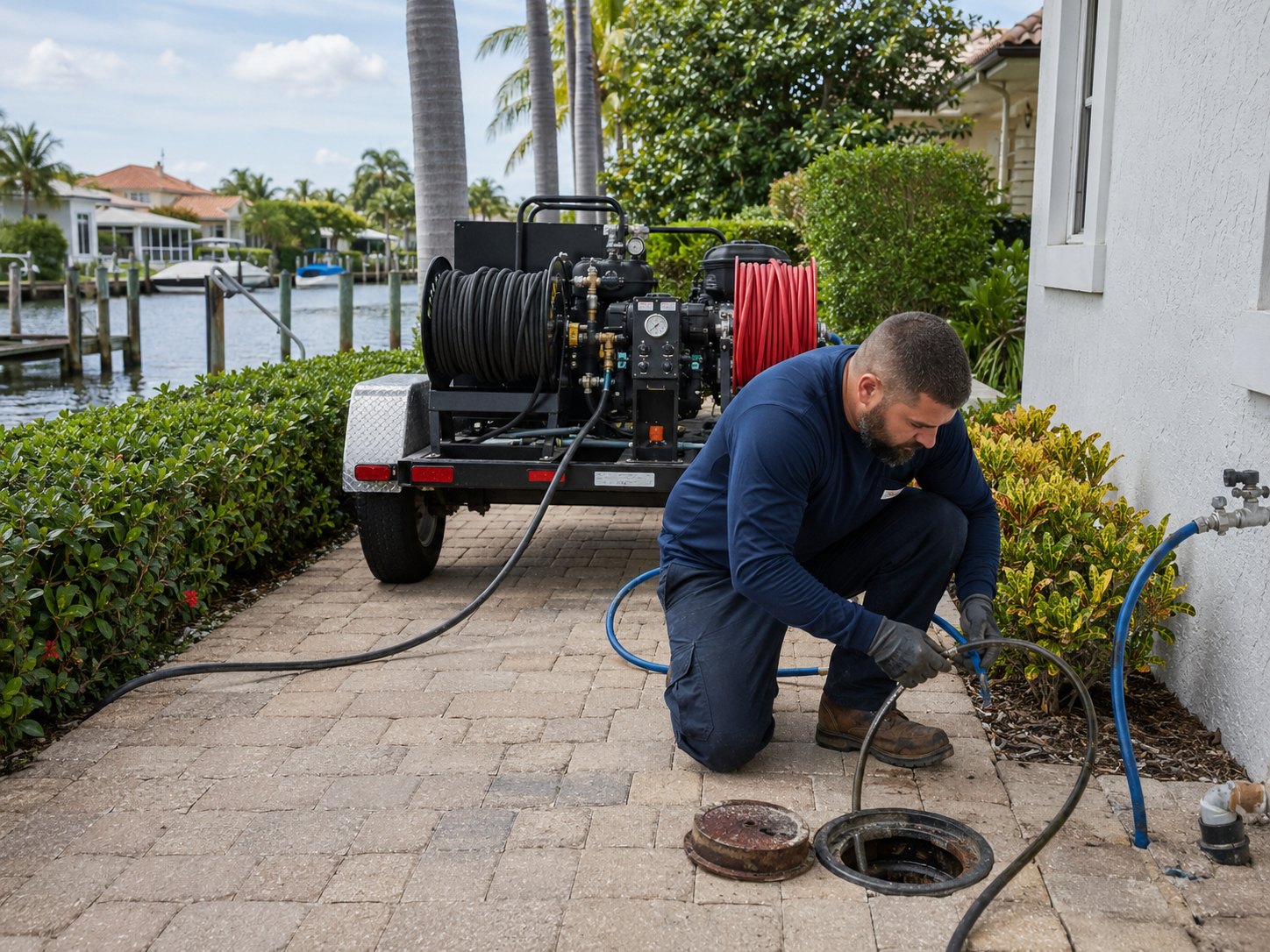
A hydro jetting nozzle is introduced into the drain system through an appropriate access point. Water pressure is directed through the line to help break apart and flush away grease, sludge, scale, and debris that may be reducing flow capacity.
The goal is not simply to force water through the pipe. The goal is to clean the internal surface more thoroughly so waste can move through the line with less resistance.
This can be especially useful in older Lighthouse Point homes where rough cast iron surfaces have gradually become more likely to catch debris. However, cleaning pressure should be matched to the pipe condition and the actual diagnosis.
A Careful Approach Protects Against Overselling the Service
Hydro jetting can be valuable when buildup is the issue, but it should not be treated as an automatic answer for every recurring drain problem.
1. Review the Symptom Pattern
Determine whether the issue involves one fixture, several drains, recurring main-line backups, grease buildup, or a broader underground restriction.
2. Check the Sewer Line Condition
Camera inspection may help reveal scaling, roots, standing water, separation, breaks, or severe deterioration before aggressive cleaning is recommended.
3. Match Pressure to the Line
A serviceable line with heavy buildup may benefit from jetting. A severely weakened or collapsed line may need a different repair path.
4. Confirm the Next Step
After cleaning, the line may be reviewed again when appropriate so homeowners understand whether flow improved or a deeper issue remains.
Hydro Jetting Cleans Pipes, but It Does Not Repair Structural Damage
Hydro jetting can remove buildup and restore flow capacity in the right situation. It cannot correct a collapsed sewer line, severe cast iron deterioration, a broken section of pipe, a major belly holding water, or a disconnected joint.
That is why the service should be recommended based on pipe condition rather than treated as a universal cure. When deterioration is significant, cast iron pipe repair or sewer line repair may be more appropriate than repeated cleaning.
A practical recommendation explains both what hydro jetting may improve and what it cannot solve.
Cleaning Works Best When It Fits the Actual Condition of the Line
Hydro jetting is one part of a larger sewer and drain system. Inspection, basic drain cleaning, root management, and repair planning may each matter depending on what is happening underground.
Sewer Camera Inspection
Camera inspection may help confirm whether buildup, roots, standing water, cast iron scaling, or structural damage is contributing to the restriction.
Drain Cleaning
Basic drain cleaning may be enough for a localized clog, while repeated restrictions may justify a deeper cleaning or inspection path.
Grease Buildup Removal
Kitchen and main-line restrictions may develop as grease and debris gradually narrow the usable interior diameter of the drain.
Root Intrusion Cleaning
Root intrusion may affect older buried laterals near mature landscaping and may require both cleaning and longer-term repair planning.
Main Line Jetting
Main-line jetting may help restore flow when heavy buildup affects the larger underground drain path serving multiple fixtures.
Questions About Cleaning Older Drain Lines
Hydro jetting is most useful when it solves the problem actually inside the pipe. These answers explain when it may fit and when another path may be better.
Is hydro jetting better than snaking?
The services solve different problems. Snaking may reopen a path through a clog. Hydro jetting may clean buildup from the interior walls of a serviceable line and restore more usable flow capacity when restrictions keep returning.
Can hydro jetting damage older cast iron pipes?
Pipe condition matters. Older cast iron lines should be evaluated carefully before aggressive cleaning is recommended. A sewer camera inspection may help reveal whether the line appears serviceable or whether deterioration changes the repair plan.
Will hydro jetting fix a collapsed sewer line?
No. Hydro jetting can remove buildup, sludge, grease, and debris, but it cannot repair collapse, severe deterioration, separation, or a major pipe belly holding water.
Why does my drain keep slowing down after snaking?
Snaking may only open a temporary path through the restriction. Heavy buildup, rough cast iron surfaces, roots, standing water, or another buried condition may still be affecting flow.
Should a sewer camera inspection happen before hydro jetting?
In many recurring or older-line situations, camera inspection can provide useful information before jetting. It may reveal pipe condition, standing water, buildup, roots, or damage that changes the recommendation.
Hydro Jetting Across Lighthouse Point and Nearby Eastern Broward Areas
Hydro jetting is available for Lighthouse Point homeowners dealing with recurring drain restrictions, older cast iron buildup, main-line flow problems, and backups that return after temporary clearing.
Local coverage includes Venetian Isles, Coral Key Villas, Coral Key Harbor, Lighthouse Point Estates, Lighthouse Manor, Lake Placid, Lake Placid Isles, properties near Federal Highway, homes near Sample Road, and canal-front neighborhoods near the Intracoastal Waterway.
You can also review Lighthouse Point sewer services, return to the Lighthouse Point plumber hub, or view broader Broward County plumbing services.
Find Out Whether Hydro Jetting Fits the Condition of Your Drain Line
When drain problems return after temporary clearing, the right next step is understanding whether heavy buildup, roots, standing water, or pipe deterioration is affecting the system.