
Water Coming Through Ceiling in Pompano Beach
Water coming through a ceiling usually means the leak has already moved beyond the original plumbing source. By the time dripping, staining, bubbling paint, or sagging drywall appears overhead, moisture may already be spreading through ceiling cavities, wall framing, insulation, or flooring above.
In Pompano Beach homes, condos, and older Broward properties, ceiling leaks often come from upstairs bathrooms, water supply lines, drain connections, water heaters, AC-adjacent plumbing areas, or shared plumbing stacks in multi-unit buildings. The first priority is containment, then identifying where the water is actually coming from.
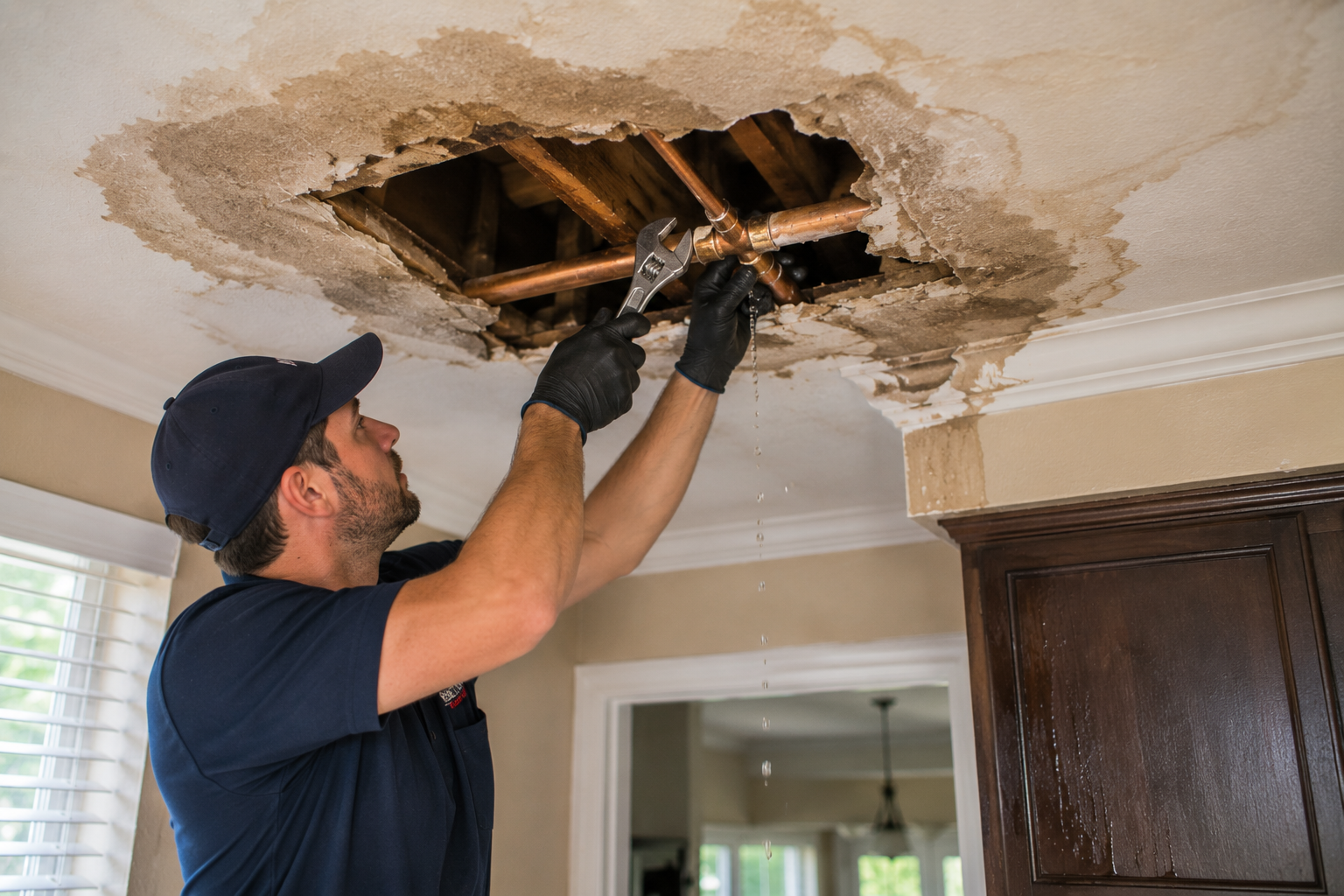
Ceiling Saturation
Ceiling stains, bubbling paint, and dripping water usually mean moisture has already collected above the visible surface.
Hidden Leak Paths
Water may travel through framing, pipe chases, and wall cavities before appearing far from the actual leak source.
Condo Leak Risk
In beachside condos and multi-unit buildings, ceiling leaks may involve upstairs units, shared stacks, or shutoff coordination.
Damage Control
Fast containment may help limit drywall damage, flooring damage, cabinet swelling, and moisture spreading behind walls.
Water Coming Through the Ceiling Is Usually Not the Starting Point
A ceiling leak often becomes visible only after water has already collected above drywall or traveled through hidden building cavities. The plumbing failure may be directly overhead, but it may also be several feet away where a pipe, fixture, drain, or supply line is leaking into the ceiling system.
In a two-story home, the source may be an upstairs bathroom, toilet supply line, shower drain, tub overflow, vanity plumbing, laundry area, or water heater connection. In a condo, the problem may involve plumbing from the unit above, a shared drain stack, or a common wall where access and shutoff coordination are more complicated.
Ceiling leak situations often connect directly to emergency leak repair, burst pipe repair, or broader emergency plumbing services when water is actively spreading and the source is not obvious.
Signs the Ceiling May Be Holding More Water Than You Can See
A small drip can be misleading. Ceiling drywall may absorb water, stain slowly, or bulge before it releases water into the room below. Once water appears, the material above may already be saturated.
If the ceiling is sagging, paint is bubbling, or water is spreading toward light fixtures, cabinets, or wall corners, the leak should be treated as an active emergency rather than a cosmetic stain.
Ceiling Leak Emergencies Need Water Control Before Cosmetic Repair
When water is coming through the ceiling, stopping the water source matters more than drying the visible spot. If the leak appears connected to an upstairs fixture, avoid using that bathroom, laundry area, or nearby plumbing until the source is checked. If water continues dripping and the source is unclear, the main water shutoff may need to be used.
Ceiling water can also create electrical concerns when it appears near lights, ceiling fans, outlets, or switches. The plumbing issue may be the source, but the surrounding area still needs to be treated carefully because wet materials can continue releasing water after the leak slows.
Towels and buckets may help manage dripping temporarily, but they do not stop water inside the ceiling cavity. The important question is whether water is still entering the space from a live plumbing line, fixture drain, upstairs unit, or hidden pipe connection.
What May Be Causing Water to Come Through the Ceiling
Ceiling leaks can be difficult to trace because water rarely drops straight down from the source. It may follow framing, pipe penetrations, insulation, or drywall seams before showing up in a visible spot.
In Pompano Beach condos and older Broward homes, the source often depends on what plumbing fixtures sit above the damaged ceiling and whether the leak happens constantly or only after certain fixtures are used.
Ceiling Leaks Are Commonly More Complicated in Older and Multi-Unit Properties
Pompano Beach includes a mix of older single-story homes, remodeled ranch houses, waterfront properties, beachside condos, and multi-unit buildings. Each type of property changes how a ceiling leak should be evaluated. In a single-family home, the source may be an upstairs or attic-level plumbing issue. In a condo, the leak may involve another unit, shared plumbing, HOA access, or coordinated shutoffs.
Coastal humidity can make moisture problems feel worse once drywall, insulation, or framing becomes wet. Ceiling materials may stay damp longer, and water stains can spread even after the active leak slows. That is why ceiling leak emergencies should be approached as both a plumbing issue and a hidden moisture concern.
If water appears to be spreading behind walls, a related service such as hidden water leak detection or condo leak detection may be needed after the immediate emergency is stabilized.
How Ceiling Leak Plumbing Problems Are Evaluated
Ceiling leak emergencies require more than looking at the stain. The goal is to stop active water movement, identify the likely source, and determine whether hidden moisture is continuing to spread.
Check Active Water Movement
The first step is determining whether water is still entering the ceiling cavity from a live supply line, fixture, drain, or unit above.
Isolate the Likely Source
Nearby bathrooms, laundry rooms, water heaters, upstairs fixtures, and condo plumbing areas are reviewed to narrow down where the water may be coming from.
Evaluate Hidden Spread
Moisture may extend beyond the visible ceiling stain into walls, insulation, cabinets, or adjacent rooms depending on how long the leak has been active.
Plan the Repair Path
Once the emergency is controlled, the next step may involve pipe repair, fixture repair, leak detection, drywall access, or condo coordination.
Services Often Connected to Water Coming Through the Ceiling
Ceiling leaks often connect to hidden plumbing problems, active pipe leaks, upstairs fixtures, condo plumbing coordination, or moisture spreading behind finished surfaces.
Emergency Leak Repair
Emergency leak repair helps address active plumbing leaks before water spreads further through ceilings, walls, or flooring.
Burst Pipe Repair
A burst or split supply pipe can send water through ceiling cavities quickly, especially when the pipe remains under pressure.
Emergency Ceiling Leak Repair
Ceiling leak repair focuses on urgent ceiling saturation, dripping water, wet drywall, and source identification.
Condo Leak Detection
Condo ceiling leaks may involve upstairs units, shared stacks, HOA access, and coordinated shutoff timing.
Water Coming Through Ceiling Help in Pompano Beach and Broward County
Ceiling leak emergencies can happen in older homes near Atlantic Boulevard, single-family properties east or west of Dixie Highway, waterfront homes, and beachside condo buildings near Federal Highway, A1A, and the Intracoastal.
Pompano Beach properties often include older plumbing layouts, remodeled bathrooms, shared condo systems, and hidden pipe routes that can make ceiling leaks harder to trace without checking the plumbing source carefully.
You can also visit our Pompano Beach plumber hub or view broader Broward County plumbing services.
Get Help When Water Is Coming Through Your Ceiling
Water coming through the ceiling should be treated as an active plumbing emergency until the source is controlled. Dripping, staining, bubbling paint, or sagging drywall may mean water is still moving through hidden spaces above the room.