
Ceiling Leak Between Condo Units in Pembroke Pines
A ceiling stain, damp drywall patch, or intermittent drip inside a condo unit can be difficult to interpret. The visible moisture may come from an upstairs bathroom, water-heater closet, supply line, drain connection, or nearby plumbing route that is not directly above the damaged area.
Home Town Repair Experts helps Pembroke Pines residents find ceiling-leak diagnosis support for water traveling between units, growing stains, active dripping, wall moisture, and situations that may require neighboring access or property-management coordination.
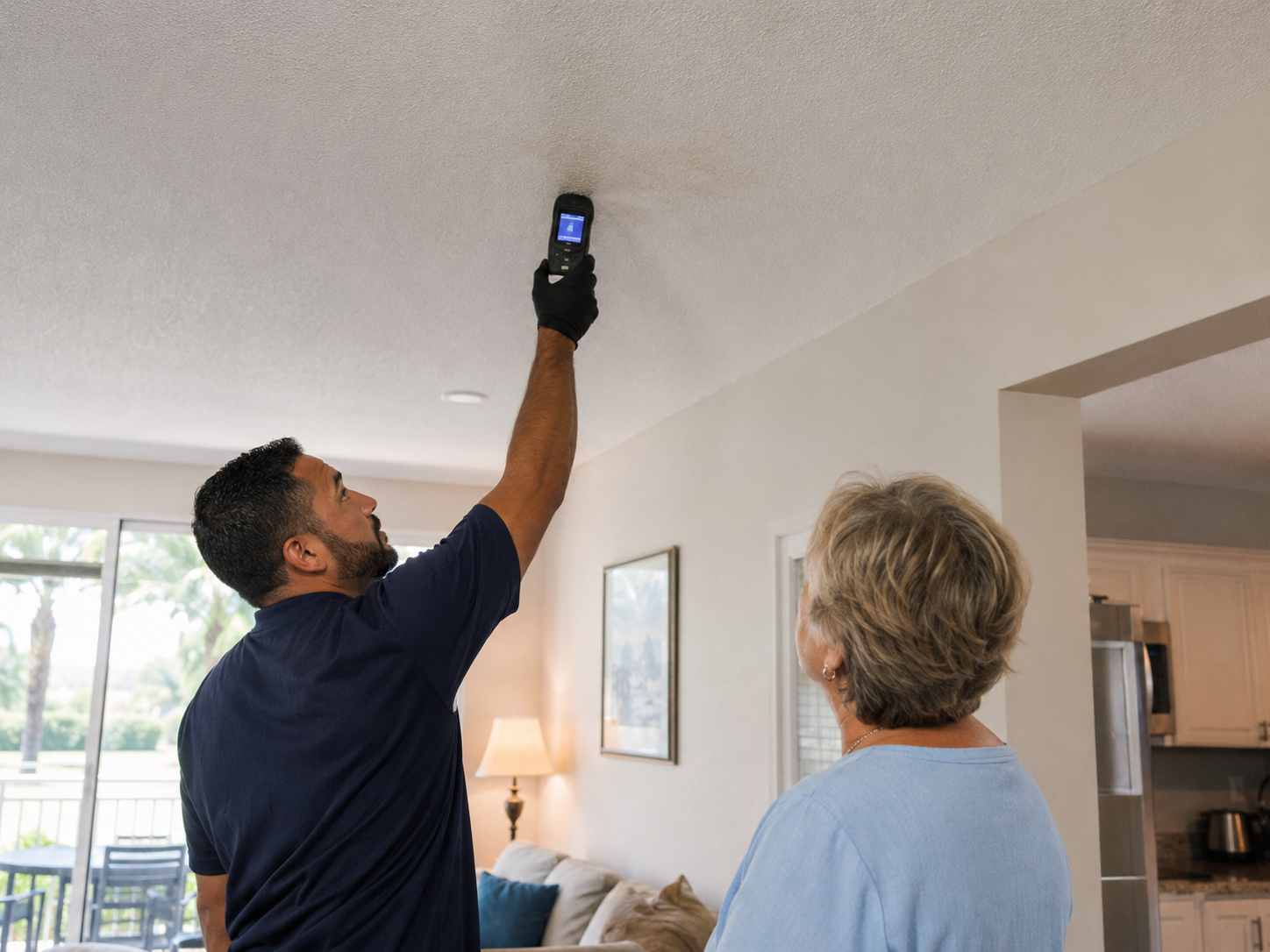
Ceiling Stain Is Growing
A stain that spreads or darkens over time may indicate ongoing moisture from a plumbing source above or nearby.
Dripping Starts After Fixture Use
Moisture appearing after an upstairs shower, toilet flush, or sink use may point toward a drain-side or fixture connection issue.
Water Appears With No Fixture Use
Moisture that continues while fixtures are off may suggest a pressurized supply leak or another hidden plumbing source.
Neighboring Access May Be Needed
The visible stain may be inside one condo while the most useful inspection point is located in the unit above or along a shared wall.
A Ceiling Stain Does Not Automatically Reveal the Plumbing Source
Water does not always travel straight down. It can move along framing, drywall seams, pipes, floor transitions, and wall cavities before appearing in the unit below. That means the wettest section of ceiling may not sit directly beneath the failed connection.
A stain beneath an upstairs bathroom may come from a toilet base, sink supply line, tub drain, shower connection, or hidden pipe. Moisture near a hallway may be connected to a nearby water-heater closet. A ceiling patch near a shared wall may involve a plumbing route that crosses between rooms before the water becomes visible.
Ceiling-leak diagnosis connects naturally with broader Pembroke Pines condo leak detection. If water is actively dripping or spreading quickly, emergency condo plumbing may be the more appropriate route.
Signs Moisture May Be Traveling From Another Unit
Condo ceiling leaks often begin with a small stain that looks easy to ignore. The stain may remain light for a while, darken after upstairs fixture use, or begin dripping intermittently before the source is confirmed.
The timing, location, and rate of change all help narrow whether the issue may involve a drain connection, supply line, water-heater closet, or hidden plumbing path.
When the Water Appears Can Help Narrow the Cause
Drain-side leaks often appear after water is used. An upstairs shower, tub, toilet, sink, or laundry connection may release water only while the fixture drains. The ceiling stain may grow after use and then slow down again.
Supply-side leaks may behave differently because the pipe remains pressurized. Water can continue seeping even when no fixture is running. A small supply-line drip, valve issue, or hidden pipe leak can keep feeding moisture into the ceiling cavity throughout the day.
The pattern does not prove the source on its own, but it helps narrow where inspection should begin and whether neighboring-unit access may be needed.
Ceiling Leaks Between Units Can Have Several Causes
A ceiling leak should be approached as a source-tracing problem rather than an assumption about the nearest fixture. The correct repair may involve a bathroom connection, water-heater closet, hidden pipe, shared wall, or another nearby plumbing route.
If visible fixtures do not explain the moisture, hidden-water-leak detection may help narrow a concealed source. If the leak appears connected to a water-heater closet, water-heater leak repair may provide the more focused next step.
The Most Useful Inspection Point May Be Inside the Unit Above
A lower-unit resident may see the ceiling stain first without having access to the plumbing source. If the moisture appears beneath an upstairs bathroom, laundry area, kitchen, or water-heater closet, the next step may require coordination with the neighboring resident.
Property management or an HOA representative may help arrange access, identify shutoff locations, and determine whether the problem appears limited to one unit or connected to a shared plumbing route.
The goal is to narrow the source before opening ceilings or walls unnecessarily. Access coordination should support the diagnosis without delaying containment when water is actively spreading.
A Small Ceiling Stain Can Become More Disruptive When It Begins Dripping
A faint stain may allow time for careful diagnosis, but recurring ceiling moisture should not be ignored. Water can spread into drywall, insulation, framing, walls, closets, and flooring before the visible damage becomes severe.
If the ceiling begins dripping actively, the stain expands quickly, drywall becomes soft, or water reaches electrical fixtures, emergency-leak repair may be the better next step.
Inter-Unit Ceiling Leaks Are a Practical Pembroke Pines Condo Concern
Century Village and other active-adult or multi-unit communities give Pembroke Pines a meaningful need for focused condo leak diagnosis. These properties may include shared walls, neighboring units, interior water-heater closets, tighter service spaces, and plumbing routes that are difficult to evaluate from one condo alone.
A modest ceiling stain can become disruptive quickly when water begins moving through a lower unit, hallway, closet, or adjacent wall. Residents often need help understanding whether the next step involves their own unit, the condo above, a water-heater closet, property management, or a hidden plumbing connection.
The practical goal is to trace the moisture carefully, avoid assigning a source without inspection, and move into the correct repair path before water spreads farther.
Services That Often Connect to Ceiling Leaks Between Units
The right service depends on whether the moisture comes from an upstairs fixture, hidden pipe, water-heater closet, shared wall, or active leak spreading into the lower unit.
Condo Leak Detection
For broader ceiling stains, wall moisture, closet leaks, cabinet dampness, and water traveling between units from an unclear source.
Condominium Plumbing
For condo leaks, drain backups, water-heater issues, fixture repairs, shared plumbing symptoms, and access coordination.
Hidden-Water-Leak Detection
For concealed pipe leaks, recurring ceiling moisture, damp walls, and wet areas that remain unclear after visible fixtures are checked.
Emergency Condo Plumbing
For active dripping, rapidly growing stains, water reaching flooring, shared shutoff concerns, and urgent access coordination.
A Practical Way to Trace a Leak Between Condo Units
Ceiling-leak diagnosis should move from the visible stain to the likely plumbing route, neighboring access, source confirmation, and the most appropriate repair path.
Document the Visible Moisture
The first step is identifying where the stain appears, whether it is growing, and whether the ceiling is damp, soft, bubbling, or actively dripping.
Compare the Leak to Fixture Use
The timing may help distinguish between an upstairs drain connection, supply-line leak, water-heater closet issue, or hidden plumbing route.
Coordinate Access When Needed
Neighboring-unit, property-management, or HOA access may be needed when the likely source is above, behind a shared wall, or near a common shutoff.
Choose the Right Repair Path
The next step may involve fixture repair, hidden-leak detection, water-heater service, emergency containment, or a focused repair inside the source unit.
Trace the Water Before Opening the Ceiling Unnecessarily
Ceiling leaks between units create enough disruption without unclear recommendations. Experienced and certified technicians can help distinguish between an upstairs fixture leak, drain connection issue, supply-line drip, water-heater closet problem, hidden pipe, and moisture traveling along a nearby plumbing route.
Fully stocked service vehicles help address many common condo leaks on the first visit when the source is straightforward. Modern diagnostic equipment can also help narrow ceiling moisture when the visible stain does not reveal where the plumbing problem began.
Transparent upfront pricing helps residents understand the proposed repair, any access-coordination needs, and recommended follow-up diagnosis before additional work begins.
Pembroke Pines Ceiling-Leak Questions
These are common questions residents ask when ceiling stains, dripping water, or moisture appear between condo units.
Does a ceiling stain prove the leak is directly above it?
No. Water can travel along framing, pipes, drywall seams, and wall cavities before it appears. The source may be offset from the visible stain or located in a nearby room or unit.
Why does the ceiling drip only after the upstairs shower is used?
Moisture appearing after shower use may point toward a drain connection, tub or shower component, nearby fixture, or another drain-side plumbing route. Inspection is still needed before assuming the exact source.
Should property management be involved in a ceiling leak?
Property-management or HOA coordination may be useful when access is needed inside another unit, the source appears connected to a shared wall or plumbing chase, or a broader shutoff may be required.
When does a ceiling leak become an emergency?
Emergency help may be appropriate when water is actively dripping, the stain is expanding quickly, drywall becomes soft, flooring is getting wet, the leak cannot be isolated safely, or moisture is spreading near electrical fixtures.
Ceiling-Leak Diagnosis in Pembroke Pines and Broward County
Home Town Repair Experts helps Pembroke Pines residents find ceiling-leak diagnosis support for stains, dripping water, damp drywall, moisture traveling between units, water-heater closet concerns, and neighboring access coordination.
Condo-leak relevance is strongest around Century Village and other active-adult, townhome, and multi-unit communities throughout Pembroke Pines, including areas near Pines Boulevard, Flamingo Road, University Drive, Pembroke Lakes, and central residential corridors.
You can also visit our Pembroke Pines plumber hub or view broader Broward County plumbing services.
Trace the Moisture Before It Spreads Into Another Room or Unit
If a condo ceiling stain keeps growing, water drips intermittently, drywall feels damp, or the source may be coming from an upstairs plumbing route, ceiling-leak diagnosis can help narrow the cause and determine the right repair path.