
Lighthouse Point Water Heater Services for Leaks, Repairs, and Hot-Water Problems
A water heater problem does not always begin with a complete loss of hot water. Some homeowners first notice moisture near the tank, water inside a drain pan, corrosion around a connection, inconsistent heating, or a damp garage or utility-closet floor.
Lighthouse Point water-heater service should identify whether the issue involves an aging tank, leaking connection, failed component, tankless performance concern, or active water leak that needs faster containment.
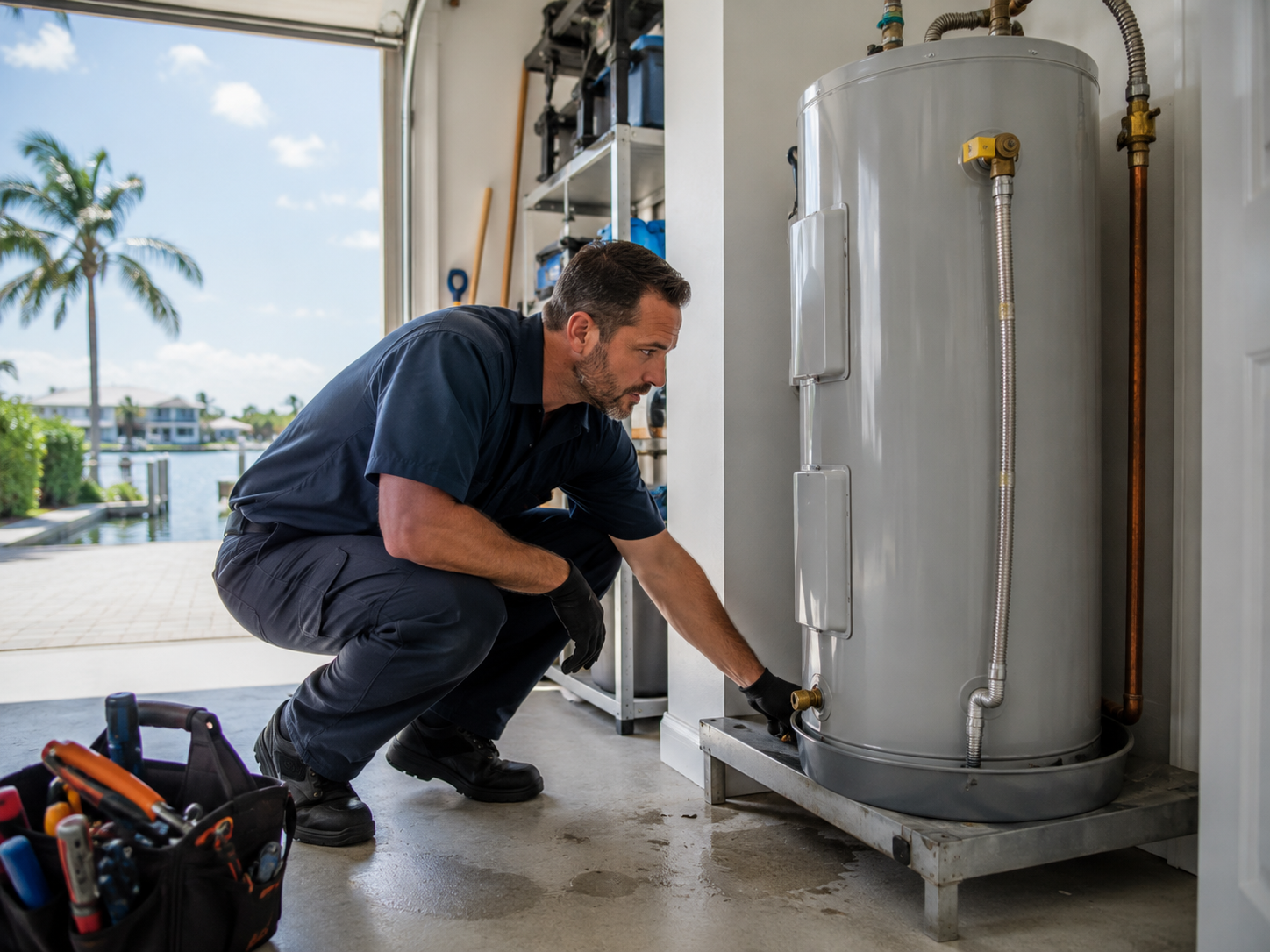
Moisture Near the Tank
A damp garage floor, wet utility closet, or water inside the drain pan may be an early sign of a leak.
Hot Water Runs Out Quickly
Inconsistent hot water may point to a heating component, thermostat, sediment, sizing, or system-performance issue.
Connections Look Corroded
Visible corrosion near fittings, valves, or metal components may justify inspection before a slow leak spreads.
Water Is Actively Spreading
An active tank or connection leak may need faster containment before flooring, drywall, storage, or cabinetry is affected.
A Small Amount of Moisture Can Be the First Sign of a Larger Repair Need
A water heater does not always fail through a sudden tank rupture. A slow connection leak, aging valve, drain-pan issue, corrosion point, or tank problem may release a small amount of water before the damage becomes obvious.
The first clue may be easy to overlook: a faint damp area on the garage floor, moisture near a utility-closet baseboard, rust-colored staining around a fitting, or water that returns after the area is dried.
Lighthouse Point homeowners dealing with active moisture can also review emergency leak repair when water is spreading beyond the installation area or a shutoff may be needed.
Match the Service to the Hot-Water or Leak Problem
A slow tank leak, sudden garage-floor water, inconsistent hot water, and a tankless performance issue each require a different evaluation path.
Lighthouse Point Water-Heater Repair
Water-heater repair may help when hot water is inconsistent, recovery takes too long, components are failing, or the system is no longer performing normally.
Lighthouse Point Emergency Water-Heater Repair
Emergency service is appropriate when water is actively spreading, the tank is leaking rapidly, a shutoff is needed, or the installation area cannot remain safely in service.
Lighthouse Point Tankless Water-Heater Services
Tankless service may be appropriate when a tankless unit shows error behavior, inconsistent temperature, reduced hot-water output, or maintenance-related performance concerns.
Lighthouse Point Water-Heater Leak Repair
Leak repair focuses on moisture around the tank, drain pan, valves, fittings, and nearby flooring before water reaches a larger area of the home.
Lighthouse Point Leak Detection
Leak detection may help when moisture appears near a utility closet, wall, baseboard, or finished surface but the water-heater connection is not clearly the source.
Water-Heater Symptoms Can Appear Before the System Stops Working
A complete loss of hot water is only one possible symptom. The more useful clues may involve moisture, corrosion, changing temperature, unusual sounds, or water appearing in places that normally stay dry.
When a wet area keeps returning after cleanup, the installation should be checked before the moisture spreads into nearby storage, drywall, cabinetry, or finished flooring.
The Installation Location Can Change How Quickly Water Damage Spreads
A water heater in a garage may leak onto concrete before a homeowner notices the problem. A unit inside a utility closet can create a different risk because water may reach drywall, flooring, baseboards, cabinets, storage, or adjacent living areas more quickly.
A slow leak can also migrate beyond the first visible damp spot. Water may travel along the floor edge, collect beneath stored items, or move into a nearby wall before the installation area looks seriously wet.
The repair plan should account for both the plumbing problem and the surrounding surfaces. Containing the leak early can help limit unnecessary disruption inside a finished waterfront home.
Start With the Symptom, Then Identify the Component or Leak Source
A practical water-heater evaluation should determine whether the issue involves heating performance, a slow leak, active water loss, corrosion, or a system that may need a broader repair decision.
1. Review the Visible Symptom
Start with what changed: no hot water, shorter hot-water duration, damp flooring, drain-pan water, corrosion, noise, or active leakage.
2. Check the Tank and Connections
Inspect the installation area, fittings, valves, drain pan, tank condition, and nearby surfaces to determine where moisture may be coming from.
3. Separate Repair From Emergency Containment
A slow performance issue may allow a standard repair path. Active water spreading beyond the tank area may require a shutoff and faster containment.
4. Explain the Most Practical Next Step
The next step may involve component repair, leak repair, tankless service, emergency containment, or a broader replacement discussion when the system is no longer reliable.
Coastal Conditions Can Make Corrosion Worth Watching More Closely
Lighthouse Point homes sit in a humid coastal environment. Salt-air exposure and long-term moisture conditions may contribute to corrosion around metal components, fittings, valves, and nearby plumbing connections in some properties.
That does not mean coastal exposure automatically caused the water-heater problem. Age, maintenance history, installation quality, tank condition, component wear, and the location of the unit all matter.
The practical takeaway is simple: visible corrosion, recurring dampness, or staining near a garage or utility-closet water heater should not be dismissed as a cosmetic issue without checking whether moisture is active.
Moisture Near the Tank Does Not Always Mean the Tank Is the Only Source
Water near a water heater may come from the tank, a nearby valve, a fitting, a drain connection, a supply line, or another plumbing source in the surrounding area. Moisture can also travel before it becomes visible.
A damp baseboard beside a utility closet may be connected to the water heater, but the source could also sit behind the wall or along another pipe route. That is why the wettest visible area should be treated as a clue rather than a complete diagnosis.
When the source is unclear, Lighthouse Point leak detection may help narrow the problem before unnecessary walls, flooring, or finished surfaces are opened.
Tankless Systems Have Different Performance and Maintenance Questions
A tankless water heater does not store water the same way a traditional tank system does, but it can still develop service needs. Temperature inconsistency, error behavior, reduced output, delayed hot water, and maintenance-related performance changes may justify evaluation.
The right recommendation depends on the system, its installation, household demand, maintenance history, and the specific symptom. A tankless unit should not be treated like a standard storage tank with a different cover.
Homeowners dealing with these symptoms can review Lighthouse Point tankless water-heater services for a more focused evaluation path.
Active Water Spread Changes the Priority From Routine Repair to Containment
A small damp area should be checked, but a rapidly spreading leak needs a faster response. Water moving across flooring, soaking stored belongings, reaching drywall, or leaving the utility closet may continue causing damage until the flow is reduced.
A shutoff may help limit additional water loss when the source is active. The right immediate step depends on the installation, the location of the leak, and whether water is still feeding into the affected area.
When the tank or connection is actively leaking, emergency water-heater repair may be the appropriate service path.
Homeowners Should Understand the Symptom, the Source, and the Repair Path
Water-heater service should not begin and end with a generic recommendation. Homeowners should understand whether the issue involves heating performance, corrosion, a leaking connection, a tank problem, a tankless system concern, or moisture traveling from another plumbing source.
Experienced technicians, fully stocked service vehicles, modern diagnostic equipment, and transparent upfront pricing help make the process more practical. The objective is to identify the problem efficiently, explain the available options clearly, and reduce unnecessary disruption wherever possible.
That clarity matters in Lighthouse Point properties where garages, utility closets, finished interiors, storage areas, and coastal moisture conditions can all shape how a water-heater problem first becomes noticeable.
Common Questions About Water-Heater Leaks and Hot-Water Problems
Water-heater issues often begin with subtle warning signs. These answers explain what homeowners should understand before moisture spreads or hot-water service becomes less reliable.
Does moisture near the water heater always mean the tank is leaking?
Not always. Moisture may come from the tank, a valve, fitting, drain pan, nearby supply line, or another plumbing source in the surrounding area. The installation should be checked before the source is assumed.
When does a water-heater leak become an emergency?
The issue becomes more urgent when water is actively spreading, the tank area cannot remain dry, flooring or drywall is affected, storage is getting wet, or a shutoff is needed to limit additional water loss.
Can coastal humidity damage a water heater?
Humidity and salt-air exposure may contribute to corrosion around metal components over time in some properties. They are not the only factors. Age, maintenance, installation quality, component wear, and tank condition also matter.
Why does my hot water run out faster than it used to?
Reduced hot-water duration may involve a heating component, thermostat, sediment, tank condition, household demand, or another performance issue. A closer evaluation helps identify the most practical repair path.
Should I shut off the water if the tank is leaking?
Shutoff may help limit additional damage when water is actively escaping. The appropriate step depends on the installation and where the leak is occurring. Emergency service may be appropriate when water continues spreading.
Can a tankless water heater still need repair?
Yes. A tankless system may need service when temperature becomes inconsistent, error behavior appears, output drops, or maintenance-related issues affect performance.
Water-Heater Services Across Lighthouse Point and Eastern Broward County
Water-heater service is available for Lighthouse Point homeowners dealing with tank leaks, utility-closet moisture, garage-floor water, inconsistent hot water, corrosion concerns, drain-pan water, tankless performance issues, and emergency repair needs.
Local coverage includes Venetian Isles, Coral Key Villas, Coral Key Harbor, Lighthouse Point Estates, Lighthouse Manor, Lake Placid, Lake Placid Isles, homes near Federal Highway, properties near Sample Road, neighborhoods near NE 39th Street, and waterfront areas close to the Intracoastal Waterway.
You can also return to the Lighthouse Point plumber hub or view broader Broward County plumbing services.
Get Help With a Water-Heater Leak or Hot-Water Problem
If moisture keeps returning near the tank, hot water has become inconsistent, or water is actively spreading beyond a garage or utility closet, the next step is identifying the source and choosing the right repair path.