
Slab Leak Detection in Coral Springs
A slab leak can stay hidden before it becomes obvious. In Coral Springs homes, early signs may look like a warm floor, damp tile, baseboard moisture, a rising water bill, or a water meter that keeps moving when fixtures are off.
Home Town Repair Experts helps Coral Springs homeowners understand when slab leak detection may be needed for hidden plumbing beneath the foundation, moisture under flooring, and leaks that are hard to trace from the surface.
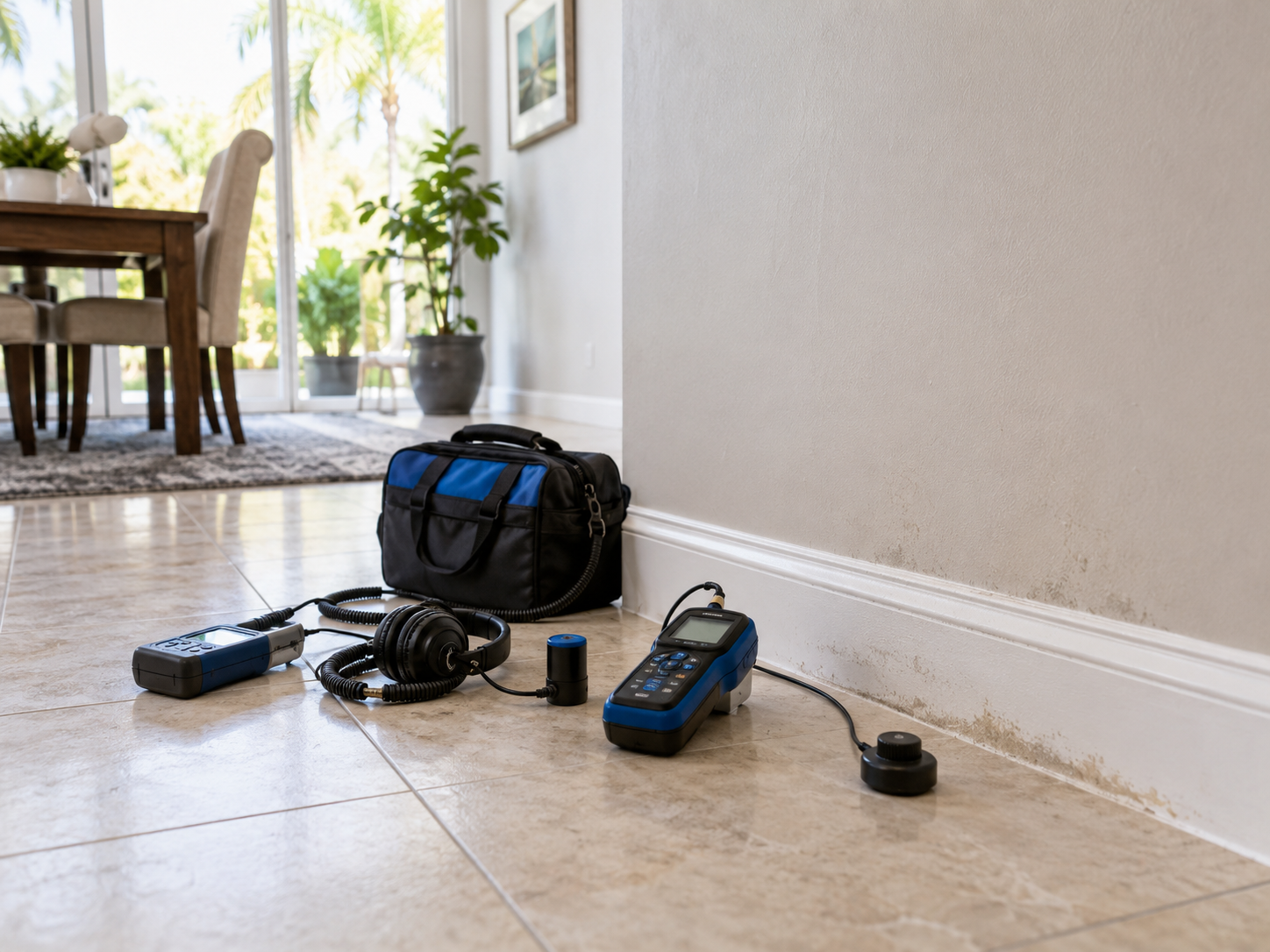
Slab Leak Focus
Slab leak detection looks for signs of hidden water movement beneath flooring and foundation areas.
Modern Diagnostic Tools
Moisture checks, pressure clues, sound-based methods, and other diagnostic steps help narrow the leak area.
Experienced Technicians
Licensed and insured plumbing professionals help evaluate slab leak symptoms before repair planning begins.
Clear Repair Direction
Once the likely leak area is understood, the next step may involve slab repair, pipe rerouting, or water line work.
When a Slab Leak Starts Before You Can See the Source
A slab leak happens when a water line beneath or inside the concrete foundation begins leaking. The pipe is hidden, so the first signs often show up somewhere else. A homeowner may notice warm tile, damp flooring, a musty smell, water near baseboards, or a water bill that does not match normal use.
Coral Springs has many slab foundation homes built across suburban neighborhoods. That means plumbing lines may run under floors, through walls, or below finished surfaces. When a pipe leaks under the slab, water can move before it becomes visible.
Slab leak detection helps narrow down where the leak may be coming from before the wrong floor, wall, or cabinet area is opened. If the leak signs are not clearly under the foundation, broader leak detection may help rule out other possible sources.
Signs Coral Springs Homeowners Often Notice First
Slab leaks are easy to miss at first because the pipe is not visible. The leak may begin slowly, then show up as small changes around flooring, walls, pressure, or water use.
The key is the pattern. One damp spot may have several possible causes. But damp flooring, meter movement, higher water bills, and warm floor areas together can point toward hidden plumbing beneath the slab.
Water Can Move Under Tile Before It Shows Up
The wet spot is not always where the pipe is leaking. Water under a slab can follow low areas, floor seams, pipe openings, wall edges, or small gaps before it becomes visible. That is why a damp area in one room may not always mean the leak started directly below that spot.
In Coral Springs homes with tile, laminate, baseboards, cabinets, or remodeled flooring, slab moisture can travel quietly before the damage is obvious. A homeowner may dry the area, only to see the moisture return again.
This is where diagnosis matters. A slab leak should not be guessed at based only on where the floor feels wet. Pressure behavior, water meter movement, moisture patterns, and sound clues can all help narrow the likely leak area before repair work begins.
What Slab Leak Detection Helps Determine
The goal is not just to confirm that water is present. The goal is to understand whether the moisture is likely coming from a pressurized water line, a drain issue, an appliance, an exterior source, or another plumbing path.
If the leak appears to be outside the slab or near the main service line, underground leak detection or water line repair may become the better next step.
Slab Leak Detection for Suburban Coral Springs Homes
Coral Springs is filled with suburban slab homes, family neighborhoods, garage water heaters, utility-room plumbing, and underground water service lines. Homes near Ramblewood, Cypress Run, Shadow Wood, Maplewood, Pine Ridge, Turtle Run, North Springs, Forest Hills, and Coral Springs Country Club can all show slab leak symptoms in different ways.
Some homes have original plumbing lines. Others have updated kitchens, bathrooms, or flooring tied into older parts of the system. When plumbing has been changed in pieces over time, leak symptoms can be harder to read from the surface.
Heavy summer rain and irrigation cycles can also confuse exterior moisture symptoms. But inside the home, warm floors, damp tile, unexplained water use, and moisture near baseboards should be checked before the damage spreads.
A Practical Slab Leak Detection Path
Slab leak detection works best when the symptoms are reviewed step by step. The goal is to narrow the leak area before repair decisions are made.
1. Review the Symptoms
The process starts with what changed: warm floors, damp tile, water bill increases, meter movement, low pressure, or moisture near walls.
2. Check Water Use Clues
Meter movement, pressure changes, and hot water behavior can help show whether a pressurized plumbing line may be leaking.
3. Trace Moisture Patterns
Moisture may travel under floors or along walls, so the visible damp area is checked as part of a larger pattern.
4. Plan the Next Step
Once the likely leak area is clearer, the repair path may involve access, pipe repair, rerouting, or another leak service.
Related Coral Springs Leak Services
Slab leak detection is part of the larger Coral Springs leak detection cluster. The right next step depends on where the water is moving and how quickly the issue is spreading.
Leak Detection
Broader leak detection helps when the source is unclear and symptoms may involve walls, cabinets, floors, fixtures, or underground lines.
Underground Leak Detection
If wet areas appear outside or near the water service line, the leak may be underground rather than under the slab.
Water Line Repair
When the main water line is leaking, losing pressure, or causing meter movement, repair may be needed after diagnosis.
Emergency Plumbing
If water is actively spreading through flooring, walls, or cabinets, emergency plumbing help may be needed before slower repairs are planned.
Slab Leak Detection in Coral Springs and Broward County
Home Town Repair Experts helps with slab leak detection needs across Coral Springs, including warm floor areas, slab moisture, damp tile, rising water bills, low pressure concerns, and hidden pipe leaks beneath foundations.
Service area relevance includes Ramblewood, Cypress Run, Shadow Wood, Coral Springs Country Club, Maplewood, The Crossings, Pine Ridge, Oakwood, Turtle Run, North Springs, Forest Hills, Butler Farms, and residential areas near University Drive, Sample Road, Wiles Road, Atlantic Boulevard, Riverside Drive, and Coral Ridge Drive.
You can also visit our Coral Springs plumber hub or view broader Broward County plumbing services.
Coral Springs Slab Leak Detection FAQs
Slab leaks can be confusing because the pipe is hidden below the floor. These answers cover common signs Coral Springs homeowners notice first.
How do I know if I may have a slab leak?
Common signs include warm flooring, damp tile, water meter movement, low pressure, baseboard moisture, musty odors, or a water bill that rises without clear extra use.
Can a slab leak happen without visible water?
Yes. A slab leak can waste water under the floor before standing water appears. Higher water bills, warm floor areas, or meter movement may show up first.
Why is one part of my tile floor warm?
A warm floor area may point to a hot water line leaking beneath the slab, although other causes are possible. Slab leak detection helps check whether plumbing is involved.
Is slab leak detection the same as underground leak detection?
They are related, but not always the same. Slab leak detection focuses on leaks beneath the foundation, while underground leak detection may involve exterior water lines or buried plumbing outside the home.
Talk With a Coral Springs Slab Leak Detection Professional
If you are noticing warm floors, damp tile, rising water bills, low water pressure, or moisture near baseboards, slab leak detection can help narrow down the source before the wrong area is opened. Home Town Repair Experts can help route the issue toward the right next step.