
Lighthouse Point Drain Cleaning
A drain that keeps slowing down after clearing may be pointing to more than a one-time clog. Grease, soap residue, sludge, paper, debris, roots, and rough internal pipe surfaces can all reduce flow and make the same problem return.
The right service depends on whether the issue is isolated to one fixture, affecting several drains, or tied to a larger underground restriction. Lighthouse Point drain cleaning should restore flow while also recognizing when deeper sewer diagnosis is needed.
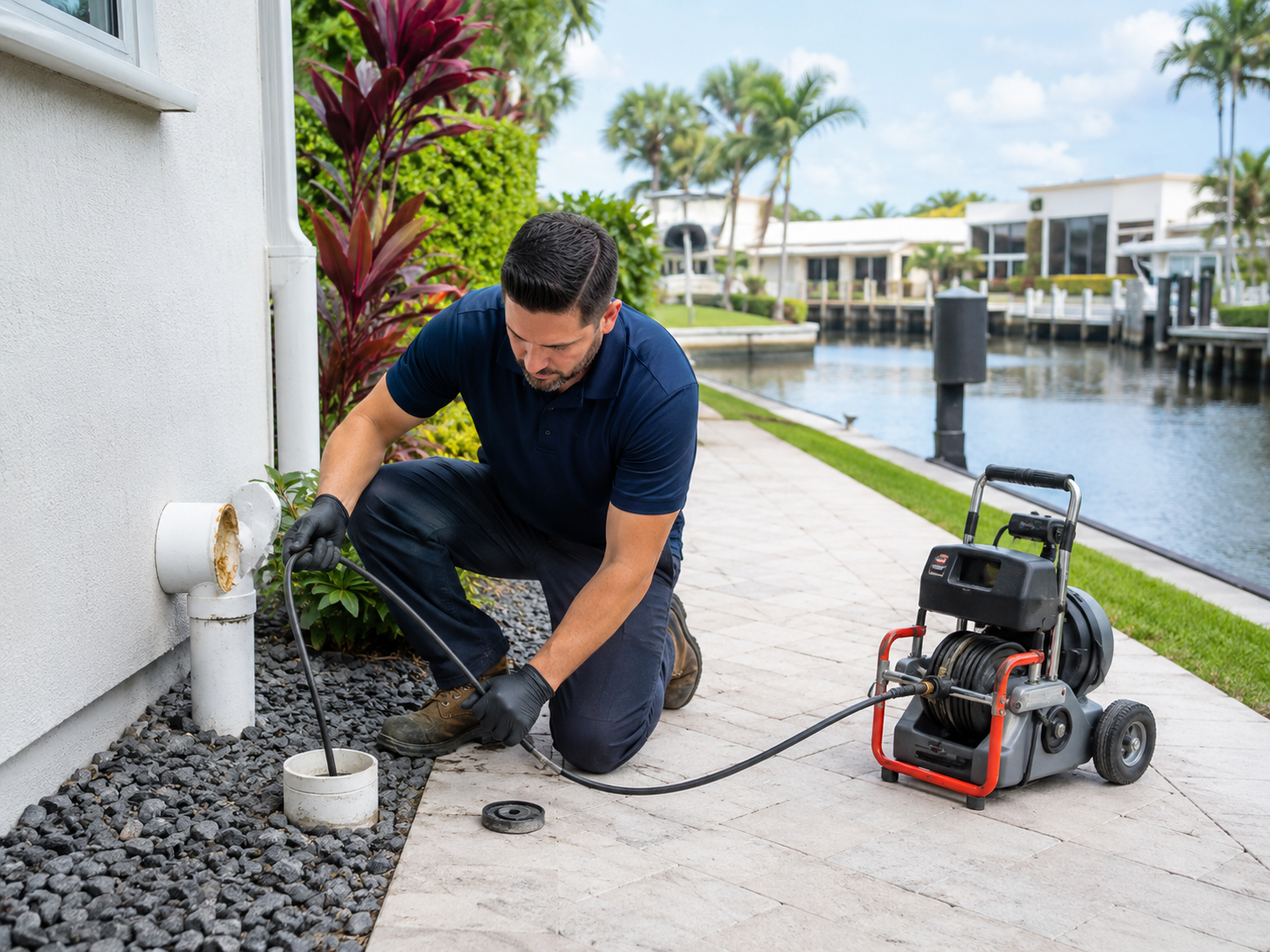
Slow Drain Returns
A fixture that clogs again after clearing may still have buildup farther inside the line.
Kitchen Drain Backup
Grease, food residue, sludge, and soap buildup can gradually narrow the kitchen drain path.
Several Fixtures Affected
When tubs, showers, sinks, and toilets slow down together, a deeper main-line restriction may be involved.
Overflow After Heavy Rain
Storms may make an existing underground restriction or exterior cleanout problem more noticeable.
Temporary Flow Improvement Does Not Always Mean the Restriction Is Gone
A drain can begin moving again after basic clearing even when the underlying problem remains. A cable may open a pathway through grease, sludge, paper, or debris without fully cleaning the interior walls of the pipe.
That is why some homeowners see the same symptoms return within days or weeks. The drain line may still have narrowed areas, rough cast iron surfaces, standing water, root intrusion, or a larger restriction farther downstream.
Homeowners who notice several fixtures acting up together can also review Lighthouse Point sewer services to determine whether the problem has moved beyond routine drain cleaning.
Match the Cleaning Approach to the Drain Pattern
A kitchen restriction, bathroom clog, emergency overflow, and main-line backup each need a different level of attention.
Lighthouse Point Kitchen Drain Cleaning
Kitchen drain cleaning may help when grease, food residue, soap buildup, or sludge causes slow drainage, odors, or sink backups.
Lighthouse Point Bathroom Drain Cleaning
Bathroom drain cleaning can address localized restrictions affecting tubs, showers, sinks, and floor drains before the issue becomes more disruptive.
Lighthouse Point Main Line Drain Cleaning
Main-line cleaning may be appropriate when several fixtures drain slowly, toilets bubble, or wastewater begins backing up through tubs and showers.
Lighthouse Point Hydro Jetting
Hydro jetting may help restore flow capacity when heavy buildup remains inside a serviceable drain line after basic clearing stops providing lasting relief.
Lighthouse Point Emergency Drain Cleaning
Emergency drain help is appropriate when wastewater is rising through fixtures, an overflowing toilet will not stop, or continued use could spread water or sewage.
The Location and Pattern of the Clog Help Determine the Next Step
A single sink that drains slowly may need straightforward clearing. When several fixtures are affected, the issue may sit farther down the system than one branch line.
If the same backup keeps returning after service, a sewer camera inspection may help reveal buildup, roots, standing water, or deterioration inside the buried drain path.
Recurring Restrictions May Develop Inside Buried Lines Long Before a Major Backup
Some Lighthouse Point homes have updated kitchens, bathrooms, and finished living areas connected to older buried drains. The visible fixtures may be new while cast iron or aging underground piping continues serving the property beneath the slab or yard.
Rough internal surfaces can catch debris more easily over time. A partial PVC repair may solve one failed section while another portion of the original system remains restrictive. A cleanout overflow after a storm may also make an existing main-line problem much harder to ignore.
Canal-front conditions do not automatically cause a plumbing failure. However, saturated soil, drainage, irrigation, and yard moisture can overlap visually with exterior symptoms, which makes careful diagnosis more useful than surface assumptions.
Start With the Symptom, Then Escalate Only When the Pattern Justifies It
Good drain cleaning should solve the immediate problem while also recognizing when repeat symptoms point toward a deeper underground restriction.
1. Identify Which Fixtures Are Affected
Determine whether the issue is isolated to one sink or shower, limited to one area of the home, or affecting the larger drain system.
2. Clear the Immediate Restriction
Localized drain cleaning may reopen flow when hair, grease, residue, paper, or debris is blocking a branch line.
3. Watch for Recurring Symptoms
If the problem returns quickly, affects several fixtures, or causes cleanout overflow, deeper inspection may be appropriate.
4. Match the Next Service to the Cause
Hydro jetting, sewer camera inspection, cast iron evaluation, or sewer line repair may be considered when basic drain clearing is no longer enough.
A Drain Cable Can Reopen Flow Without Fully Cleaning the Pipe
Snaking is often useful for a localized clog. It can break through hair, paper, grease, or debris and restore drainage quickly. The limitation is that the tool may open a narrow pathway while leaving buildup attached to the interior walls.
When the same restriction keeps returning, hydro jetting may help clean buildup more thoroughly from a serviceable line. If camera inspection reveals standing water, severe cast iron deterioration, or structural damage, a repair path may be more appropriate.
The right recommendation should explain whether the homeowner is dealing with a routine clog, recurring buildup, a larger sewer restriction, or an underground pipe condition that cleaning alone will not solve.
Small Changes Can Reduce Repeat Restrictions Without Replacing Proper Diagnosis
Kitchen grease, food residue, soap, hair, paper products, and debris all contribute to drain restrictions. Avoiding grease disposal through the sink, using strainers where practical, and paying attention to drains that repeatedly slow down can help reduce avoidable problems.
Maintenance habits cannot correct a damaged pipe, severe buildup layer, or underground sewer issue. If the same drain problem returns after service, the pattern should be investigated rather than treated as a series of unrelated clogs.
Homeowners can also return to the Lighthouse Point plumber hub for help choosing the right service category.
Common Questions About Slow Drains and Repeat Clogs
A recurring clog is often more useful as a pattern than as an isolated event. These answers explain when routine cleaning may be enough and when deeper diagnosis makes sense.
Why does my drain keep clogging after it was cleared?
The original clearing may have opened a temporary pathway without removing all of the grease, sludge, scale, or debris inside the pipe. A recurring restriction may also involve rough cast iron surfaces, roots, standing water, or a deeper main-line issue.
When does a slow drain point to a main-line problem?
A single slow sink is often localized. When several fixtures drain slowly together, toilets bubble, or wastewater rises through tubs and showers, the restriction may be farther down the underground drain system.
Is hydro jetting always necessary for recurring clogs?
No. Hydro jetting may help when heavy buildup is narrowing a serviceable line, but basic clearing may be enough for a localized clog. Pipe condition and symptom history should guide the recommendation.
Can heavy rain make a drain problem more noticeable?
Heavy rain does not automatically cause a private drain failure, but it may make an existing underground restriction or exterior cleanout overflow more noticeable. Saturated soil and drainage conditions may also complicate what homeowners see outside.
When should I stop using fixtures during a backup?
Stop using plumbing fixtures when wastewater is rising through tubs, showers, toilets, or an exterior cleanout. Continued water use can send more wastewater into an already restricted line and increase the mess inside or outside the home.
Drain Cleaning Across Lighthouse Point and Eastern Broward County
Drain cleaning support is available for Lighthouse Point homeowners dealing with kitchen clogs, bathroom restrictions, slow drains, main-line backups, exterior cleanout overflows, and recurring drainage problems.
Local coverage includes Venetian Isles, Coral Key Villas, Coral Key Harbor, Lighthouse Point Estates, Lighthouse Manor, Lake Placid, Lake Placid Isles, homes near Federal Highway, properties near Sample Road, and canal-front neighborhoods close to the Intracoastal Waterway.
You can also return to the Lighthouse Point plumber hub or review broader Broward County plumbing services.
Get Help With a Drain Problem That Keeps Returning
Whether the issue involves a slow kitchen sink, bathroom restriction, main-line backup, or recurring clog after temporary clearing, the next step is matching the cleaning approach to the actual pattern inside the drain system.