
Sink Leak Repair in Pembroke Pines
Water beneath a kitchen or bathroom sink can spread quietly through cabinet bases, flooring edges, baseboards, and nearby walls. The source may be a loose drain fitting, leaking trap, supply-line connection, shutoff valve, faucet base, disposal seal, or another nearby plumbing line.
Home Town Repair Experts helps Pembroke Pines homeowners find sink-leak repair support for recurring cabinet moisture, slow drips, active leaks, vanity water damage, kitchen-sink plumbing problems, and wet areas that need a practical source diagnosis.
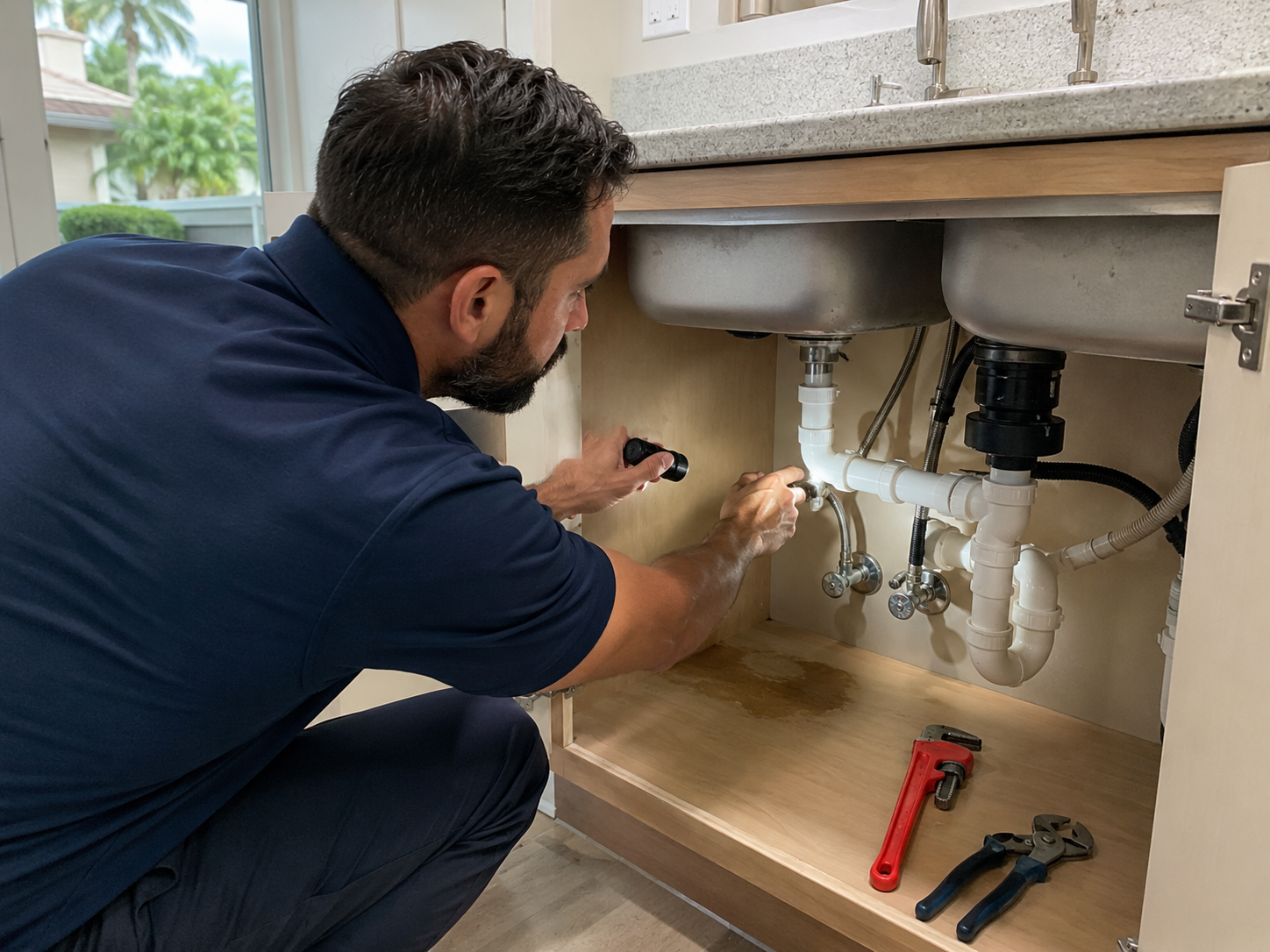
Cabinet Base Stays Damp
Moisture returning after cleanup may mean a slow plumbing leak is still active beneath the sink.
Trap or Drain Fitting Drips
Water appearing only while the sink drains may point toward a loose fitting, worn seal, or trap connection.
Supply Valve Stays Wet
A damp shutoff valve or supply line can leak slowly even when the sink is not actively being used.
Water Spreads Beyond the Cabinet
Active water reaching flooring, baseboards, or nearby walls may need faster containment before damage spreads.
The Wettest Spot Beneath the Sink Is Not Always Where the Leak Began
Sink cabinets bring several plumbing components into one compact area. Water may come from a faucet supply line, shutoff valve, drain fitting, trap connection, disposal seal, dishwasher hose, faucet base, or nearby wall connection. Once the water begins moving, it can travel along pipes and cabinet surfaces before collecting at the lowest point.
That is why wiping up the cabinet and checking again later is often more useful than assuming the first wet fitting is the source. Some leaks appear only while the faucet runs. Others drip slowly throughout the day. A drain leak may show up after the basin empties, while a supply-side leak can continue even when the sink is not being used.
Sink-leak repair connects naturally with broader Pembroke Pines residential plumbing. If the moisture appears around the fixture base or handle area, faucet repair may be the more focused next step.
Signs the Cabinet Plumbing Needs Closer Review
Sink leaks often start small. A cabinet may smell damp. The base panel may swell slightly. A towel placed beneath the trap may become wet again after normal use. Over time, even a slow drip can damage cabinetry and nearby flooring.
The most useful clue is when the water appears. A leak that starts during faucet use may involve different components than moisture that returns overnight.
When the Water Appears Helps Narrow the Source
Drain-side leaks often appear while the sink is being used or shortly after water empties from the basin. A trap connection, drain fitting, disposal mount, or dishwasher connection may leak only when wastewater moves through the plumbing.
Supply-side leaks behave differently. A shutoff valve, faucet supply line, or pressurized connection may drip even when the sink is not running. Those leaks can continue slowly throughout the day and create recurring cabinet moisture without an obvious event.
The distinction matters because the repair path changes depending on whether the leak comes from the drainage side, the supply side, the fixture itself, or another nearby plumbing route.
Cabinet Moisture Can Come From Several Connected Components
Kitchen and bathroom sink leaks should be diagnosed as a connected system rather than one isolated fitting. The correct repair may involve tightening or replacing a drain connection, repairing a valve, addressing a faucet issue, or tracing moisture from a less obvious source.
If the cabinet remains wet after the visible fittings are checked, hidden-water-leak detection may help determine whether moisture is coming from behind the wall or another nearby plumbing route.
Kitchen Cabinets Have More Connections That Can Leak
Kitchen-sink cabinets often contain more plumbing connections than bathroom vanities. The faucet supply lines, shutoff valves, drain fittings, garbage disposal, dishwasher hose, and branch-line connections may all share the same cabinet space.
Moisture beneath the disposal does not automatically mean the disposal body has failed. Water may travel from the faucet base, drain fitting, sink rim, dishwasher hose, or another connection before collecting near the unit.
If the disposal hums, leaks, or leaves the sink backing up, garbage-disposal repair may be the more focused path. If the kitchen basin drains slowly or backs up after normal use, kitchen-drain cleaning may also be relevant.
A Small Drip Can Become an Emergency When Water Leaves the Cabinet
A slow cabinet leak may allow time for careful diagnosis, but it should not be ignored. Moisture can soak into particleboard, cabinet bases, grout lines, flooring edges, and baseboards before the problem looks serious from the outside.
If water is actively pooling, spreading beyond the cabinet, or continuing after a nearby shutoff valve is closed, emergency-leak repair may be the better next step.
Updated Fixtures Can Still Connect to Older Valves and Drain Lines
Pembroke Pines includes older east-side homes, western subdivision properties, townhomes, condos, and active-adult communities. A kitchen or bathroom may look recently remodeled while still relying on older supply valves, drain fittings, and plumbing routes behind the cabinet.
Older homes near University Drive, Pembroke Road, Pasadena Lakes, and Hollywood Pines may have sink plumbing that has been repaired or updated in stages. A newer faucet or vanity does not automatically mean every connected fitting and shutoff valve was replaced at the same time.
Western communities near Chapel Trail, Silver Lakes, Pembroke Falls, Pembroke Isles, Towngate, Grand Palms, and US-27 may place more daily demand on kitchen and bathroom plumbing through larger households, multiple bathrooms, disposals, and frequent dishwasher use.
Century Village and other condo or active-adult communities add another layer. A slow sink leak can affect nearby flooring, shared walls, and neighboring areas more quickly when plumbing is located inside tighter multi-unit spaces.
Services That Often Connect to Sink-Leak Repair
The right service depends on whether the water comes from the faucet, drain fittings, supply lines, shutoff valve, disposal area, or a hidden plumbing route.
Residential Plumbing
For everyday kitchen, bathroom, faucet, toilet, disposal, sink-leak, and fixture concerns throughout the home.
Faucet Repair
For dripping faucets, leaking handles, fixture-base moisture, shutoff-valve concerns, and faucet-related cabinet leaks.
Hidden-Water-Leak Detection
For recurring cabinet moisture, wall dampness, unclear wet areas, and leaks that remain hidden after visible fittings are checked.
Emergency Leak Repair
For active water spread, pooling beneath cabinets, moisture reaching flooring, and leaks that cannot be isolated safely.
A Practical Way to Diagnose Water Beneath a Sink
Sink-leak repair should move from the visible moisture to the source, the connected plumbing components, the immediate repair, and any hidden leak that still needs attention.
Identify When the Water Appears
The first step is determining whether moisture appears while the faucet runs, while the sink drains, after dishwasher use, or even when the fixture is not being used.
Check the Cabinet Plumbing
The trap, drain fittings, supply lines, shutoff valves, faucet connections, disposal area, and dishwasher hose may need review.
Repair the Confirmed Source
The loose fitting, leaking valve, damaged connection, fixture component, or other confirmed source should be addressed before cabinet damage spreads.
Route Hidden or Active Leaks Correctly
Recurring unexplained moisture may need hidden-leak detection. Active water spreading beyond the cabinet may need emergency-leak repair.
Find the Source Before a Small Cabinet Leak Spreads
Sink leaks create enough frustration without unclear recommendations. Experienced and certified technicians can help distinguish between a trap leak, loose drain fitting, supply-line drip, shutoff-valve problem, faucet issue, disposal-area leak, and hidden plumbing concern.
Fully stocked service vehicles help address many common sink leaks on the first visit when the problem is straightforward. Modern diagnostic equipment can also help narrow recurring moisture when the visible cabinet plumbing does not reveal the full source.
Transparent upfront pricing helps homeowners understand the proposed repair and any recommended follow-up leak diagnosis before additional work begins.
Pembroke Pines Sink-Leak Repair Questions
These are common questions homeowners ask when water appears beneath a kitchen sink, bathroom vanity, disposal area, or cabinet plumbing connection.
Why is there water beneath my sink?
Cabinet moisture may come from a trap connection, drain fitting, supply line, shutoff valve, faucet base, disposal seal, dishwasher hose, or nearby plumbing line. The source should be identified before the repair is chosen.
Why does the sink leak only when water drains?
A leak that appears while the basin empties may involve the trap, drain fittings, disposal connection, or another drain-side component. Supply-side leaks can continue even when the sink is not being used.
Can a small sink leak damage the cabinet?
Yes. A slow leak can soak into cabinet bases, particleboard, flooring edges, grout lines, and nearby baseboards over time. Recurring moisture should not be ignored simply because the leak is small.
When does a sink leak need emergency repair?
Emergency help may be appropriate when water is pooling quickly, spreading beyond the cabinet, reaching flooring or walls, continuing after a nearby valve is closed, or appearing from a source that cannot be isolated safely.
Sink-Leak Repair in Pembroke Pines and Broward County
Home Town Repair Experts helps Pembroke Pines homeowners find sink-leak repair support for cabinet moisture, trap leaks, supply-line drips, shutoff-valve leaks, faucet connections, disposal-area water, bathroom vanity leaks, and active water spread.
Service coverage includes areas near Pines Boulevard, Flamingo Road, University Drive, Sheridan Street, Chapel Trail, Silver Lakes, Century Village, Pembroke Falls, Pembroke Isles, Towngate, Grand Palms, Pasadena Lakes, Walnut Creek, and western Pembroke Pines near US-27.
You can also visit our Pembroke Pines plumber hub or view broader Broward County plumbing services.
Stop Cabinet Moisture Before a Small Leak Spreads
If water keeps appearing beneath a kitchen or bathroom sink, the cabinet base stays damp, a valve is dripping, or moisture is spreading into flooring or baseboards, sink-leak repair can help identify the source and determine the right next step.