No Hot Water Repair in Pembroke Pines
A water heater can stop producing hot water suddenly even when the tank is not leaking. In Pembroke Pines homes, the problem may involve a breaker, thermostat, heating element, electrical connection, or aging component that needs diagnosis before replacement is considered.
Home Town Repair Experts helps Pembroke Pines homeowners find no-hot-water repair support for sudden hot-water loss, lukewarm water, short hot-water cycles, electric water-heater problems, and units that are no longer keeping up with normal household demand.
Hot Water Stopped Suddenly
A unit that worked normally yesterday but produces cold water today may have a breaker, thermostat, element, or electrical-component issue.
Water Stays Lukewarm
Water that never becomes fully hot may point toward partial heating performance rather than a complete tank failure.
Hot Water Runs Out Quickly
A short hot-water cycle can indicate reduced recovery, an element problem, thermostat concerns, sediment, or an aging unit.
Breaker Keeps Tripping
Repeated breaker issues should be evaluated carefully instead of resetting the system over and over without identifying the cause.
No Hot Water Is a Symptom, Not the Final Diagnosis
A water heater can lose heating performance for several reasons. The tank may still be physically intact while a thermostat, heating element, breaker, wiring connection, or other component prevents the unit from heating normally.
The symptom pattern matters. A unit producing no hot water at all may point toward a different issue than a tank that delivers one short shower before turning cold. Lukewarm water may suggest partial heating performance. A breaker that repeatedly trips may require a closer electrical review before the unit is returned to service.
No-hot-water repair connects naturally with broader Pembroke Pines water heater repair. When the unit is electric, electric water heater repair may provide a more focused diagnostic path.
Signs the Water Heater Is Not Heating Properly
Heating problems can appear suddenly or develop gradually. Some homeowners notice that the water is completely cold. Others notice shorter showers, slower recovery, or water that never becomes fully hot.
The difference helps narrow whether the problem may involve one heating component, the electrical supply, the tank condition, or the unit’s ability to keep up with household demand.
Electric Water-Heater Problems Often Need Step-by-Step Review
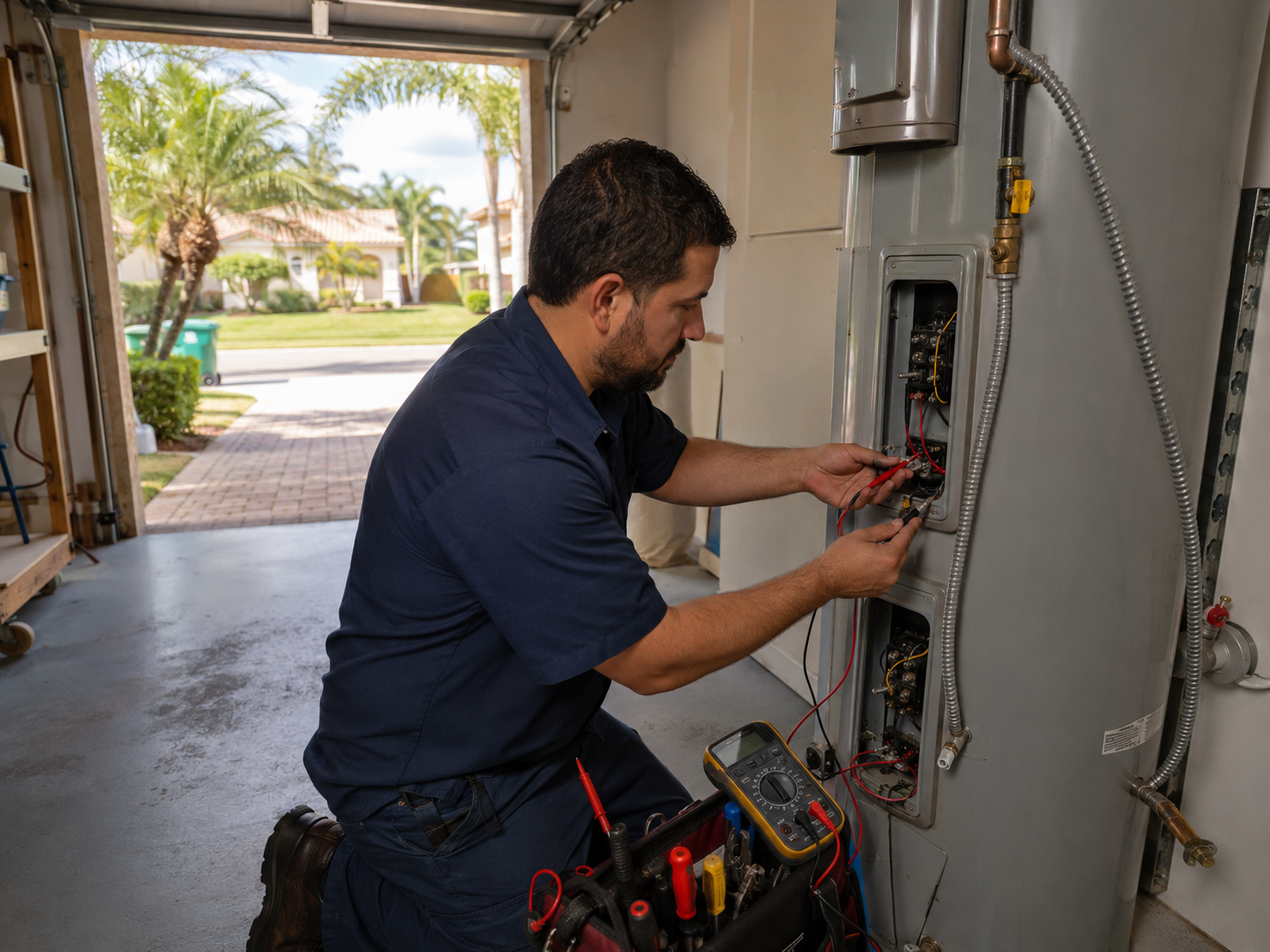
Many Pembroke Pines homes use electric water heaters. These systems rely on electrical components that work together to heat the tank properly. A failed thermostat, damaged heating element, breaker issue, or electrical connection problem can interrupt normal operation.
A partial failure may still produce some hot water. For example, one heating element may stop working while the other continues operating. The result can be lukewarm water, reduced recovery, or a short supply that does not last through normal household use.
Repeated breaker resets are not a long-term solution. If the breaker continues tripping, the cause should be evaluated before the system is repeatedly returned to service.
The Repair Path Depends on What Failed
A no-hot-water complaint may lead to a straightforward component repair, but the overall tank condition still matters. A dependable tank with an isolated thermostat or element issue may be worth repairing. An older unit with recurring performance problems may deserve a broader replacement discussion.
If the water heater is also leaking, water heater leak repair may help identify whether the moisture comes from a connection, valve, pan, relief discharge, or tank body.
Sudden Hot-Water Loss Does Not Automatically Mean Replacement
A water heater may still be a reasonable repair candidate when the tank is in good condition and the issue is limited to a thermostat, heating element, breaker concern, or another isolated component.
Replacement becomes more practical when the tank is leaking from the body, repairs keep repeating, corrosion is advanced, or hot-water performance has declined enough that the unit no longer meets normal household demand.
Homeowners weighing that larger decision can review water heater replacement. If the problem includes active leaking or water spreading into a garage, closet, or utility room, emergency water heater repair may be the better next step.
Hot-Water Problems Can Show Up Differently Across Pembroke Pines Homes
Pembroke Pines includes older east-side homes, western subdivision properties, townhomes, condos, and active-adult communities. The water-heater setup can vary depending on the age and layout of the property.
Older homes near University Drive, Pembroke Road, Pasadena Lakes, and Hollywood Pines may have tanks that have been replaced over time, older electrical connections, or utility-room layouts that differ from newer construction.
Western communities near Chapel Trail, Silver Lakes, Pembroke Falls, Pembroke Isles, Towngate, Grand Palms, and US-27 may have larger households and higher daily hot-water demand. A partially failing unit may become obvious when multiple showers, laundry loads, and kitchen use happen close together.
Century Village and other condo or active-adult communities may have closet installations, tighter service access, and smaller units where a sudden loss of hot water becomes especially disruptive.
Services That Often Connect to No-Hot-Water Problems
The right service depends on whether the problem is isolated to heating performance, connected to an electric component, paired with a leak, or part of an aging-unit replacement decision.
Water Heater Repair
For thermostat, element, valve, supply-line, heating, and tank-performance problems that may still be repairable.
Electric Water Heater Repair
For electric-tank breaker concerns, thermostat failures, heating-element problems, and reduced hot-water recovery.
Emergency Water Heater Repair
For sudden hot-water loss paired with active leaking, garage flooding, pan overflow, or urgent safety concerns.
Water Heater Replacement
For aging tanks, repeated failures, body leaks, declining recovery, and units that no longer meet household demand reliably.
A Practical Way to Diagnose Sudden Hot-Water Loss
No-hot-water repair should move from the visible symptom to the electrical components, tank condition, household demand, and the most reasonable repair path.
Identify the Heating Pattern
The first step is determining whether the water is completely cold, only lukewarm, running out too quickly, or recovering more slowly than usual.
Check the Electrical Components
The breaker, thermostats, heating elements, connections, and related electric water-heater components may need review.
Review the Tank Condition
A repair may make sense when the tank is dependable. Leaks, repeated failures, corrosion, or declining performance may shift the decision toward replacement.
Choose the Next Step
The final path may involve component repair, electric water-heater service, leak diagnosis, emergency help, or replacement planning.
Diagnose the Heating Problem Before Recommending Replacement
No-hot-water problems create enough inconvenience without unclear recommendations. Experienced and certified technicians can help determine whether the issue is a breaker concern, thermostat failure, heating-element problem, connection issue, or aging tank that deserves replacement planning.
Fully stocked service vehicles help address many common water-heater problems on the first visit when the repair is straightforward. Modern diagnostic equipment can also help narrow electrical and tank-performance concerns when the symptom does not reveal the full cause.
Transparent upfront pricing helps homeowners understand the proposed repair and any recommended follow-up work before service begins.
Pembroke Pines No-Hot-Water Repair Questions
These are common questions homeowners ask when hot water stops working, becomes lukewarm, or runs out much faster than usual.
Why did my hot water stop working suddenly?
Sudden hot-water loss may involve a breaker issue, thermostat failure, damaged heating element, electrical connection concern, or another component problem. The exact cause should be diagnosed before replacement is assumed.
Why is the water only lukewarm?
Lukewarm water can point toward partial heating performance. One heating element may be failing, a thermostat may not be working properly, or the unit may be struggling to recover under normal household demand.
Should I keep resetting the breaker?
Repeated breaker resets are not a long-term repair. If the breaker continues tripping, the underlying issue should be evaluated before the system is repeatedly returned to service.
Does no hot water mean I need a new water heater?
Not always. A repairable thermostat, heating element, breaker concern, or electrical component may be the cause. Replacement becomes more practical when the tank is leaking, repairs keep repeating, or the unit is no longer dependable.
No-Hot-Water Repair in Pembroke Pines and Broward County
Home Town Repair Experts helps Pembroke Pines homeowners find no-hot-water repair support for sudden hot-water loss, lukewarm water, short hot-water cycles, breaker issues, thermostat failures, heating-element problems, and aging water heaters.
Service coverage includes areas near Pines Boulevard, Flamingo Road, University Drive, Sheridan Street, Chapel Trail, Silver Lakes, Century Village, Pembroke Falls, Pembroke Isles, Towngate, Grand Palms, Pasadena Lakes, Walnut Creek, and western Pembroke Pines near US-27.
You can also visit our Pembroke Pines plumber hub or view broader Broward County plumbing services.
Find Out Why the Water Heater Stopped Working
If your water heater is producing cold water, staying lukewarm, recovering slowly, or tripping the breaker repeatedly, no-hot-water repair can help identify the failed component and determine the right next step.